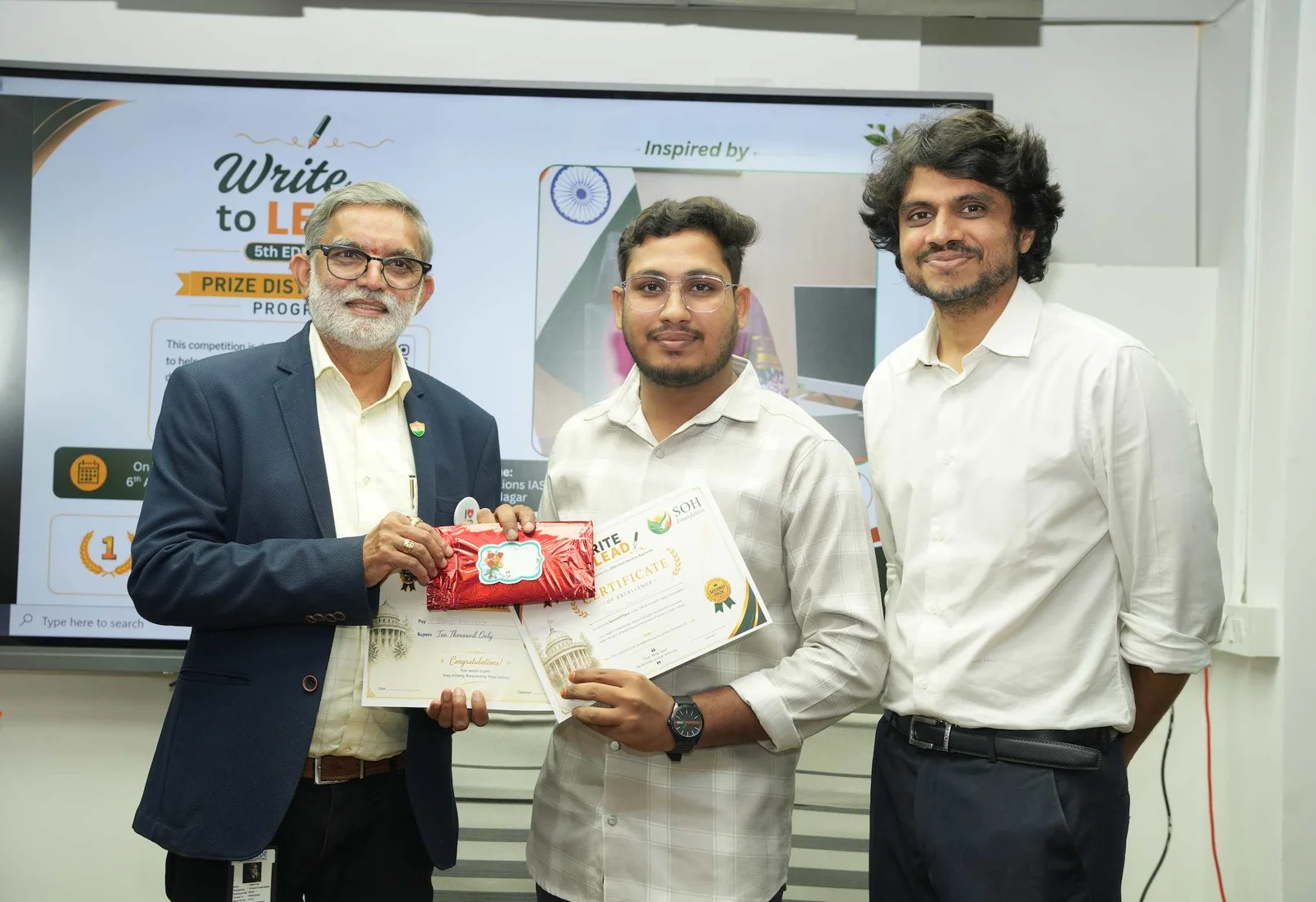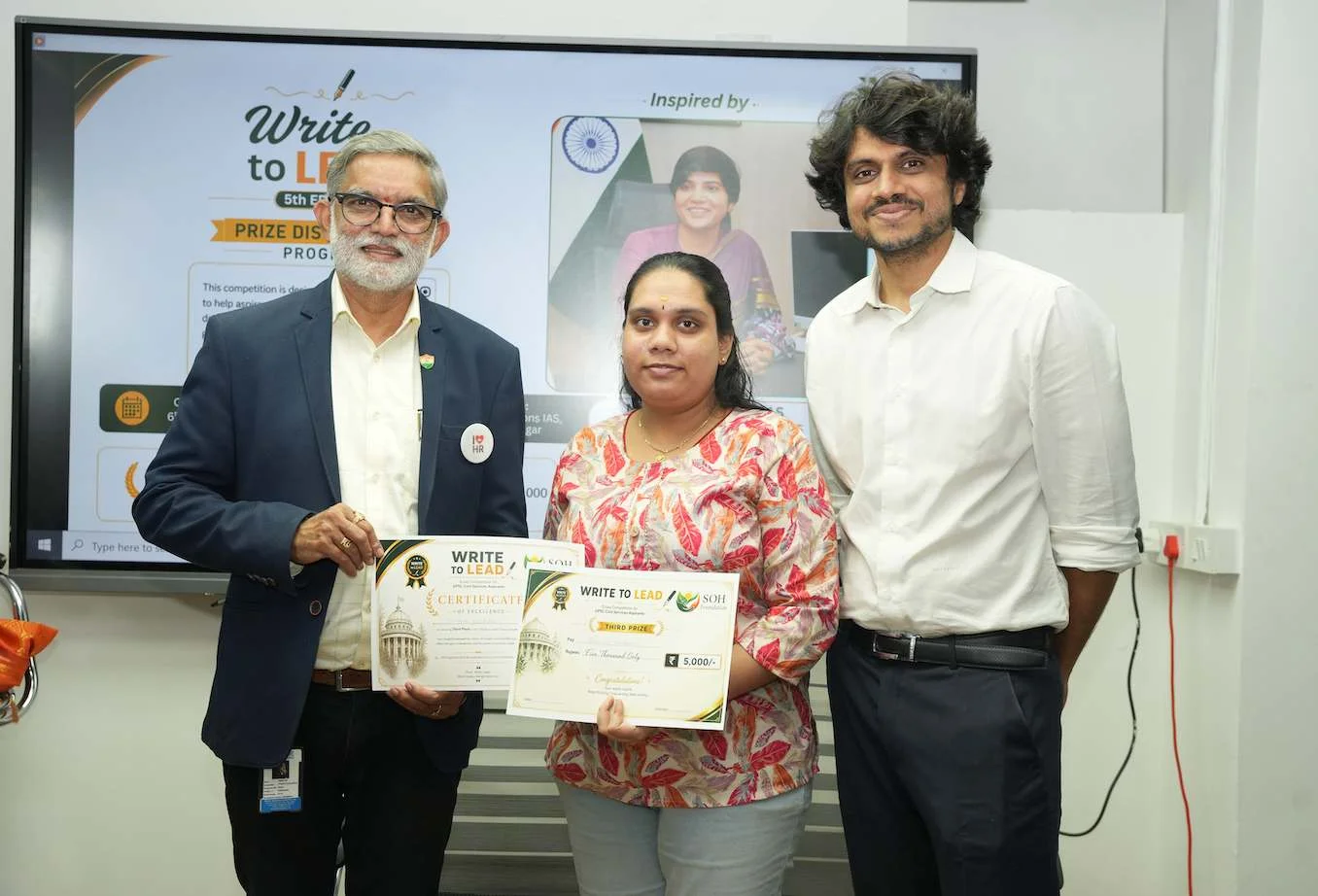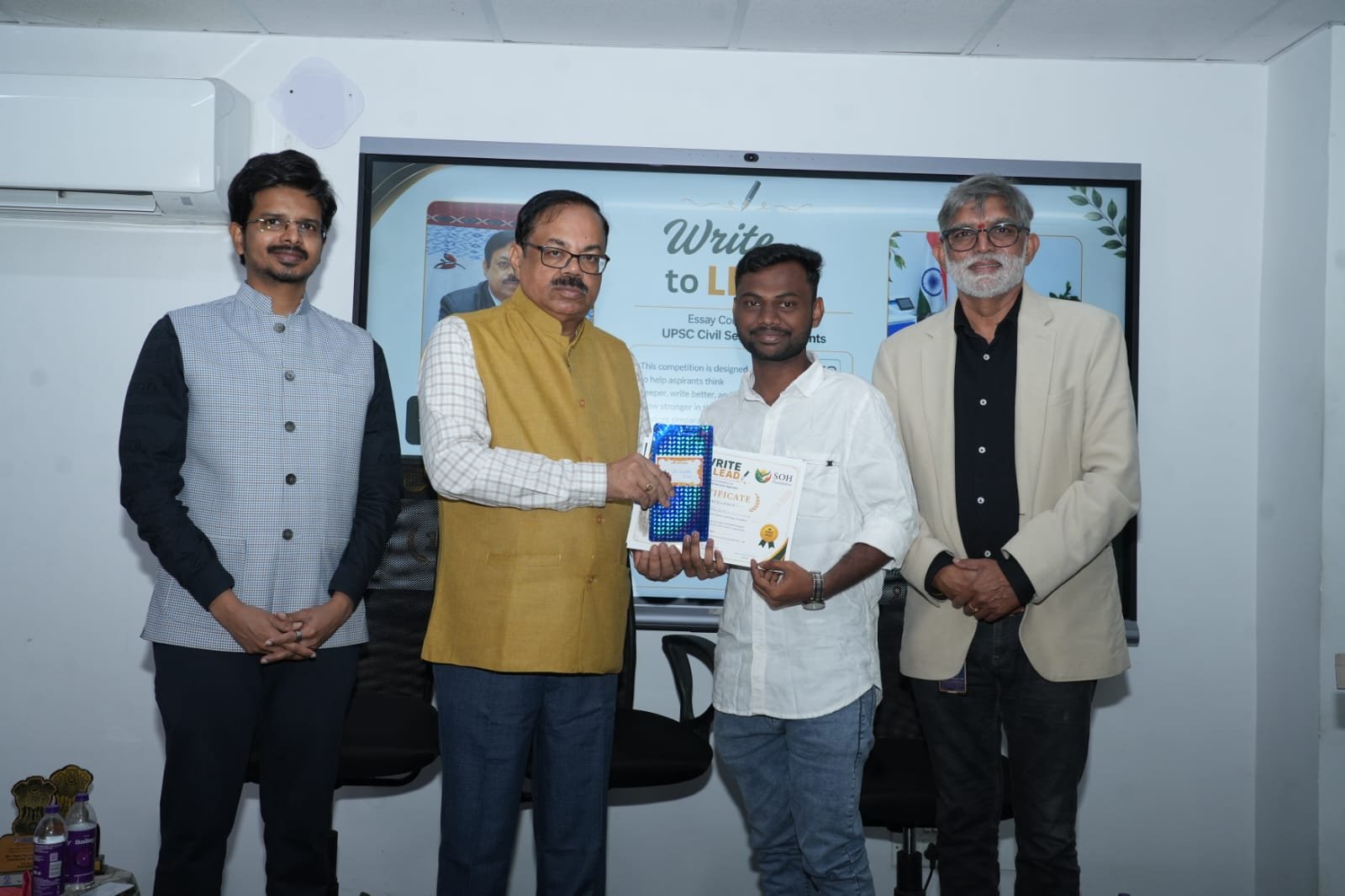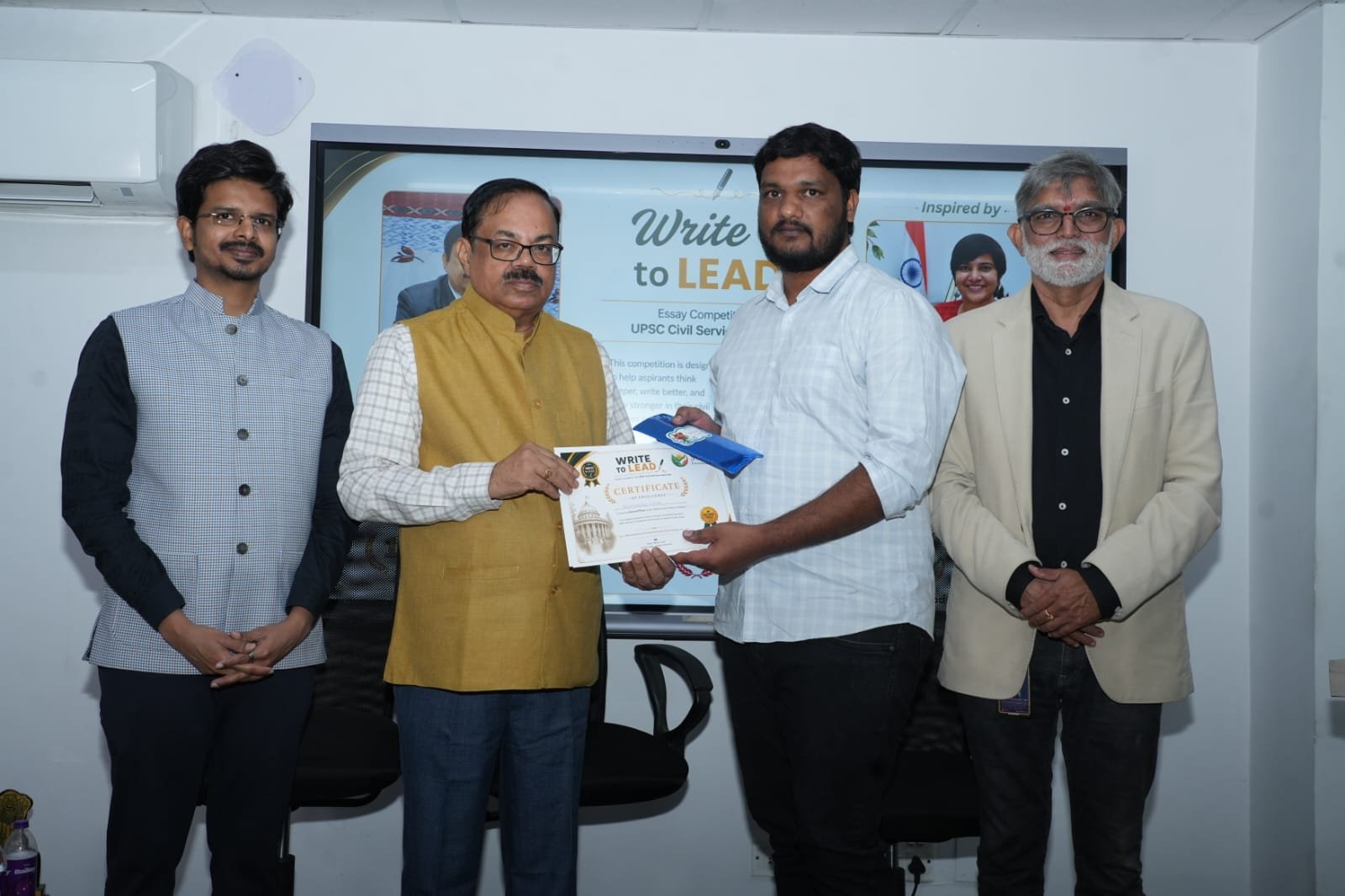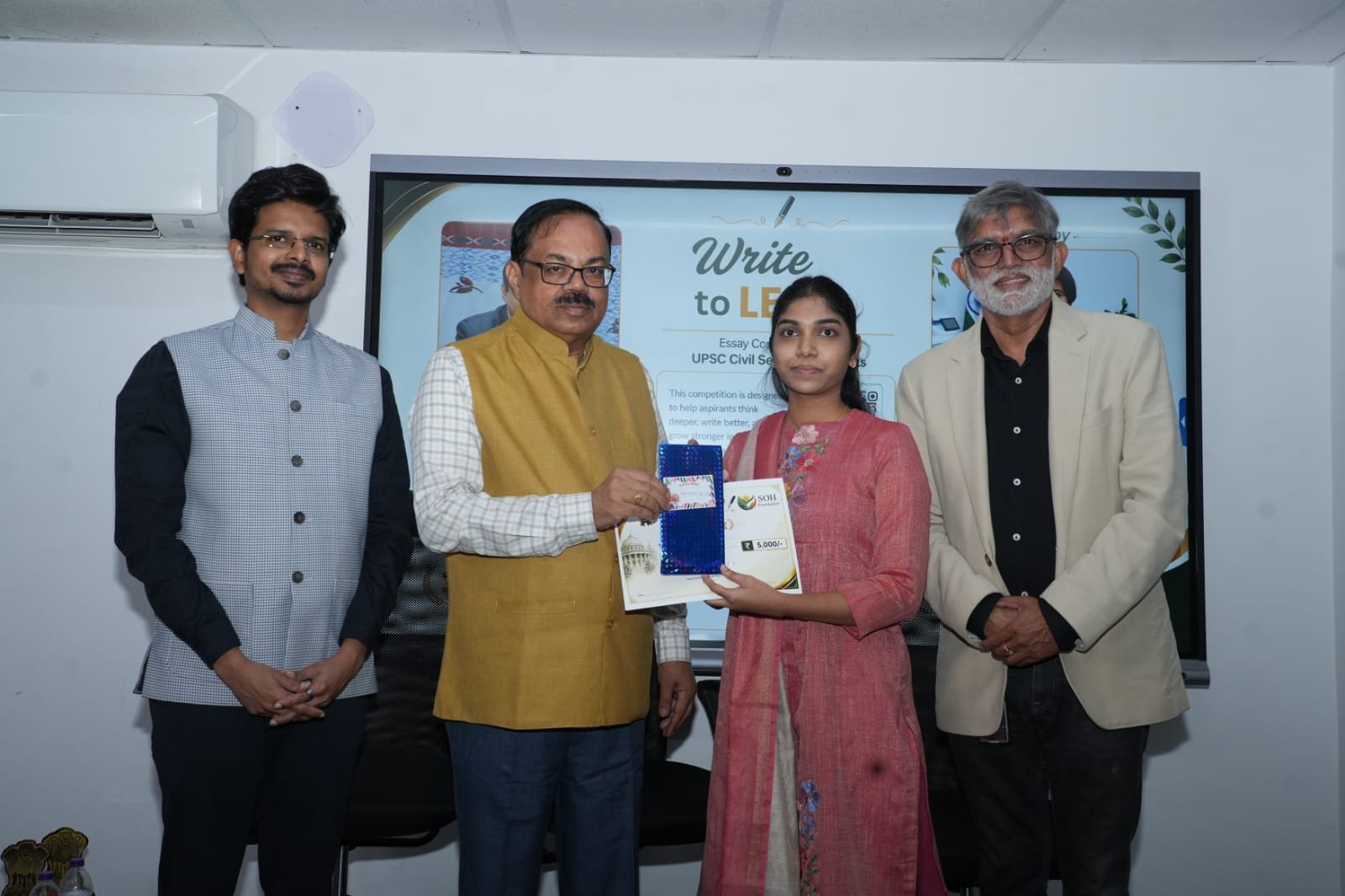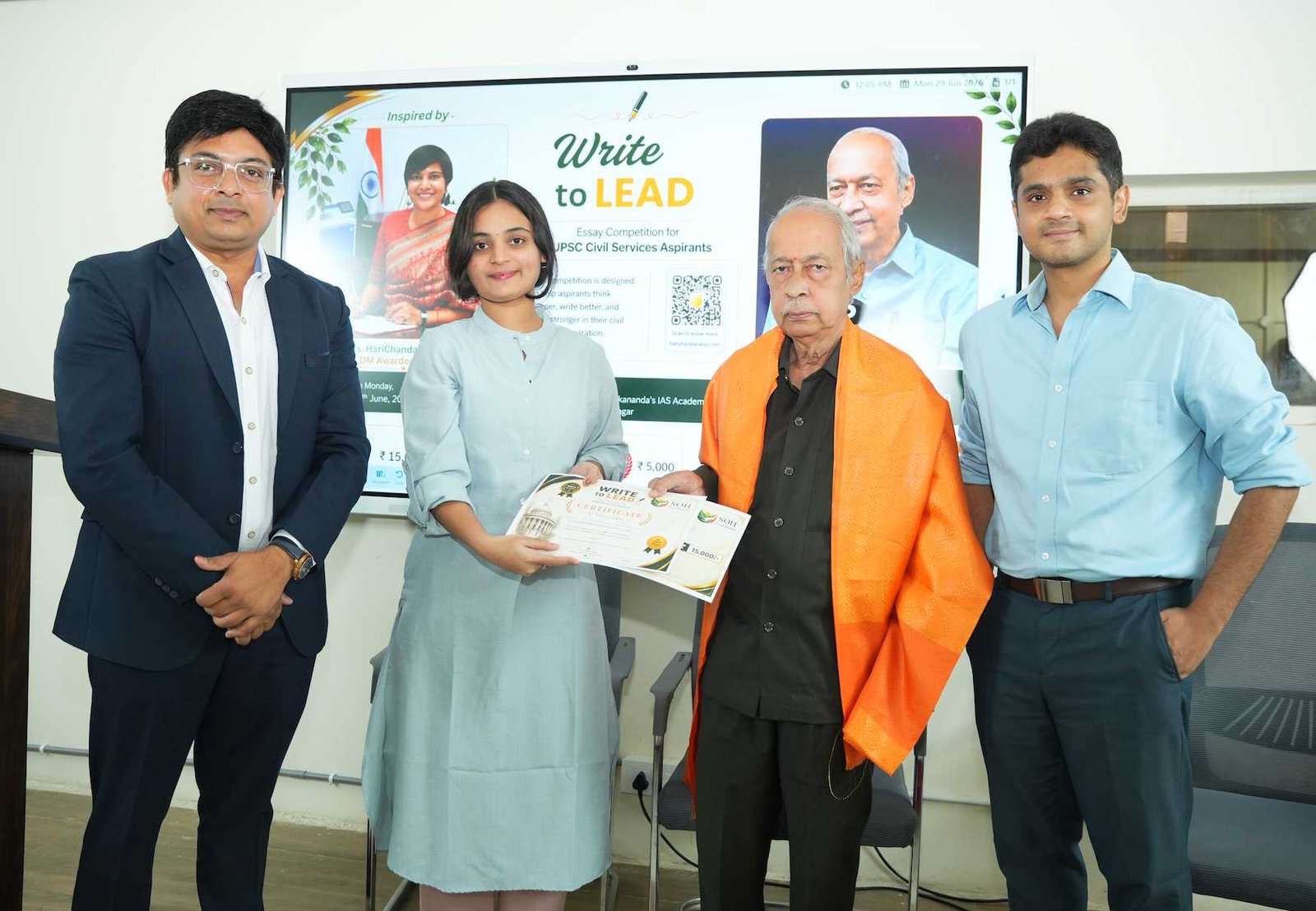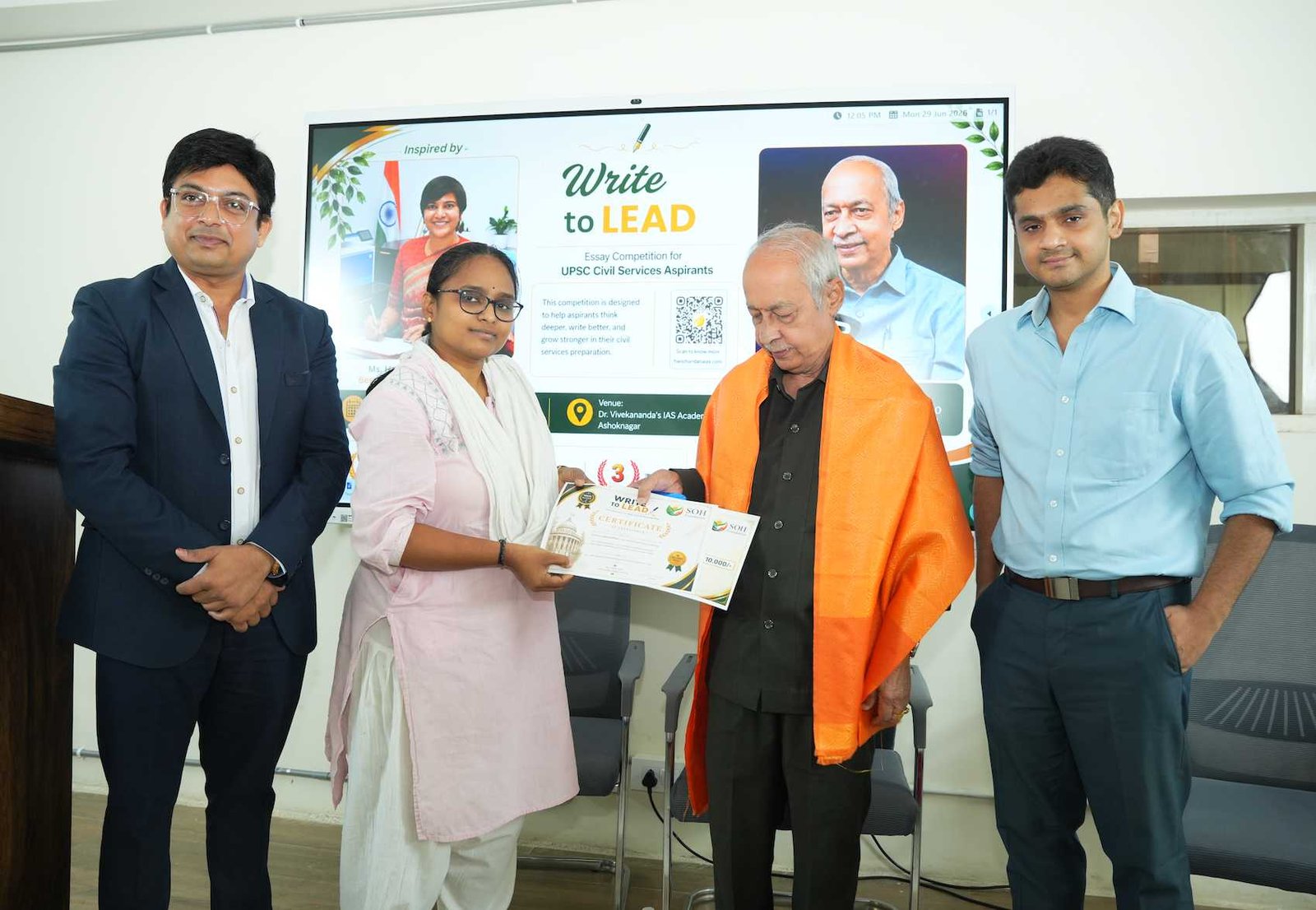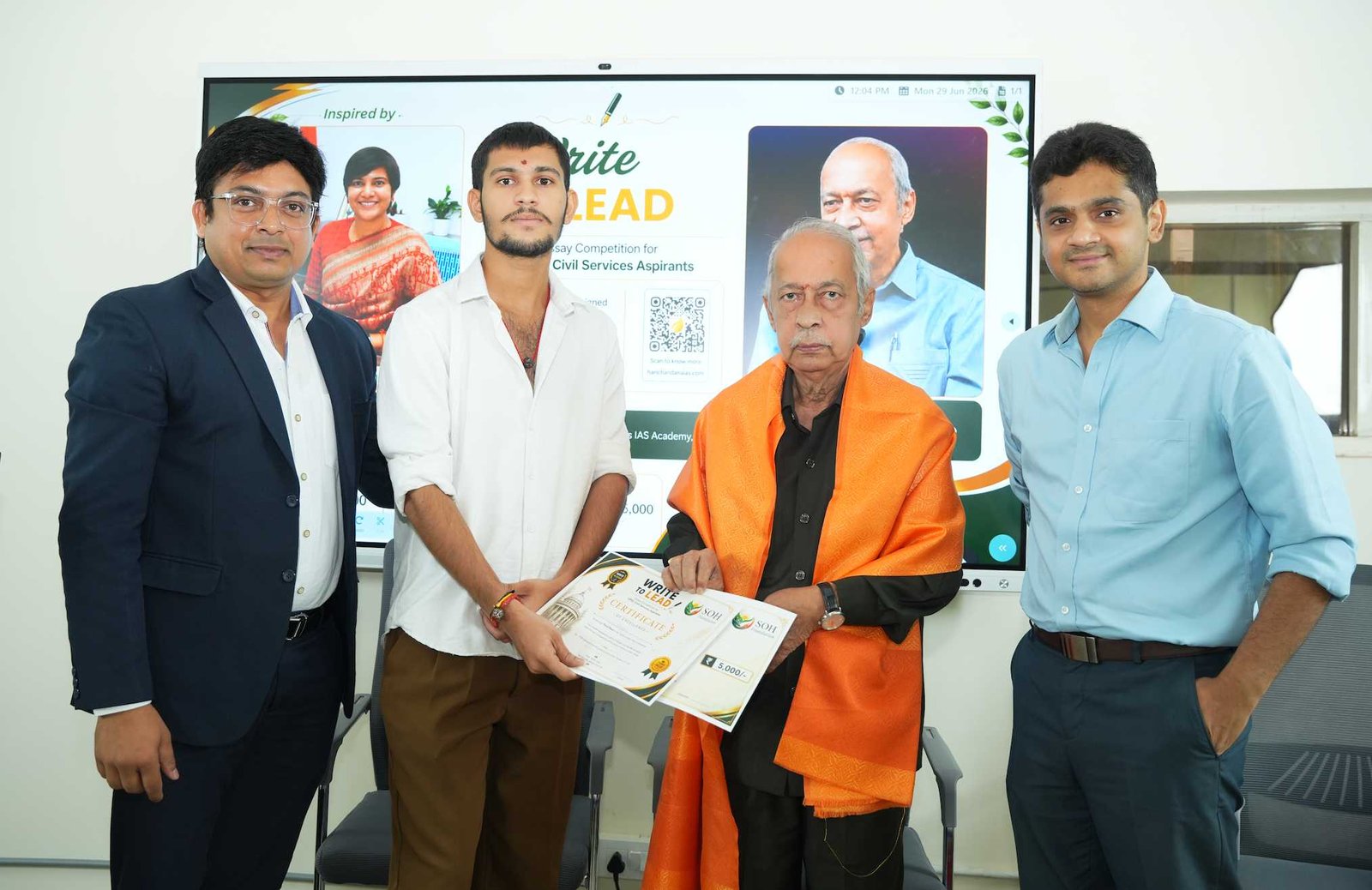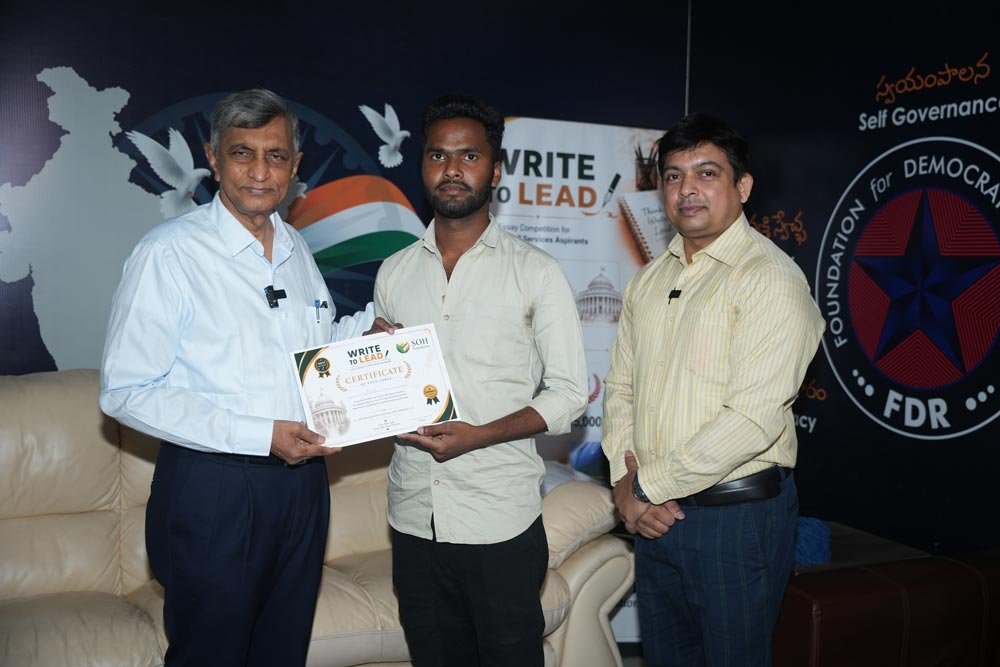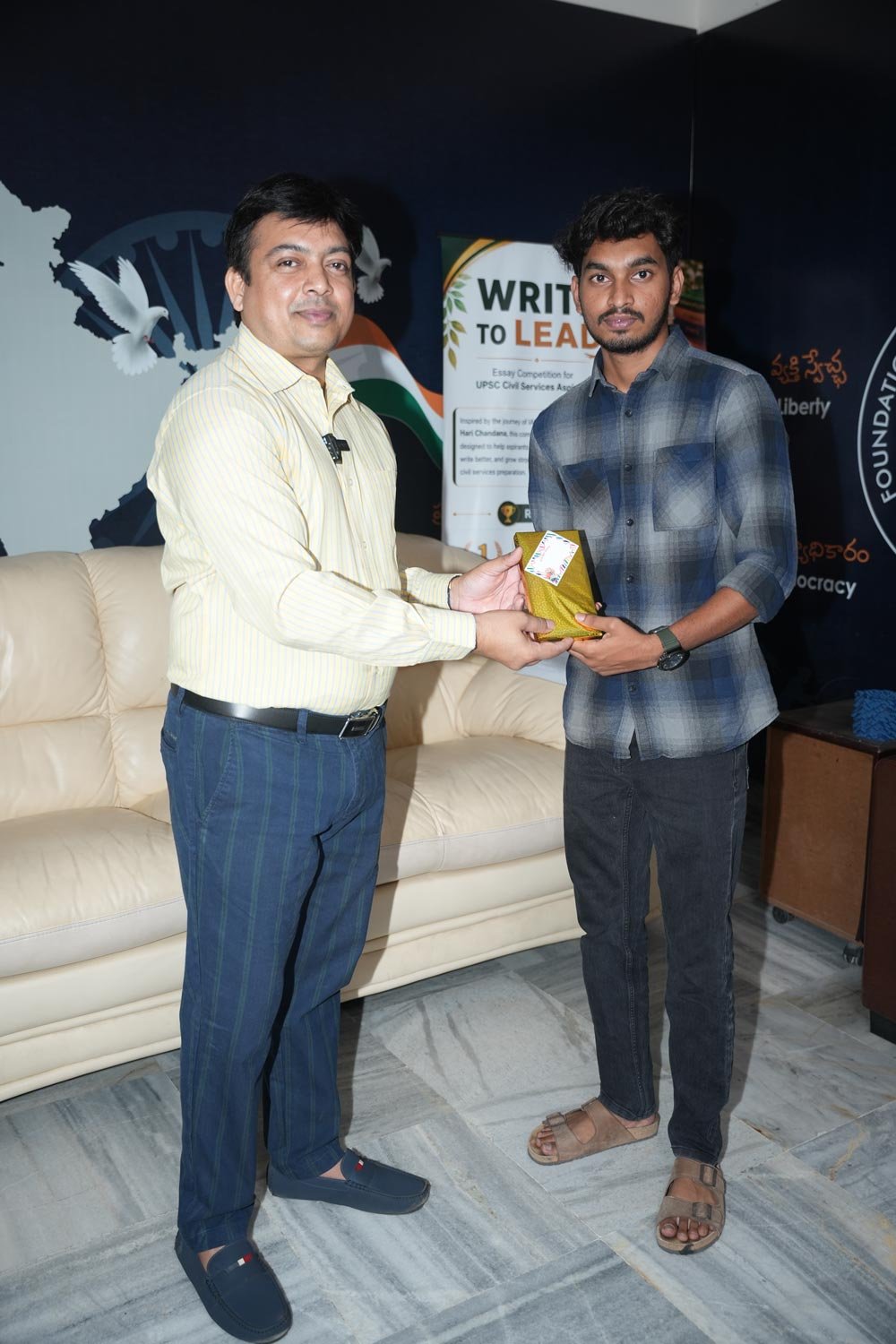

WRITE TO LEAD – Topic 1
Essay Topic:
Samatha Kitchen: A Step Towards Inclusive and Dignified Public Service
Samatha Kitchen at the Hyderabad Collector’s Office reflects inclusive governance—providing affordable food while empowering women, differently abled individuals, and transgender communities. Discuss how such initiatives promote dignity, livelihoods, and social equity, and their role in shaping compassionate, people-centric administration, moreso when introduced in public spaces of administration centres.
List of Essay Entries Received
Jathin
ot****@gmail.com
02 May 2026
Samatha Kitchen is an example of how a simple idea can become a good way to run things. Dasari Harichandana Madam started this project with help from Nirmaan Organization. The project helps people in ways. It makes sure everyone is included people can make a living and citizens get services. It does all this without needing a lot of money or big changes in rules.
The good thing about this model is that it is easy to understand. Every district already has an important things. Government office space, people visiting these offices and local groups that can help people. By using spaces in government buildings and working with groups that have experience governments can start similar kitchens without spending too much money.
The model is also good with money. At first the government just needs to provide a space some things and help get everything started. After that the kitchen can run on its own because people use it every day. This means the government does not have to spend a lot of money over time.
What makes Samatha Kitchen really special is that it helps with things at the same time. It helps transgender people empowers women includes people who're different teaches new skills and makes public services better. It does all this in a way that's easy to see and practical.
It is also easy for governments to make this model a part of how they work. They just need to follow some steps: give some space in government buildings work with a good group teach people who are marginalized how to serve food and make sure everything is clean and affordable. If they make a small changes, for their local area they can start a similar project.
The important thing is that Samatha Kitchen shows that new ways of running things do not always need big changes. By using what we already have and caring about people we can make a difference. It shows how small projects can make running things fair, helpful and kind to citizens. Samatha Kitchen is an example of this.
The good thing about this model is that it is easy to understand. Every district already has an important things. Government office space, people visiting these offices and local groups that can help people. By using spaces in government buildings and working with groups that have experience governments can start similar kitchens without spending too much money.
The model is also good with money. At first the government just needs to provide a space some things and help get everything started. After that the kitchen can run on its own because people use it every day. This means the government does not have to spend a lot of money over time.
What makes Samatha Kitchen really special is that it helps with things at the same time. It helps transgender people empowers women includes people who're different teaches new skills and makes public services better. It does all this in a way that's easy to see and practical.
It is also easy for governments to make this model a part of how they work. They just need to follow some steps: give some space in government buildings work with a good group teach people who are marginalized how to serve food and make sure everything is clean and affordable. If they make a small changes, for their local area they can start a similar project.
The important thing is that Samatha Kitchen shows that new ways of running things do not always need big changes. By using what we already have and caring about people we can make a difference. It shows how small projects can make running things fair, helpful and kind to citizens. Samatha Kitchen is an example of this.
Shiva Chowdary
sh****@gmail.com
02 May 2026
When you walk into the Hyderabad District Collectorate you see the Samatha Kitchen. At first it looks like a food counter.. It is actually a lot more than that. The Samatha Kitchen is trying to show us what it means to have a government that really cares about people.
It is in a place where you would normally expect to see a lot of bureaucracy and official things.. The Samatha Kitchen is different. It is warm and welcoming. It is a place where everyone is treated with dignity.
The Samatha Kitchen was started by Dasari Harichandana and the Nirmaan Organization. They did not just want to provide food to people who come to the Collectorate. They wanted to create a place where the government could really help people. They wanted to show that the government can be caring and responsible.
One of the things about the Samatha Kitchen is the team that runs it. The team includes people who are often left out of jobs. There are transgender people, a woman and a person with a disability. They are all working together to make the Samatha Kitchen a success.
When people come to the Collectorate they interact with the team in a natural way. This helps to break down barriers. It shows that everyone is equal and deserves to be treated with respect.
For transgender people it is often very hard to find a job. Even though they are legally recognized they still face a lot of discrimination. The Samatha Kitchen is trying to change this. It provides an stable place for transgender people to work. They are not just given help. They are given jobs and responsibilities.
The idea for the Samatha Kitchen came from a project called "Hope in a Cup". This project was started by the Nirmaan Organization to help transgender people find jobs in cafes and community spaces. Dasari Harichandana liked this idea. Wanted to bring it to the government.
With the help of some entrepreneurs and public leaders the Samatha Kitchen became a reality. It is now a symbol of what it means to have a government that really cares about people.
The Samatha Kitchen is inside the Collectorate. This is important because government offices can often seem impersonal. The Samatha Kitchen is trying to change this. It is creating an welcoming space where people can come and feel comfortable.
This may seem like a thing but it can make a big difference. It can change the way people feel about the government and public institutions.
The Samatha Kitchen is also helping people in ways. Many people have to spend hours waiting in line or filling out forms. The Samatha Kitchen provides them with affordable food. This may seem like a thing but it can make a big difference.
It shows that the government is paying attention to the needs of people. It is not just focused on policies. It is also focused on the things that can make a big difference in peoples lives.
The Samatha Kitchen is also challenging stereotypes. When people interact with transgender staff in an environment they start to see them in a different way. They start to realize that everyone is equal and deserves to be treated with respect.
This is not just happening through speeches or campaigns. It is happening through interactions. The Samatha Kitchen is showing that inclusion can be a part of life.
The Samatha Kitchen is also an example of what can happen when the government and civil society work together. The administration worked with community organizations and social entrepreneurs to build a model.
This partnership shows that the government can be stronger when it works with society to solve challenges. It is not about the government doing things on its own. It is about the government working with people to create change.
Today the Samatha Kitchen is a symbol of a government that really cares about people. It shows that even small initiatives can make a difference when they are designed with dignity, accessibility and inclusion, in mind.
The success of the Samatha Kitchen has inspired people to think about expanding kitchens across Telangana. It shows that compassionate governance can inspire institutional change.
The Samatha Kitchen reminds us that government buildings do not have to be cold and impersonal. They can be places where people feel respected welcomed and seen. This is the spirit of democratic public service. The Samatha Kitchen is an example of what this can look like in real life.
It is in a place where you would normally expect to see a lot of bureaucracy and official things.. The Samatha Kitchen is different. It is warm and welcoming. It is a place where everyone is treated with dignity.
The Samatha Kitchen was started by Dasari Harichandana and the Nirmaan Organization. They did not just want to provide food to people who come to the Collectorate. They wanted to create a place where the government could really help people. They wanted to show that the government can be caring and responsible.
One of the things about the Samatha Kitchen is the team that runs it. The team includes people who are often left out of jobs. There are transgender people, a woman and a person with a disability. They are all working together to make the Samatha Kitchen a success.
When people come to the Collectorate they interact with the team in a natural way. This helps to break down barriers. It shows that everyone is equal and deserves to be treated with respect.
For transgender people it is often very hard to find a job. Even though they are legally recognized they still face a lot of discrimination. The Samatha Kitchen is trying to change this. It provides an stable place for transgender people to work. They are not just given help. They are given jobs and responsibilities.
The idea for the Samatha Kitchen came from a project called "Hope in a Cup". This project was started by the Nirmaan Organization to help transgender people find jobs in cafes and community spaces. Dasari Harichandana liked this idea. Wanted to bring it to the government.
With the help of some entrepreneurs and public leaders the Samatha Kitchen became a reality. It is now a symbol of what it means to have a government that really cares about people.
The Samatha Kitchen is inside the Collectorate. This is important because government offices can often seem impersonal. The Samatha Kitchen is trying to change this. It is creating an welcoming space where people can come and feel comfortable.
This may seem like a thing but it can make a big difference. It can change the way people feel about the government and public institutions.
The Samatha Kitchen is also helping people in ways. Many people have to spend hours waiting in line or filling out forms. The Samatha Kitchen provides them with affordable food. This may seem like a thing but it can make a big difference.
It shows that the government is paying attention to the needs of people. It is not just focused on policies. It is also focused on the things that can make a big difference in peoples lives.
The Samatha Kitchen is also challenging stereotypes. When people interact with transgender staff in an environment they start to see them in a different way. They start to realize that everyone is equal and deserves to be treated with respect.
This is not just happening through speeches or campaigns. It is happening through interactions. The Samatha Kitchen is showing that inclusion can be a part of life.
The Samatha Kitchen is also an example of what can happen when the government and civil society work together. The administration worked with community organizations and social entrepreneurs to build a model.
This partnership shows that the government can be stronger when it works with society to solve challenges. It is not about the government doing things on its own. It is about the government working with people to create change.
Today the Samatha Kitchen is a symbol of a government that really cares about people. It shows that even small initiatives can make a difference when they are designed with dignity, accessibility and inclusion, in mind.
The success of the Samatha Kitchen has inspired people to think about expanding kitchens across Telangana. It shows that compassionate governance can inspire institutional change.
The Samatha Kitchen reminds us that government buildings do not have to be cold and impersonal. They can be places where people feel respected welcomed and seen. This is the spirit of democratic public service. The Samatha Kitchen is an example of what this can look like in real life.
Venkat naidu
Ve****@gmail.com
02 May 2026
Inside the corridors of the Hyderabad District Collectorate Samatha Kitchen seems like just another small food counter.. When people step closer they realize it is more than just tea and meals. It represents a way of thinking about governance that focuses on dignity, inclusion and humanity.
The initiative was thought of by Dasari Harichandana with help from Nirmaan Organization. Of just doing administrative work the idea behind Samatha Kitchen is to create a public space that feels welcoming, supportive and meaningful. In a place usually associated with files and formal procedures the kitchen brings warmth and human connection.
What makes Samatha Kitchen special is the people behind the counter. The staff includes transgender individuals, a woman and an employee with a disability. This makes the initiative an example of inclusion. Their presence is not for show; it is real participation in public life. Every interaction between citizens and staff challenges stereotypes and normalizes inclusion.
Government programs often talk about empowerment. Samatha Kitchen shows what it means in reality. The people working there are not just receiving charity. They are earning a living developing skills. Gaining independence with dignity. The initiative creates an environment where marginalized individuals are treated with trust, responsibility and respect not sympathy.
The idea for the project came from Nirmaans "Hope in a Cup" cafes, which helped transgender individuals. Harichandana used this idea to bring an approach to the Collectorate. With support from entrepreneur Mayur Patnala and encouragement from representatives like Ponnam Prabhakar the concept became a practical model of inclusive governance.
The kitchens location is significant. Government offices are often seen as distant and intimidating. Samatha Kitchen changes that. It creates a space where people can eat comfortably and interact naturally with individuals from communities that society has pushed aside. These daily interactions break down prejudice effectively than slogans or awareness campaigns.
The kitchen also addresses a need. Visitors to government offices often struggle to find affordable food. Samatha Kitchen provides meals and refreshments at reasonable prices. This improves the experience of citizens visiting the Collectorate. It reminds people that governance is not about policy. It is also about care, comfort and accessibility.
The initiative also focuses on sustainability. The workers receive an income, training and long-term exposure. For communities that face unemployment and exclusion these opportunities can be life-changing.
The success of Samatha Kitchen has inspired discussions about expanding models across Telangana. This shows that inclusive governance does not require large-scale reforms or massive investments. Small but thoughtful interventions can transform institutions into more humane spaces.
Samatha Kitchen is more than a canteen. It is a reminder that governance's meaningful when it recognizes the experiences of ordinary people. By combining public service with inclusion and dignity the initiative shows how government spaces can evolve into spaces of belonging and social change.
Every cup of tea served carries a message: true governance is not about managing systems. It is, about valuing people.
The initiative was thought of by Dasari Harichandana with help from Nirmaan Organization. Of just doing administrative work the idea behind Samatha Kitchen is to create a public space that feels welcoming, supportive and meaningful. In a place usually associated with files and formal procedures the kitchen brings warmth and human connection.
What makes Samatha Kitchen special is the people behind the counter. The staff includes transgender individuals, a woman and an employee with a disability. This makes the initiative an example of inclusion. Their presence is not for show; it is real participation in public life. Every interaction between citizens and staff challenges stereotypes and normalizes inclusion.
Government programs often talk about empowerment. Samatha Kitchen shows what it means in reality. The people working there are not just receiving charity. They are earning a living developing skills. Gaining independence with dignity. The initiative creates an environment where marginalized individuals are treated with trust, responsibility and respect not sympathy.
The idea for the project came from Nirmaans "Hope in a Cup" cafes, which helped transgender individuals. Harichandana used this idea to bring an approach to the Collectorate. With support from entrepreneur Mayur Patnala and encouragement from representatives like Ponnam Prabhakar the concept became a practical model of inclusive governance.
The kitchens location is significant. Government offices are often seen as distant and intimidating. Samatha Kitchen changes that. It creates a space where people can eat comfortably and interact naturally with individuals from communities that society has pushed aside. These daily interactions break down prejudice effectively than slogans or awareness campaigns.
The kitchen also addresses a need. Visitors to government offices often struggle to find affordable food. Samatha Kitchen provides meals and refreshments at reasonable prices. This improves the experience of citizens visiting the Collectorate. It reminds people that governance is not about policy. It is also about care, comfort and accessibility.
The initiative also focuses on sustainability. The workers receive an income, training and long-term exposure. For communities that face unemployment and exclusion these opportunities can be life-changing.
The success of Samatha Kitchen has inspired discussions about expanding models across Telangana. This shows that inclusive governance does not require large-scale reforms or massive investments. Small but thoughtful interventions can transform institutions into more humane spaces.
Samatha Kitchen is more than a canteen. It is a reminder that governance's meaningful when it recognizes the experiences of ordinary people. By combining public service with inclusion and dignity the initiative shows how government spaces can evolve into spaces of belonging and social change.
Every cup of tea served carries a message: true governance is not about managing systems. It is, about valuing people.
Sri Ram
d.****@gmail.com
02 May 2026
The Samatha Kitchen at the Hyderabad District Collectorate is an example of what happens when the people are the focus. Dasari Harichandana madam thought this up. Supported by the Nirmaan Organization. The main idea here is that the government should be efficient but kind and considerate to the people.
Government offices can be really frustrating. People often have to wait in line for a time and the spaces are crowded. Thousands of people travel from away to visit these offices but they do not even have basic things like clean and affordable food. The Samatha Kitchen is trying to fix this problem in a way. By providing food and drinks inside the Collectorate it makes the visitors feel cared for.
This is more than a place to eat. It shows that the government understands what people need every day. When the government cares about peoples comfort and dignity it is a thing. The Samatha Kitchen is helping to make the government space feel more welcoming and friendly.
One of the things about the Samatha Kitchen is that it includes everyone. They have hired transgender people, women and people with disabilities to work there. This helps to break down barriers and makes people more accepting. It is not about giving people jobs but also about making them feel like they are part of the community.
The community is also involved in the Samatha Kitchen. It was not the government that made this happen but also civil society organizations. This shows that when the government works with the people it can make a difference. It is a way of thinking about how the government should work, where they are partners with the community not just telling them what to do.
The Samatha Kitchen has also changed the way the Collectorate feels. Usually government offices feel strict and scary.. Now it feels more welcoming and friendly. People who visit the Collectorate do not just feel like they are doing paperwork they also feel like they are being taken care of. This can help people trust the government more.
The important thing about the Samatha Kitchen is that it shows we do not need a lot of money or big changes to make a difference. Sometimes small things can make an impact. By using the space they already have and focusing on what people need the Samatha Kitchen is showing that the government can be more considerate of the people.
The Samatha Kitchen is what the government should be, like. It is kind, inclusive and considerate. It makes the Collectorate feel like a place where people are valued and cared for. The Samatha Kitchen is an example of what happens when the government puts people first. The Samatha Kitchen is a place where people feel respected and cared for. The Samatha Kitchen is an example of how the government can be more people-friendly.
Government offices can be really frustrating. People often have to wait in line for a time and the spaces are crowded. Thousands of people travel from away to visit these offices but they do not even have basic things like clean and affordable food. The Samatha Kitchen is trying to fix this problem in a way. By providing food and drinks inside the Collectorate it makes the visitors feel cared for.
This is more than a place to eat. It shows that the government understands what people need every day. When the government cares about peoples comfort and dignity it is a thing. The Samatha Kitchen is helping to make the government space feel more welcoming and friendly.
One of the things about the Samatha Kitchen is that it includes everyone. They have hired transgender people, women and people with disabilities to work there. This helps to break down barriers and makes people more accepting. It is not about giving people jobs but also about making them feel like they are part of the community.
The community is also involved in the Samatha Kitchen. It was not the government that made this happen but also civil society organizations. This shows that when the government works with the people it can make a difference. It is a way of thinking about how the government should work, where they are partners with the community not just telling them what to do.
The Samatha Kitchen has also changed the way the Collectorate feels. Usually government offices feel strict and scary.. Now it feels more welcoming and friendly. People who visit the Collectorate do not just feel like they are doing paperwork they also feel like they are being taken care of. This can help people trust the government more.
The important thing about the Samatha Kitchen is that it shows we do not need a lot of money or big changes to make a difference. Sometimes small things can make an impact. By using the space they already have and focusing on what people need the Samatha Kitchen is showing that the government can be more considerate of the people.
The Samatha Kitchen is what the government should be, like. It is kind, inclusive and considerate. It makes the Collectorate feel like a place where people are valued and cared for. The Samatha Kitchen is an example of what happens when the government puts people first. The Samatha Kitchen is a place where people feel respected and cared for. The Samatha Kitchen is an example of how the government can be more people-friendly.
Vanteru Sidda
si****@gmail.com
02 May 2026
Tucked away in a corner of the Hyderabad District Collectorate the Samatha Kitchen is easy to miss. At first it looks like any government canteen. A small counter, a few steel vessels and people stopping by for a quick cup of tea or lunch before rushing back to work.. If you spend a little time there you start to notice something special. The Samatha Kitchen is not a place to grab a bite it is a great example of how the government can really help people.
The idea for the Samatha Kitchen came about when IAS officer Dasari Harichandana was working with the Nirmaan Organization. They wanted to do something that would really make a difference in peoples lives, not just talk about it. They had a powerful goal: to turn a regular public space into a place where people could find dignity get a job and feel included.
What makes the Samatha Kitchen so special is the people who work there. The people in charge are transgender individuals, women and people with disabilities. Groups that are often pushed to the side and do not get opportunities.. Here they are not treated like charity cases. They are professionals who run the kitchen with confidence and pride. The kitchen quietly challenges the social rules that keep marginalized communities separate.
Government offices in India can be frustrating. Long lines, waiting rooms and a feeling of being far away from the people who work there. The Samatha Kitchen changes that in a way. In the middle of a government building people can get a nutritious meal at a price they can afford and it is served with kindness and respect. When you walk into the collectorate to do some official work you are suddenly faced with something very human. A meal served with care at a price that is fair in a place where everyone is included.
The Samatha Kitchen got its start from the "Hope in a Cup" cafes, which were started by the Nirmaan Organization. At these cafes transgender people would. Sell tea and they would get a job and gain confidence. Dasari Harichandana liked this idea. Wanted to bring it to a government space. With the help of entrepreneur Mayur Patnala and public officials like Ponnam Prabhakar, the Samatha Kitchen became a reality.
The location of the kitchen is a statement. Most marginalized communities are not visible. Do not get to participate in public life. The Samatha Kitchen puts them in the middle of the government. People who visit the interact with them every day. They talk, buy meals and drink tea together. These everyday interactions help break down prejudices in a way that official announcements and awareness campaigns cannot. Inclusion is not an idea here. It is something that people practice every day.
The initiative has also made a difference in the lives of the people who work there. They get a salary, regular working hours, training and respect. They are not invisible anymore. They stand tall in an institution and people recognize their skills and hard work. Being seen and respected means a lot to them.
At the time the Samatha Kitchen has become important for the people who visit the collectorate. Government offices can be tiring. Long waits, stress and exhaustion. Having access to affordable food is a big comfort. What seems like a meal service becomes a small but meaningful act of kindness.
The government and the Nirmaan Organization are so happy with how the Samatha Kitchen's doing that they want to open similar kitchens in other districts in Telangana. If they can make it work the Samatha Kitchen could become a model for governance, where the government creates opportunities for people who have been left behind.
In the end the Samatha Kitchen is more than a place to eat or work. It shows that good governance is not about big speeches or expensive plans. Sometimes it is the things. Like a steel plate of affordable food served with dignity by people who were once ignored. By bringing marginalized communities into the center of life the Samatha Kitchen turns a regular government building into a place of equality, empathy and hope.
That is what good governance is all, about. Not running systems but making sure every person feels seen, respected and included. Every meal served at the Samatha Kitchen sends a message: the government belongs to everyone.
The idea for the Samatha Kitchen came about when IAS officer Dasari Harichandana was working with the Nirmaan Organization. They wanted to do something that would really make a difference in peoples lives, not just talk about it. They had a powerful goal: to turn a regular public space into a place where people could find dignity get a job and feel included.
What makes the Samatha Kitchen so special is the people who work there. The people in charge are transgender individuals, women and people with disabilities. Groups that are often pushed to the side and do not get opportunities.. Here they are not treated like charity cases. They are professionals who run the kitchen with confidence and pride. The kitchen quietly challenges the social rules that keep marginalized communities separate.
Government offices in India can be frustrating. Long lines, waiting rooms and a feeling of being far away from the people who work there. The Samatha Kitchen changes that in a way. In the middle of a government building people can get a nutritious meal at a price they can afford and it is served with kindness and respect. When you walk into the collectorate to do some official work you are suddenly faced with something very human. A meal served with care at a price that is fair in a place where everyone is included.
The Samatha Kitchen got its start from the "Hope in a Cup" cafes, which were started by the Nirmaan Organization. At these cafes transgender people would. Sell tea and they would get a job and gain confidence. Dasari Harichandana liked this idea. Wanted to bring it to a government space. With the help of entrepreneur Mayur Patnala and public officials like Ponnam Prabhakar, the Samatha Kitchen became a reality.
The location of the kitchen is a statement. Most marginalized communities are not visible. Do not get to participate in public life. The Samatha Kitchen puts them in the middle of the government. People who visit the interact with them every day. They talk, buy meals and drink tea together. These everyday interactions help break down prejudices in a way that official announcements and awareness campaigns cannot. Inclusion is not an idea here. It is something that people practice every day.
The initiative has also made a difference in the lives of the people who work there. They get a salary, regular working hours, training and respect. They are not invisible anymore. They stand tall in an institution and people recognize their skills and hard work. Being seen and respected means a lot to them.
At the time the Samatha Kitchen has become important for the people who visit the collectorate. Government offices can be tiring. Long waits, stress and exhaustion. Having access to affordable food is a big comfort. What seems like a meal service becomes a small but meaningful act of kindness.
The government and the Nirmaan Organization are so happy with how the Samatha Kitchen's doing that they want to open similar kitchens in other districts in Telangana. If they can make it work the Samatha Kitchen could become a model for governance, where the government creates opportunities for people who have been left behind.
In the end the Samatha Kitchen is more than a place to eat or work. It shows that good governance is not about big speeches or expensive plans. Sometimes it is the things. Like a steel plate of affordable food served with dignity by people who were once ignored. By bringing marginalized communities into the center of life the Samatha Kitchen turns a regular government building into a place of equality, empathy and hope.
That is what good governance is all, about. Not running systems but making sure every person feels seen, respected and included. Every meal served at the Samatha Kitchen sends a message: the government belongs to everyone.
Prakash
pr****@gmail.com
02 May 2026
Samatha Kitchen at the Hyderabad District Collectorate is an example of how administrative leadership can make a real difference in peoples lives. It's not about routine governance but about creating meaningful social change.
The initiative was started by IAS officer Hari Chandana Dasari with help from the Nirmaan Organization. It shows how public administration can be a tool for inclusion, dignity and community empowerment.
Usually administrative leadership is about implementing policies maintaining law and order and managing government systems.. Samatha Kitchen shows that there's more to leadership than that. It's about using existing structures to solve social problems.
The administration didn't wait for laws or policy changes. They transformed a government space into a platform for inclusion and opportunity.
What makes Samatha Kitchen special is how leadership was put into action. Of just talking about inclusion the administration gave real responsibilities to marginalized individuals. They included a transgender person, a woman and a abled individual in the initiative.
This shows a leadership style thats based on trust, participation and empowerment not welfare.
The initiative also highlights the importance of working with organizations. By partnering with groups like Nirmaan Organization the administration showed that effective governance isn't isolated from society.
Meaningful public leadership often emerges when government institutions work with organizations to create sustainable solutions.
Samatha Kitchen changed the way people see spaces. District Collectorates are usually administrative centers.. By establishing an inclusive community kitchen the administration changed the emotional character of the institution.
The Collectorate became not a center of governance but also a visible space of equality, accessibility and social participation.
Another remarkable thing about Samatha Kitchen is its long-term vision. Of offering temporary help it focuses on empowerment through employment skill development and dignified work.
Employees are not just beneficiaries; they are participants responsible for managing operations interacting with the public and building professional experience.
The initiative sends a message to the broader administrative system. It shows that bureaucracy can be progressive, humane and innovative. Small changes within government institutions can create effects across departments, public discourse and governance culture.
Samatha Kitchen is an example for administrators. It proves that inclusion can be practically integrated into governance.
The participation of representatives like Ponnam Prabhakar during the launch emphasizes how localized initiatives can inspire larger policy conversations and wider public awareness.
It reflects how empathetic leadership at the district level can influence broader governance thinking.
At its core Samatha Kitchen represents leadership thats rooted in humanity. It combines service with social justice creating a model where governance is not limited to administration alone but also becomes a tool for restoring dignity and opportunity to marginalized communities.
Ultimately Samatha Kitchen shows that true administrative leadership is not about efficiency or control. It's about creating systems that improve lives.
By turning a kitchen into a space of empowerment and equality the initiative demonstrates how compassionate governance can quietly transform society from, within.
Samatha Kitchen and its leadership are making a difference. Samatha Kitchen is a shining example of what can be achieved through inclusive governance.
Samatha Kitchens impact will be felt for a time.
The initiative was started by IAS officer Hari Chandana Dasari with help from the Nirmaan Organization. It shows how public administration can be a tool for inclusion, dignity and community empowerment.
Usually administrative leadership is about implementing policies maintaining law and order and managing government systems.. Samatha Kitchen shows that there's more to leadership than that. It's about using existing structures to solve social problems.
The administration didn't wait for laws or policy changes. They transformed a government space into a platform for inclusion and opportunity.
What makes Samatha Kitchen special is how leadership was put into action. Of just talking about inclusion the administration gave real responsibilities to marginalized individuals. They included a transgender person, a woman and a abled individual in the initiative.
This shows a leadership style thats based on trust, participation and empowerment not welfare.
The initiative also highlights the importance of working with organizations. By partnering with groups like Nirmaan Organization the administration showed that effective governance isn't isolated from society.
Meaningful public leadership often emerges when government institutions work with organizations to create sustainable solutions.
Samatha Kitchen changed the way people see spaces. District Collectorates are usually administrative centers.. By establishing an inclusive community kitchen the administration changed the emotional character of the institution.
The Collectorate became not a center of governance but also a visible space of equality, accessibility and social participation.
Another remarkable thing about Samatha Kitchen is its long-term vision. Of offering temporary help it focuses on empowerment through employment skill development and dignified work.
Employees are not just beneficiaries; they are participants responsible for managing operations interacting with the public and building professional experience.
The initiative sends a message to the broader administrative system. It shows that bureaucracy can be progressive, humane and innovative. Small changes within government institutions can create effects across departments, public discourse and governance culture.
Samatha Kitchen is an example for administrators. It proves that inclusion can be practically integrated into governance.
The participation of representatives like Ponnam Prabhakar during the launch emphasizes how localized initiatives can inspire larger policy conversations and wider public awareness.
It reflects how empathetic leadership at the district level can influence broader governance thinking.
At its core Samatha Kitchen represents leadership thats rooted in humanity. It combines service with social justice creating a model where governance is not limited to administration alone but also becomes a tool for restoring dignity and opportunity to marginalized communities.
Ultimately Samatha Kitchen shows that true administrative leadership is not about efficiency or control. It's about creating systems that improve lives.
By turning a kitchen into a space of empowerment and equality the initiative demonstrates how compassionate governance can quietly transform society from, within.
Samatha Kitchen and its leadership are making a difference. Samatha Kitchen is a shining example of what can be achieved through inclusive governance.
Samatha Kitchens impact will be felt for a time.
Nani
sh****@gmail.com
02 May 2026
Samatha Kitchen is an example of how to help people earn a living and learn new skills. It's part of the administration in Hyderabad led by IAS officer Hari Chandana Dasari with help from Nirmaan Organization. This kitchen is more than a place to serve food. It's a platform that gives marginalized communities like transgender people, women and those with disabilities a chance to work with dignity and respect.
These communities often face challenges in finding formal jobs because of social discrimination.. Samatha Kitchen offers them a chance to work in a respected government institution. This is very important because it recognizes their contributions as valuable and professional.
The work at Samatha Kitchen is not about cooking and serving food. Employees learn skills like customer service, food preparation and teamwork. They also learn how to handle cash manage inventory and do administration tasks. These are real-world skills that can boost their confidence and make them more employable.
One of the things about Samatha Kitchen is that it focuses on learning through experience. Employees learn skills every day while working. They pick up techniques, food safety practices and communication skills. These skills can help them find jobs or even start their own businesses.
The fact that Samatha Kitchen is located in a government institution makes it even stronger. Employees get to interact with government officials, employees and the public. This helps them improve their communication skills and build confidence.
The livelihood aspect of Samatha Kitchen is also crucial. A stable income gives employees security and independence. For transgender individuals this can be especially life-changing. They often face exclusion and stigma. Samatha Kitchen offers them a chance to earn a living with dignity.
Whats great about this model is that it combines livelihood and public service. Visitors get hygienic food while employees gain work experience and economic stability. This creates a win-win situation where everyone benefits.
This initiative shows that impactful skill development doesn't require a lot of resources. Even a small community kitchen can make a difference with the right vision and support. Samatha Kitchen generates employment builds confidence and promotes inclusion.
From a perspective Samatha Kitchen shows how public administration can promote inclusive workforce participation. It proves that government institutions can do more than just make policies. They can create environments where marginalized communities can gain experience and become part of the mainstream economy.
Samatha Kitchen is not about serving food. It's about serving opportunity, dignity, confidence and hope. It turns a kitchen into a pathway, toward inclusion and self-reliance. It shows that meaningful social change can start with creating spaces where people are trusted, empowered and given the chance to grow.
These communities often face challenges in finding formal jobs because of social discrimination.. Samatha Kitchen offers them a chance to work in a respected government institution. This is very important because it recognizes their contributions as valuable and professional.
The work at Samatha Kitchen is not about cooking and serving food. Employees learn skills like customer service, food preparation and teamwork. They also learn how to handle cash manage inventory and do administration tasks. These are real-world skills that can boost their confidence and make them more employable.
One of the things about Samatha Kitchen is that it focuses on learning through experience. Employees learn skills every day while working. They pick up techniques, food safety practices and communication skills. These skills can help them find jobs or even start their own businesses.
The fact that Samatha Kitchen is located in a government institution makes it even stronger. Employees get to interact with government officials, employees and the public. This helps them improve their communication skills and build confidence.
The livelihood aspect of Samatha Kitchen is also crucial. A stable income gives employees security and independence. For transgender individuals this can be especially life-changing. They often face exclusion and stigma. Samatha Kitchen offers them a chance to earn a living with dignity.
Whats great about this model is that it combines livelihood and public service. Visitors get hygienic food while employees gain work experience and economic stability. This creates a win-win situation where everyone benefits.
This initiative shows that impactful skill development doesn't require a lot of resources. Even a small community kitchen can make a difference with the right vision and support. Samatha Kitchen generates employment builds confidence and promotes inclusion.
From a perspective Samatha Kitchen shows how public administration can promote inclusive workforce participation. It proves that government institutions can do more than just make policies. They can create environments where marginalized communities can gain experience and become part of the mainstream economy.
Samatha Kitchen is not about serving food. It's about serving opportunity, dignity, confidence and hope. It turns a kitchen into a pathway, toward inclusion and self-reliance. It shows that meaningful social change can start with creating spaces where people are trusted, empowered and given the chance to grow.
Sarika
ba****@gmail.com
02 May 2026
Samatha Kitchen is a place where people can learn about change in behavior. This change does not happen because of speeches or campaigns. It happens because of the way people interact with each other every day. Samatha Kitchen is located in the Hyderabad District Collectorate. It was started by IAS officer Hari Chandana Dasari with help from Nirmaan Organization. This place shows how peoples attitudes can change when they see things happening in front of them.
Usually people try to change behavior by telling others what to do. They use posters, workshops and policies to make people aware.. These methods do not always work. They do not change the way people think about things. Samatha Kitchen does things differently. It does not try to teach people about inclusion. Instead it creates a place where people can experience inclusion every day.
When people visit the Collectorate they meet transgender persons, women and people with disabilities. They interact with them in an respectful way. They order tea get snacks and talk to each other. These small interactions are very important. They help people see that everyone is the same. They help people understand that everyone deserves respect.
The power of Samatha Kitchen is in the way it makes people interact with each other. There are no lectures or speeches about equality. People just talk to each other. Become friends. Over time people start to see things in a way. They start to accept others because they see them every day.
When people meet others who're different from them they start to see them in a new way. They do not see them as different or weird. They see them as people. This happens because people get used to seeing them every day. Samatha Kitchen uses this idea to make people more accepting.
The location of Samatha Kitchen is also very important. It is located in a government building. This building represents authority and trust. When people from marginalized communities work there it shows that they are accepted. It shows that they are part of the system.
Samatha Kitchen also changes the way people see communities. Usually people see them as people who need help.. At Samatha Kitchen they are the ones who help others. They provide services. Make people feel welcome. This changes the way people think about them. They start to see them as dignified people.
This idea is similar to community-driven models. These models use interaction to make people change. They show that people can change their behavior when they interact with others in a way. Samatha Kitchen is, like a laboratory where people can learn about inclusion.
Every day Samatha Kitchen creates moments of inclusion. These moments are small. They are very important. They help break down barriers and stereotypes. They help people accept each other. Samatha Kitchen shows that change can happen quietly. It can happen when people share a space and interact with each other in a way. It can happen over a cup of tea and a simple conversation.
Usually people try to change behavior by telling others what to do. They use posters, workshops and policies to make people aware.. These methods do not always work. They do not change the way people think about things. Samatha Kitchen does things differently. It does not try to teach people about inclusion. Instead it creates a place where people can experience inclusion every day.
When people visit the Collectorate they meet transgender persons, women and people with disabilities. They interact with them in an respectful way. They order tea get snacks and talk to each other. These small interactions are very important. They help people see that everyone is the same. They help people understand that everyone deserves respect.
The power of Samatha Kitchen is in the way it makes people interact with each other. There are no lectures or speeches about equality. People just talk to each other. Become friends. Over time people start to see things in a way. They start to accept others because they see them every day.
When people meet others who're different from them they start to see them in a new way. They do not see them as different or weird. They see them as people. This happens because people get used to seeing them every day. Samatha Kitchen uses this idea to make people more accepting.
The location of Samatha Kitchen is also very important. It is located in a government building. This building represents authority and trust. When people from marginalized communities work there it shows that they are accepted. It shows that they are part of the system.
Samatha Kitchen also changes the way people see communities. Usually people see them as people who need help.. At Samatha Kitchen they are the ones who help others. They provide services. Make people feel welcome. This changes the way people think about them. They start to see them as dignified people.
This idea is similar to community-driven models. These models use interaction to make people change. They show that people can change their behavior when they interact with others in a way. Samatha Kitchen is, like a laboratory where people can learn about inclusion.
Every day Samatha Kitchen creates moments of inclusion. These moments are small. They are very important. They help break down barriers and stereotypes. They help people accept each other. Samatha Kitchen shows that change can happen quietly. It can happen when people share a space and interact with each other in a way. It can happen over a cup of tea and a simple conversation.
Ashwini
ba****@gmail.com
02 May 2026
Samatha Kitchen is an interesting idea. It is called "The Symbolism of Space." This kitchen is a place where people can eat and drink tea.. It means something much deeper. It is about making everyone feel included giving people dignity and showing how important public institutions are in our society.
Samatha Kitchen is located inside the Hyderabad District Collectorate. It was started by IAS officer Hari Chandana Dasari with help from Nirmaan Organization. What makes this kitchen special is not just who runs it but where it is. Every place has its feel and meaning. Government offices are usually seen as serious and formal. People go there to do things like fill out forms or complain about something. These places can feel cold and distant.
Samatha Kitchen is different. It is inside the Collectorate, which's a government office. This changes what the Collectorate means. It is not a place where officials work. It is also a place where people can feel welcome and connected. The kitchen helps break down the walls between the government and the people.
The people who work at Samatha Kitchen make it more special. There are transgender people, women and people with disabilities. They work together in a government office. This helps break down barriers that have been around for a long time. Many of these communities were excluded from places.. Samatha Kitchen puts them right in the middle of things.
This is not just talking about inclusion. It is actually doing something about it. The government is saying that these communities are not outsiders. They are a part of our society. They belong here. When people visit the Collectorate they can have tea at Samatha Kitchen. This is a thing but it helps people feel equal.
Samatha Kitchen is also a bridge between the community and the government. It brings people together. What happens in this kitchen is an example of how governance can be humane. It shows that empathy and administration can work together.
In the end Samatha Kitchen shows us that inclusion is not about policies or official statements. It is about the spaces we create. By changing the feel of a government office we can make it more just. This kitchen proves that spaces can communicate values. Inside a government office it sends a message: governance should be for everyone and it should be fair and democratic.
* The kitchen is a place where people can come together
* It breaks down barriers
* It shows that governance can be humane
* It is a bridge, between the community and the government
* It sends a message that everyone is included and equal
Samatha Kitchen is a place but it has a big impact. It changes the way we think about government offices and public spaces. It shows us that even small things can make a difference.
Samatha Kitchen is located inside the Hyderabad District Collectorate. It was started by IAS officer Hari Chandana Dasari with help from Nirmaan Organization. What makes this kitchen special is not just who runs it but where it is. Every place has its feel and meaning. Government offices are usually seen as serious and formal. People go there to do things like fill out forms or complain about something. These places can feel cold and distant.
Samatha Kitchen is different. It is inside the Collectorate, which's a government office. This changes what the Collectorate means. It is not a place where officials work. It is also a place where people can feel welcome and connected. The kitchen helps break down the walls between the government and the people.
The people who work at Samatha Kitchen make it more special. There are transgender people, women and people with disabilities. They work together in a government office. This helps break down barriers that have been around for a long time. Many of these communities were excluded from places.. Samatha Kitchen puts them right in the middle of things.
This is not just talking about inclusion. It is actually doing something about it. The government is saying that these communities are not outsiders. They are a part of our society. They belong here. When people visit the Collectorate they can have tea at Samatha Kitchen. This is a thing but it helps people feel equal.
Samatha Kitchen is also a bridge between the community and the government. It brings people together. What happens in this kitchen is an example of how governance can be humane. It shows that empathy and administration can work together.
In the end Samatha Kitchen shows us that inclusion is not about policies or official statements. It is about the spaces we create. By changing the feel of a government office we can make it more just. This kitchen proves that spaces can communicate values. Inside a government office it sends a message: governance should be for everyone and it should be fair and democratic.
* The kitchen is a place where people can come together
* It breaks down barriers
* It shows that governance can be humane
* It is a bridge, between the community and the government
* It sends a message that everyone is included and equal
Samatha Kitchen is a place but it has a big impact. It changes the way we think about government offices and public spaces. It shows us that even small things can make a difference.
Reshu
re****@gmail.com
02 May 2026
Let's consider the character of Samatha Kitchen from what would turn out to be a equally engrossing angle "The Symbolism of Space".
This is an eatery but symbolizes something much more than that. Samatha Kitchen Located in Hyderabad District Collectorate. This was designed by District Collector Dhasi Harichandana and supported by Nirmaan Organization at certain locations. Placements in Institutes-each of these has very different energies altogether.
The government offices are the domain of authoritarian characters, formal procedures and hierarchy. The people are immediately coming here for approval, to file an application or speak to their complaints. They are often perceived and marked as formal spaces. Hosting Samatha Kitchen in the offices means also through the administration reclaiming the space. The Colllectortate becomes not only a space of governancelike order but also of belonging.
Having transgender persons, a woman and a differently-abled person, work here in campus gay and lesbian folks challenge these social boundaries of the very institutions. The histories of these people had always marginalized them to be outside of the institutional spaces, institutional spaces designed exclusively for the dominant groups. By bringing them into these places, spaces consciously in its own locations, the state is representing it symbolically and visibly to be part of the system that they do belong, not excluded from the system. Its not just supporting them from far away but sharing the space with them.
In the present context, it is turned into a message. The prospective visitors to the Collectorate gets an experience of inclusion within the institutional frame. Having the tea at the kitchen turns into putting across a message of egalitarianism - it is that the public institutions are for all sections of the society.
How.This symbolism is reinforced by what this model is based on as the continual efforts that translating into the more formal style of government. What is can be used in who working in a community cafe experience in a more serious power. The kitchen is the symbol bridging space linking civil society and the state.
With a redefinition of the space of administration, Samartha Kitchen makes us realize that inclusion is not just restricted to policies or programs but also to the representation of spaces. The collectorate has demonstrated a symbolic and functional play of social justice.
This is how Samatha Kitchen demonstrates that even space articulates messages. The space in the government office quietly asserts that government is accessible to all participatory, humane and democratic.
This is an eatery but symbolizes something much more than that. Samatha Kitchen Located in Hyderabad District Collectorate. This was designed by District Collector Dhasi Harichandana and supported by Nirmaan Organization at certain locations. Placements in Institutes-each of these has very different energies altogether.
The government offices are the domain of authoritarian characters, formal procedures and hierarchy. The people are immediately coming here for approval, to file an application or speak to their complaints. They are often perceived and marked as formal spaces. Hosting Samatha Kitchen in the offices means also through the administration reclaiming the space. The Colllectortate becomes not only a space of governancelike order but also of belonging.
Having transgender persons, a woman and a differently-abled person, work here in campus gay and lesbian folks challenge these social boundaries of the very institutions. The histories of these people had always marginalized them to be outside of the institutional spaces, institutional spaces designed exclusively for the dominant groups. By bringing them into these places, spaces consciously in its own locations, the state is representing it symbolically and visibly to be part of the system that they do belong, not excluded from the system. Its not just supporting them from far away but sharing the space with them.
In the present context, it is turned into a message. The prospective visitors to the Collectorate gets an experience of inclusion within the institutional frame. Having the tea at the kitchen turns into putting across a message of egalitarianism - it is that the public institutions are for all sections of the society.
How.This symbolism is reinforced by what this model is based on as the continual efforts that translating into the more formal style of government. What is can be used in who working in a community cafe experience in a more serious power. The kitchen is the symbol bridging space linking civil society and the state.
With a redefinition of the space of administration, Samartha Kitchen makes us realize that inclusion is not just restricted to policies or programs but also to the representation of spaces. The collectorate has demonstrated a symbolic and functional play of social justice.
This is how Samatha Kitchen demonstrates that even space articulates messages. The space in the government office quietly asserts that government is accessible to all participatory, humane and democratic.
Chaithanya
ch****@gmail.com
02 May 2026
A Dignity-over-Charity aspect of the Samatha story. At this stage in the story what becomes most visible is the person's involvement in community-and her satisfaction from its product.
Samatha maintains a sense of herself integrated: while new customs are deconstructed and reconstructed for the sake of a "new" culture, the ancient ones are kept intact too; Samatha has constructed a balanced culture.
The Hyderabad District Collectorate Case: Samatha Kitchen pushes one to inquire into how the public systems might be able to facilitate access to design support systems for marginalized individuals. Facilitated by the Nirmaan Organization and under the tutelage of an innovative District Collector Dasari Harichandana, Samatha diverges from the conventional charity based frameworks, to concentrate on dignity, competence and agency.
Charity based methods can compromise on an individual's dignity by rendering them into a victim. Charity based mechanisms cripple their survival, and serve to consolidate the existing social structures. The Samatha Kitchen subverts this mechanism: in this Kitchen, no handouts are provided, but instead the extravert, the transgendered, the woman, and the physically challenged person get hands up. They have their leave, they do not have any special allowance for it, unlike other handout recipients, through work, craft, and application. They receive credit, dignity and self confidence anew.
The 'Collectorate' helps materialize this dignity. Becoming a part of a dignified, noble government establishment contributes positively to their occupational status. They remain non-debatable on account of their "official" and "hooded" environment: the users and agents. They become frequent food vendors rather than a 'touchable human object'.
This too changes societal attitudes towards those excluded from society. The moment the individuals who buy tea or a meal from those employed here, engage in a transaction, the action transforms from an act of sympathy to normal capitalism, relying on aid and assistance. Inviting someone over for tea/a meal here can lead to the establishment of a bonding of spirits instead of an unwanted stigma. Each such activity will subtly convey that we all are not sharing a "charity" but rather "competence."
Thus, Hope through Empowerment: The Samatha Kitchen serves as a strong representation of hope through empowerment as it equips its staff with essential food, customer service, and work environment management skills for them to work in a self-sustaining mechanism.
Financial independence: An individual's ability to sustain himself and his family through independent earnings, without depending on begging or charity, reinforces individual dignity and consciousness of class. Such financial independence grounds individuals in their experiences and integration.
The Samatha Kitchen stand out as the best approach to uplift the poor and the neglected not by soliciting alms, but by granting them an opportunity to participate in their own emancipation. This initiative has proved how prioritizing dignity over charity can foster empowerment and dignity in a community through the system of public governance.
Samatha maintains a sense of herself integrated: while new customs are deconstructed and reconstructed for the sake of a "new" culture, the ancient ones are kept intact too; Samatha has constructed a balanced culture.
The Hyderabad District Collectorate Case: Samatha Kitchen pushes one to inquire into how the public systems might be able to facilitate access to design support systems for marginalized individuals. Facilitated by the Nirmaan Organization and under the tutelage of an innovative District Collector Dasari Harichandana, Samatha diverges from the conventional charity based frameworks, to concentrate on dignity, competence and agency.
Charity based methods can compromise on an individual's dignity by rendering them into a victim. Charity based mechanisms cripple their survival, and serve to consolidate the existing social structures. The Samatha Kitchen subverts this mechanism: in this Kitchen, no handouts are provided, but instead the extravert, the transgendered, the woman, and the physically challenged person get hands up. They have their leave, they do not have any special allowance for it, unlike other handout recipients, through work, craft, and application. They receive credit, dignity and self confidence anew.
The 'Collectorate' helps materialize this dignity. Becoming a part of a dignified, noble government establishment contributes positively to their occupational status. They remain non-debatable on account of their "official" and "hooded" environment: the users and agents. They become frequent food vendors rather than a 'touchable human object'.
This too changes societal attitudes towards those excluded from society. The moment the individuals who buy tea or a meal from those employed here, engage in a transaction, the action transforms from an act of sympathy to normal capitalism, relying on aid and assistance. Inviting someone over for tea/a meal here can lead to the establishment of a bonding of spirits instead of an unwanted stigma. Each such activity will subtly convey that we all are not sharing a "charity" but rather "competence."
Thus, Hope through Empowerment: The Samatha Kitchen serves as a strong representation of hope through empowerment as it equips its staff with essential food, customer service, and work environment management skills for them to work in a self-sustaining mechanism.
Financial independence: An individual's ability to sustain himself and his family through independent earnings, without depending on begging or charity, reinforces individual dignity and consciousness of class. Such financial independence grounds individuals in their experiences and integration.
The Samatha Kitchen stand out as the best approach to uplift the poor and the neglected not by soliciting alms, but by granting them an opportunity to participate in their own emancipation. This initiative has proved how prioritizing dignity over charity can foster empowerment and dignity in a community through the system of public governance.
Subramanyam
su****@gmail.com
02 May 2026
Samatha Kitchen from a People-Centric .
Samatha Kitchen in Hyderabad District Collectorate is an example of where Administration can be built around the needs, comfort and dignity of the people. This has been conceptualized by District Collector Dasari Harichandana with support from Nirmaan Organization and demonstrates that the success of any Public Administration is not just about functioning of the government efficiently but also about being human.
Government offices are usually opened up till long hours, have lots of procedures and the visiting areas tend to be over crowded. Visitors-many of whom have travelled across by a considerable distance, rarely find the services of an affordable, clean refreshment area. Samatha kitchen fills that gap. Serving clean food and beverages at all times within the Collectorate, achieves a modest gesture of hospitality where it is really needed.
People-oriented governance is not limited to infrastructure it is living and breathing empathy. Samatha Kitchen does exactly that. It provides ease of access for citizens, at the same time making it possible for weaker sections to attain livelihood security. It thinks of people as a whole and endeavor to do justice for the undeserved as well as netizens-.
Having transgender people, a woman and a differently-abled staff members makes this body-first a people-first approach. Visitors work with them naturally and comfortably during their visit. By including them as part of their everyday experience to and interaction with the state citizen is gaining a measure of inclusion.
The civil society engagement that was used in Hope in a Cup had also brought about responsiveness to government. The superintendent used the community effort rather than coming up with a solution herself. This is characterized by being people centered.
Samatha Kitchen is also helping to down-play the very stiff looking exterior of government offices. Providing a welcoming cash and carry type of place not only adds a little life to the Collectorate, but also a feeling of comfort for its users. They are taken care of and not just another number to go through. Such minor modifications to the image make a big difference to the people.
Most strikingly, this program demonstrates that people-centered governance does not have to be expensive or need major reform. Rechanneling existing space and focusing on the needs of daily life can make a huge difference in how people relate to government.
Simply put, Samatha Kitchen is governance with a human face. By attending to comfort, inclusion, and dignity collectively, the traditional administrative setting becomes a space that truly addresses people's administrative needs on practical and social levels.
Samatha Kitchen in Hyderabad District Collectorate is an example of where Administration can be built around the needs, comfort and dignity of the people. This has been conceptualized by District Collector Dasari Harichandana with support from Nirmaan Organization and demonstrates that the success of any Public Administration is not just about functioning of the government efficiently but also about being human.
Government offices are usually opened up till long hours, have lots of procedures and the visiting areas tend to be over crowded. Visitors-many of whom have travelled across by a considerable distance, rarely find the services of an affordable, clean refreshment area. Samatha kitchen fills that gap. Serving clean food and beverages at all times within the Collectorate, achieves a modest gesture of hospitality where it is really needed.
People-oriented governance is not limited to infrastructure it is living and breathing empathy. Samatha Kitchen does exactly that. It provides ease of access for citizens, at the same time making it possible for weaker sections to attain livelihood security. It thinks of people as a whole and endeavor to do justice for the undeserved as well as netizens-.
Having transgender people, a woman and a differently-abled staff members makes this body-first a people-first approach. Visitors work with them naturally and comfortably during their visit. By including them as part of their everyday experience to and interaction with the state citizen is gaining a measure of inclusion.
The civil society engagement that was used in Hope in a Cup had also brought about responsiveness to government. The superintendent used the community effort rather than coming up with a solution herself. This is characterized by being people centered.
Samatha Kitchen is also helping to down-play the very stiff looking exterior of government offices. Providing a welcoming cash and carry type of place not only adds a little life to the Collectorate, but also a feeling of comfort for its users. They are taken care of and not just another number to go through. Such minor modifications to the image make a big difference to the people.
Most strikingly, this program demonstrates that people-centered governance does not have to be expensive or need major reform. Rechanneling existing space and focusing on the needs of daily life can make a huge difference in how people relate to government.
Simply put, Samatha Kitchen is governance with a human face. By attending to comfort, inclusion, and dignity collectively, the traditional administrative setting becomes a space that truly addresses people's administrative needs on practical and social levels.
Pretham
pr****@gmail.com
02 May 2026
Samatha Kitchen from a Behavioral Change
Synergy Samatha Kitchen, Hyderabad District Collectorate also provides an interesting example of how social mindsets can be molded through experiential interaction rather than through official programs. The Synergy Samatha Kitchen was created by Hyderabad District Collector, Mr.2004;with mentorship provided by Nirmaan Organization.
Behavior change is made through awareness programs, poster campaigns, workshops and by creating policies. These create awareness, but often not a conversion in long-held biases. Samatha Kitchen does something else; it creates an atmosphere where citizens can and do have repeated, natural encounters with transgendered/disabled men/women staff in a township setting. The encounters are not participative or didactic. There are resident staff accepting and serving tea/snacks.
This continual passive interaction is essential for destigmatising trans people because it is what brings the uninformed visitor to the point of acceptance and registration of trans people as competent to fulfill the task they are performing. Repetitive, neutral, non-judgmental familiarity—not feeling comfortable around or liking trans people--leads to acceptance.
The significance of these spaces within the Collectorate increases this effect. Government institutional space is inherently legitimate and authoritative. The fact that marginalized citizens can work comfortably within this space allows citizens to interpret this as a sign of acceptance. It presents citizenship and government as one and the same, therefore creating a positive impact without having to explicitly push it.
SAMATHA: role reversalChanging behaviors over a responsibility Management redefines the role of the staff. In fact, visitors treat the staff as the providers of services, and not as all the people who are on the welfare program. Visitors ask the staff for refreshments, strengthening and clearly demonstrating their dignity and capacity.
The prototype is modeled on existing community initiatives such as Hope in a Cup that exploit community engagement to create what purely informational messages cannot achieve. The lack of lectures or instruction makes for a more natural and sustainable shift. Rather than be told, people shift their paradigms from experience.
In this way, Samatha Kitchen can be seen as a 'live social lab' where inclusion is realised every day, where social actors are introduced to the 'actions of inclusion' consistently. The kitchen is a place where 'biases [literally] melt away,' where, daily, and in a very natural way, behavioural change begins.
Synergy Samatha Kitchen, Hyderabad District Collectorate also provides an interesting example of how social mindsets can be molded through experiential interaction rather than through official programs. The Synergy Samatha Kitchen was created by Hyderabad District Collector, Mr.2004;with mentorship provided by Nirmaan Organization.
Behavior change is made through awareness programs, poster campaigns, workshops and by creating policies. These create awareness, but often not a conversion in long-held biases. Samatha Kitchen does something else; it creates an atmosphere where citizens can and do have repeated, natural encounters with transgendered/disabled men/women staff in a township setting. The encounters are not participative or didactic. There are resident staff accepting and serving tea/snacks.
This continual passive interaction is essential for destigmatising trans people because it is what brings the uninformed visitor to the point of acceptance and registration of trans people as competent to fulfill the task they are performing. Repetitive, neutral, non-judgmental familiarity—not feeling comfortable around or liking trans people--leads to acceptance.
The significance of these spaces within the Collectorate increases this effect. Government institutional space is inherently legitimate and authoritative. The fact that marginalized citizens can work comfortably within this space allows citizens to interpret this as a sign of acceptance. It presents citizenship and government as one and the same, therefore creating a positive impact without having to explicitly push it.
SAMATHA: role reversalChanging behaviors over a responsibility Management redefines the role of the staff. In fact, visitors treat the staff as the providers of services, and not as all the people who are on the welfare program. Visitors ask the staff for refreshments, strengthening and clearly demonstrating their dignity and capacity.
The prototype is modeled on existing community initiatives such as Hope in a Cup that exploit community engagement to create what purely informational messages cannot achieve. The lack of lectures or instruction makes for a more natural and sustainable shift. Rather than be told, people shift their paradigms from experience.
In this way, Samatha Kitchen can be seen as a 'live social lab' where inclusion is realised every day, where social actors are introduced to the 'actions of inclusion' consistently. The kitchen is a place where 'biases [literally] melt away,' where, daily, and in a very natural way, behavioural change begins.
Prudhvi
ko****@gmail.com
02 May 2026
Samatha Kitchen from a Livelihood and Skill Development Point of View
The Samatha Kitchen, Hyderabad District Collectorate is an illustration of Integrated approach to livelihoods and skill development integrated into the governance process. This initiative was piloted by District Collector, Dasari Harichandana with the support of Nirmaan Organization and is more than a kitchen providing food to the employees and visitors to the collectorate. It’s also a project for an individual to learn skills to build their livelihoods or as in this case for Transgeneder individuals along with a Woman, and a differently-abled individual.
The unwillingness to work among "disadvantaged" groups does not directly prevent access to employment; it is actually the lack of formal work available that prevents access. With Samatha Kitchen offers the opportunity of formal work in an esteemed public institution. Their daily jobs-cooking, serving clients, conducting ledgers, attending to basics, and processing orders-have gained the latest practical and fulfilling experience.
The other learning aspect of Samatha Kitchen would be the on-the-job learning. Inspired by the cafe's operational effectiveness, Hope in a Cup, the kitchen allows their staffs to learn a wide array of skills such as the culinary skills, personal hygiene and food safety practices, customer handling skills and most importantly, a basic knowledge of business information and management. With these transferable skills, the staffs can then be equipped with the skills and hand-on experiences to find a job somewhere else, or even start their own business with it in the future. Learning in Samatha Kitchen is always ongoing as the staffs learnt everyday rather than formal lessons.
Having the kitchen situated in the Collectorate premises, also familiarizes the employees with the profile of the government departments and the self-reliant nature of government work. It also facilitate promp pay-work, accountability and maintenance of procedures, and also present the employees with a broad spectrum of community members-from the officials to the ordinary public and helps enhance communication and social skills. Such social skills are very crucial to employability but one rarely considers during skills training.
The livelihood element is of course equally crucial. A regularly secured income ensures monetary sustenance and also serves as an alternative to the precarious and often caste- or gender-politicized sources of livelihood. For a transperson, who finds the work proscribed for them in the regulated economy highly circumscribed and stigmatized, acquiring a livelihood with dignity and self-esteem also entails working in the formal, non-private economy.
Another factor is that livelihood, and service is naturally integrated. While workers profit from the exposure and skills acquired, visitors get a lowcost, hygienic meal in a strategic location. The kitchen is a source of value and so will sustain itself. It is not a welfare project; it is an operating business that benefits all.
Finally the Samatha Kitchen represents the reality that extensive infrastructure is not always a requirement for skill development. The kitchen has the capacity to employ very little room and supply equipment, in conjunction with an affiliated program, creating job possibilities for the pushed.
From the macro aspect, Samatha Kitchen depicts the function of public administration in the process of workforce integration. It provides an environment for those marginalized individuals to work in public administration offices and acquire working experience, which could be a good starting point for potential employment opportunities.
In brief, Samatha Kitchen is not merely about providing taste but also available to people who are underprivileged., hopes and means to leads each and every one out of outcasts, to inclusiveness.
The Samatha Kitchen, Hyderabad District Collectorate is an illustration of Integrated approach to livelihoods and skill development integrated into the governance process. This initiative was piloted by District Collector, Dasari Harichandana with the support of Nirmaan Organization and is more than a kitchen providing food to the employees and visitors to the collectorate. It’s also a project for an individual to learn skills to build their livelihoods or as in this case for Transgeneder individuals along with a Woman, and a differently-abled individual.
The unwillingness to work among "disadvantaged" groups does not directly prevent access to employment; it is actually the lack of formal work available that prevents access. With Samatha Kitchen offers the opportunity of formal work in an esteemed public institution. Their daily jobs-cooking, serving clients, conducting ledgers, attending to basics, and processing orders-have gained the latest practical and fulfilling experience.
The other learning aspect of Samatha Kitchen would be the on-the-job learning. Inspired by the cafe's operational effectiveness, Hope in a Cup, the kitchen allows their staffs to learn a wide array of skills such as the culinary skills, personal hygiene and food safety practices, customer handling skills and most importantly, a basic knowledge of business information and management. With these transferable skills, the staffs can then be equipped with the skills and hand-on experiences to find a job somewhere else, or even start their own business with it in the future. Learning in Samatha Kitchen is always ongoing as the staffs learnt everyday rather than formal lessons.
Having the kitchen situated in the Collectorate premises, also familiarizes the employees with the profile of the government departments and the self-reliant nature of government work. It also facilitate promp pay-work, accountability and maintenance of procedures, and also present the employees with a broad spectrum of community members-from the officials to the ordinary public and helps enhance communication and social skills. Such social skills are very crucial to employability but one rarely considers during skills training.
The livelihood element is of course equally crucial. A regularly secured income ensures monetary sustenance and also serves as an alternative to the precarious and often caste- or gender-politicized sources of livelihood. For a transperson, who finds the work proscribed for them in the regulated economy highly circumscribed and stigmatized, acquiring a livelihood with dignity and self-esteem also entails working in the formal, non-private economy.
Another factor is that livelihood, and service is naturally integrated. While workers profit from the exposure and skills acquired, visitors get a lowcost, hygienic meal in a strategic location. The kitchen is a source of value and so will sustain itself. It is not a welfare project; it is an operating business that benefits all.
Finally the Samatha Kitchen represents the reality that extensive infrastructure is not always a requirement for skill development. The kitchen has the capacity to employ very little room and supply equipment, in conjunction with an affiliated program, creating job possibilities for the pushed.
From the macro aspect, Samatha Kitchen depicts the function of public administration in the process of workforce integration. It provides an environment for those marginalized individuals to work in public administration offices and acquire working experience, which could be a good starting point for potential employment opportunities.
In brief, Samatha Kitchen is not merely about providing taste but also available to people who are underprivileged., hopes and means to leads each and every one out of outcasts, to inclusiveness.
Mani Kumar
ma****@gmail.com
02 May 2026
Samatha Kitchen as a Replicable Governance Model
The case of Samatha Kitchen in the Hyderabad District Collectorate, is a fine example of how an idea with a simple but sound design, can evolve into a model of governance that can easily be replicated across the districts. Initiated by the District Collector, Dasari Harichandana, and executed with the help of the Nirmaan Organization, this project which aims to encompass inclusion, livelihood and citizens' services, does not need the huge budgets or legal framework of a complicated governmental endeavor. Thus, it emerges as a perfect replica for other districts.
In essence, the model depends on three ubiquitous elements present in nearly every district-a public office space, a footfall of people, and a local civil society partner. Most collectorates and governmental campuses have an underutilized or abandoned area that can be allotted to a small eatery. Also, every day, huge number of citizens and employees visit these offices who are in need of a refreshing eat at a nominal rate. With the assistance of an organization skilled in social work-much like what happened in case of cafs of Hope in a Cup-the administrations can simply provide space and an NGO with the expertise, can kick-start a project within minimal setup time.
This governance model is replicable in terms of the financial aspect as well. The project is a self-sustaining model. All that it would need in the beginning, would be the allocation of a space, a minimal amount for setup and maintenance and of course coordination. The longer run does not pose a financial burden on the state.
The project, on a single stroke, addresses issues of transgender welfare, women's empowerment, inclusion of the disabled, skill development and citizens' friendly services. Instead of carrying out separate scheme for each cause, it provides one comprehensive scheme, that takes care of everything, and is visible on the face of governance itself.
The implementation across districts would not be very complicated. A basic blueprint for all districts would be, provide the space in the Collectorate/ government campus, assign an NGO which is capable of running such kitchen, beneficiaries of the scheme will be from the marginalized communities who would be trained as chefs, and lastly the quality of food and hygiene would have to be taken care of. With a slight touch of locality for each district, the scheme can be replicated.
What is important here is that the scheme does not rely entirely on the personality, despite having been initiated with a proactive individual. Once the structure of the project is laid out in a formal procedure or guideline, it will continue to run regardless of any transfer, thus, retaining its institutional characteristics, further enhancing its replicability. The presence of Minister Ponnam Prabhakar, during the inauguration, speaks volumes about the higher levels of government and can potentially help in getting the proposal officially accepted and recommended as a best practice for other districts within the state.
More importantly, the social outcome of this governance model-inclusion within government premises, dignified livelihood, improved citizens' experience-is something all administrations need and it is for this, that Samatha Kitchen is worth replicating. Samatha Kitchen is a perfect example to show that innovation in governance need not necessarily be complex. With careful application of the elements present and a sense of social consciousness, it is not difficult to develop projects at the district level which would bring forth dignity, equality, and a citizen-centered approach in governance.
The case of Samatha Kitchen in the Hyderabad District Collectorate, is a fine example of how an idea with a simple but sound design, can evolve into a model of governance that can easily be replicated across the districts. Initiated by the District Collector, Dasari Harichandana, and executed with the help of the Nirmaan Organization, this project which aims to encompass inclusion, livelihood and citizens' services, does not need the huge budgets or legal framework of a complicated governmental endeavor. Thus, it emerges as a perfect replica for other districts.
In essence, the model depends on three ubiquitous elements present in nearly every district-a public office space, a footfall of people, and a local civil society partner. Most collectorates and governmental campuses have an underutilized or abandoned area that can be allotted to a small eatery. Also, every day, huge number of citizens and employees visit these offices who are in need of a refreshing eat at a nominal rate. With the assistance of an organization skilled in social work-much like what happened in case of cafs of Hope in a Cup-the administrations can simply provide space and an NGO with the expertise, can kick-start a project within minimal setup time.
This governance model is replicable in terms of the financial aspect as well. The project is a self-sustaining model. All that it would need in the beginning, would be the allocation of a space, a minimal amount for setup and maintenance and of course coordination. The longer run does not pose a financial burden on the state.
The project, on a single stroke, addresses issues of transgender welfare, women's empowerment, inclusion of the disabled, skill development and citizens' friendly services. Instead of carrying out separate scheme for each cause, it provides one comprehensive scheme, that takes care of everything, and is visible on the face of governance itself.
The implementation across districts would not be very complicated. A basic blueprint for all districts would be, provide the space in the Collectorate/ government campus, assign an NGO which is capable of running such kitchen, beneficiaries of the scheme will be from the marginalized communities who would be trained as chefs, and lastly the quality of food and hygiene would have to be taken care of. With a slight touch of locality for each district, the scheme can be replicated.
What is important here is that the scheme does not rely entirely on the personality, despite having been initiated with a proactive individual. Once the structure of the project is laid out in a formal procedure or guideline, it will continue to run regardless of any transfer, thus, retaining its institutional characteristics, further enhancing its replicability. The presence of Minister Ponnam Prabhakar, during the inauguration, speaks volumes about the higher levels of government and can potentially help in getting the proposal officially accepted and recommended as a best practice for other districts within the state.
More importantly, the social outcome of this governance model-inclusion within government premises, dignified livelihood, improved citizens' experience-is something all administrations need and it is for this, that Samatha Kitchen is worth replicating. Samatha Kitchen is a perfect example to show that innovation in governance need not necessarily be complex. With careful application of the elements present and a sense of social consciousness, it is not difficult to develop projects at the district level which would bring forth dignity, equality, and a citizen-centered approach in governance.
Suresh Kumar
ga****@gmail.com
02 May 2026
Samatha Kitchen sits right inside the Hyderabad District Collectorate, and even though it looks small, it's quietly changing the whole vibe of public service. Those bleak government canteens with sad snacks and lukewarm tea? Forget them. Samatha Kitchen proves that real compassion isn’t just something you hear about—it actually shows up, right there in the middle of government halls. This all kicked off when District Collector Dasari Harichandana teamed up with the Nirmaan Organisation. Their goal wasn’t just checking boxes; they wanted public service to actually empower people.
But this place isn’t just about food. Look behind the counter. The crew includes three transgender people, one woman, and a differently abled person—so policy comes alive, right in front of you. Dignity and meaningful work stop being just buzzwords; they become the new normal inside a government building.
Let’s be honest, government offices are usually lifeless, filled with paperwork and tired faces. They don’t scream social change. But walk into Samatha Kitchen, and things flip entirely. You get affordable, fresh meals for everyone—staff, visitors, anyone who walks in. Sure, the food matters. But the real story is the team. They’re here on purpose, a clear sign from the government: "You belong here."
Transgender folks in India have always hit wall after wall. Even with new laws or schemes, basic respect and jobs still feel far off. Samatha Kitchen doesn’t just promise change; it delivers real jobs—steady pay, meaningful responsibilities, and a shot at building skills. The pride on their faces says it all. People come in to work and actually feel respected and included.
The journey started with Nirmaan’s “Hope in a Cup” cafés, led by transgender people. Harichandana saw their impact and decided to bring that spark into government spaces. Entrepreneur Mayur Patnala jumped in, and together they made it happen. When Minister Ponnam Prabhakar showed up to launch it, the message was clear: the government stands behind this.
And here’s the kicker—the location. Government offices usually mean red tape and indifference. But now, the script’s getting flipped. This isn’t a half-hearted gesture buried on some forgotten policy page. It’s right out in the open. Grab a tea here and you meet someone breaking every stereotype. All that paperwork won’t change minds, but real interactions? They just might.
Plus, these jobs aren’t going anywhere. This is stable work with proper pay and hands-on training in the kitchen. Anyone stopping by can see that empowerment isn’t just talk—it’s happening. For people who’ve been left out forever, working in the middle of government feels like a big win.
Every day, Samatha Kitchen just makes the place feel better. Sitting and waiting in endless government lines is tough—having good, affordable food nearby is a genuine comfort in a place that rarely offers any.
People have noticed. Telangana is already planning more kitchens like this in other districts. If it keeps spreading, you’ll start seeing these all over—and it’ll be clear that inclusion isn’t just a buzzword. The folks in charge are making space for people who’ve always been left out.
Samatha Kitchen stands for real equity—not lip service, but real steps up, especially for those who usually slip through the cracks. Bring marginalized voices into daily government life, and suddenly those invisible walls start to fall. Sometimes, all it takes is one committed leader to turn an anonymous building into a place where actual change gets started.
That’s what good governance looks like—remembering the people. Every meal here serves up hope and equality, reminding everyone that government isn’t just about rules and red tape. It’s supposed to see—and serve—real people.Samatha Kitchen sits right in the middle of the Hyderabad District Collectorate, and even though it’s a small place, don’t underestimate what’s happening here. This kitchen is quietly redefining what public service looks and feels like. Forget about the usual drab government canteens serving bland snacks and lifeless tea. Here, real compassion isn’t just a slogan—it shows up, right in the heart of officialdom.
It all kicked off when District Collector Dasari Harichandana teamed up with the Nirmaan Organisation. The goal was simple but ambitious: make public service matter, not just tick boxes. They wanted to actually empower people.
And look who’s running the show—a team of three transgender people, a woman, and a person with disabilities. Policy doesn’t just sit on some memo in the back office; it stands behind the counter, serving you every day. Dignity and decent work aren’t theoretical ideas—they’re baked into the daily routine of this government building.
Be honest: most government offices feel stiff and distant, with that soul-numbing paperwork and tired faces waiting around. No one expects grassroots change to grow in places like this. But then you walk into Samatha Kitchen, and the whole script flips. Affordable, solid meals for anyone who wants them—staff, visitors, whoever walks in. The food is good, sure, but the real story lives in the people serving it. Their presence is no accident—it’s the government making a point, saying, “You belong here.”
In India, transgender people still face an uphill climb—even when there’s legal backing and support programs. At Samatha Kitchen, the support is real: steady jobs, actual salaries, responsibility that matters, and skill-building that leads somewhere. You can see the pride. The staff aren’t just filling roles—they’re seen, respected, and valued.
It started with Nirmaan’s “Hope in a Cup” cafés that paved the way for transgender employment. Collector Harichandana noticed and wanted that same energy inside these government halls. Partnering with entrepreneur Mayur Patnala, they made it happen. When Minister Ponnam Prabhakar attended the opening, it sent a loud message: the government is all in.
What really changes the game is the location itself. Government buildings usually mean red tape and separation, but Samatha Kitchen sits right at the center, challenging old habits. This isn’t a quiet, token effort—it’s out in the open. Every time someone grabs a chai, they’re meeting someone breaking stereotypes, not just passing paper.
Plus, these aren’t temp gigs. We’re talking stable jobs, a paycheck you can count on, and on-the-job training in real culinary skills. It’s obvious to anyone watching that empowerment isn’t just another buzzword here.
For people who are usually pushed out to the margins, working right inside the government sends a message all its own.
Samatha Kitchen makes life a bit easier every day. Waiting in government corridors is never fun, but knowing a hot, decent meal is right around the corner? That’s a bit of comfort in a space that usually doesn’t offer much of it.
People noticed. Telangana’s already planning to take this idea and roll out more kitchens in other districts. If this model catches on, you’ll find Samatha Kitchens everywhere—and it’ll be obvious that inclusion means more than just money. It’s about leaders stepping up, making room for the folks who should’ve always been part of the story.
Samatha Kitchen is equity in action—not just talk, but real, daily progress for people the rest of the world usually overlooks it. When marginalised voices mix into everyday government routines, all those invisible walls start to fall. Sometimes you need just one leader bold enough to turn a faceless office into the beginning of actual change.
At its core, this is governance remembering to be human. With every meal, Samatha Kitchen serves more than food—it delivers hope, a fair shot, and a reminder that this is what government should be: seeing, including, and serving its people.
But this place isn’t just about food. Look behind the counter. The crew includes three transgender people, one woman, and a differently abled person—so policy comes alive, right in front of you. Dignity and meaningful work stop being just buzzwords; they become the new normal inside a government building.
Let’s be honest, government offices are usually lifeless, filled with paperwork and tired faces. They don’t scream social change. But walk into Samatha Kitchen, and things flip entirely. You get affordable, fresh meals for everyone—staff, visitors, anyone who walks in. Sure, the food matters. But the real story is the team. They’re here on purpose, a clear sign from the government: "You belong here."
Transgender folks in India have always hit wall after wall. Even with new laws or schemes, basic respect and jobs still feel far off. Samatha Kitchen doesn’t just promise change; it delivers real jobs—steady pay, meaningful responsibilities, and a shot at building skills. The pride on their faces says it all. People come in to work and actually feel respected and included.
The journey started with Nirmaan’s “Hope in a Cup” cafés, led by transgender people. Harichandana saw their impact and decided to bring that spark into government spaces. Entrepreneur Mayur Patnala jumped in, and together they made it happen. When Minister Ponnam Prabhakar showed up to launch it, the message was clear: the government stands behind this.
And here’s the kicker—the location. Government offices usually mean red tape and indifference. But now, the script’s getting flipped. This isn’t a half-hearted gesture buried on some forgotten policy page. It’s right out in the open. Grab a tea here and you meet someone breaking every stereotype. All that paperwork won’t change minds, but real interactions? They just might.
Plus, these jobs aren’t going anywhere. This is stable work with proper pay and hands-on training in the kitchen. Anyone stopping by can see that empowerment isn’t just talk—it’s happening. For people who’ve been left out forever, working in the middle of government feels like a big win.
Every day, Samatha Kitchen just makes the place feel better. Sitting and waiting in endless government lines is tough—having good, affordable food nearby is a genuine comfort in a place that rarely offers any.
People have noticed. Telangana is already planning more kitchens like this in other districts. If it keeps spreading, you’ll start seeing these all over—and it’ll be clear that inclusion isn’t just a buzzword. The folks in charge are making space for people who’ve always been left out.
Samatha Kitchen stands for real equity—not lip service, but real steps up, especially for those who usually slip through the cracks. Bring marginalized voices into daily government life, and suddenly those invisible walls start to fall. Sometimes, all it takes is one committed leader to turn an anonymous building into a place where actual change gets started.
That’s what good governance looks like—remembering the people. Every meal here serves up hope and equality, reminding everyone that government isn’t just about rules and red tape. It’s supposed to see—and serve—real people.Samatha Kitchen sits right in the middle of the Hyderabad District Collectorate, and even though it’s a small place, don’t underestimate what’s happening here. This kitchen is quietly redefining what public service looks and feels like. Forget about the usual drab government canteens serving bland snacks and lifeless tea. Here, real compassion isn’t just a slogan—it shows up, right in the heart of officialdom.
It all kicked off when District Collector Dasari Harichandana teamed up with the Nirmaan Organisation. The goal was simple but ambitious: make public service matter, not just tick boxes. They wanted to actually empower people.
And look who’s running the show—a team of three transgender people, a woman, and a person with disabilities. Policy doesn’t just sit on some memo in the back office; it stands behind the counter, serving you every day. Dignity and decent work aren’t theoretical ideas—they’re baked into the daily routine of this government building.
Be honest: most government offices feel stiff and distant, with that soul-numbing paperwork and tired faces waiting around. No one expects grassroots change to grow in places like this. But then you walk into Samatha Kitchen, and the whole script flips. Affordable, solid meals for anyone who wants them—staff, visitors, whoever walks in. The food is good, sure, but the real story lives in the people serving it. Their presence is no accident—it’s the government making a point, saying, “You belong here.”
In India, transgender people still face an uphill climb—even when there’s legal backing and support programs. At Samatha Kitchen, the support is real: steady jobs, actual salaries, responsibility that matters, and skill-building that leads somewhere. You can see the pride. The staff aren’t just filling roles—they’re seen, respected, and valued.
It started with Nirmaan’s “Hope in a Cup” cafés that paved the way for transgender employment. Collector Harichandana noticed and wanted that same energy inside these government halls. Partnering with entrepreneur Mayur Patnala, they made it happen. When Minister Ponnam Prabhakar attended the opening, it sent a loud message: the government is all in.
What really changes the game is the location itself. Government buildings usually mean red tape and separation, but Samatha Kitchen sits right at the center, challenging old habits. This isn’t a quiet, token effort—it’s out in the open. Every time someone grabs a chai, they’re meeting someone breaking stereotypes, not just passing paper.
Plus, these aren’t temp gigs. We’re talking stable jobs, a paycheck you can count on, and on-the-job training in real culinary skills. It’s obvious to anyone watching that empowerment isn’t just another buzzword here.
For people who are usually pushed out to the margins, working right inside the government sends a message all its own.
Samatha Kitchen makes life a bit easier every day. Waiting in government corridors is never fun, but knowing a hot, decent meal is right around the corner? That’s a bit of comfort in a space that usually doesn’t offer much of it.
People noticed. Telangana’s already planning to take this idea and roll out more kitchens in other districts. If this model catches on, you’ll find Samatha Kitchens everywhere—and it’ll be obvious that inclusion means more than just money. It’s about leaders stepping up, making room for the folks who should’ve always been part of the story.
Samatha Kitchen is equity in action—not just talk, but real, daily progress for people the rest of the world usually overlooks it. When marginalised voices mix into everyday government routines, all those invisible walls start to fall. Sometimes you need just one leader bold enough to turn a faceless office into the beginning of actual change.
At its core, this is governance remembering to be human. With every meal, Samatha Kitchen serves more than food—it delivers hope, a fair shot, and a reminder that this is what government should be: seeing, including, and serving its people.
Rohith
ko****@gmail.com
02 May 2026
You can think of Samatha Kitchen at the Hyderabad District Collectorate as one such display of administrative leadership; a way of understanding the extent to which an administration is more than simply administrative and is actually social intervention. Driven by a District Administrator and a woman named Dasari Harichandana and assisted by the Nirmaan Organisation, this initiative teaches us how one person can lead a public space to turn into an integrated inclusive center; the leadership was born in the District Administration itself.
Administrative leadership can be broadly interpreted to have always meant ensuring implementation of policies, maintaining law and order, or management of the state bureaucracy, however it also has the possibility of serving as an 'in-itself' aspect of finding solutions to social change through existing structures. Samatha Kitchen demonstrates how, without new policy or an directive from state, the Administration could provide an enabling platform that can ensure inclusivity in a public space such as a District Collectorate- this is the potential of administrative leadership.
This type of inclusive leadership which was observed not just as a concept but also as a practice of entrusting three individuals- a transgender, a woman and a physically disabled person with key roles at the Samatha Kitchen-- has clearly taken a real form through partnerships, networking and operations planning from the administrative leadership perspective. Additionally, by moving beyond seeing civil society organizations like the Hope in a Cup which run similar social entrepreneurship schemes, as the ideal to imitate and instead replicating the idea, the leadership is showing the way to its own peers in bureaucracy, while working outside of the confines of its conventional role of a political entity.
This was one instance where leadership was seen leading by example; bringing inclusion into the heart of state administrative power in the form of a kitchen at the District Collectorate, surely shows existence of a progressive nature within bureaucracy, which may lead to a chain reaction in government departments, public institutions and public discourse. Previously known as solely a bureaucratic space of the Collectorate, it has evolved to be a nexus of social equality.
The second aspect about this leadership that is remarkable is that it aimed at empowering the beneficiaries in the long run and not simply giving temporary relief. Empowering victims through employment generation,skill development,dignity of work through employment has been achieved in the Samatha Kitchen, giving power to victims and allowing them to take charge of its operation, thus revealing a thought-full aspect of this leadership; long-term results.
The presence of the minister, Mr. Ponnam Prabhakar, on the dais for the launch can only illustrate how an administration can translate localized small-scale implementations into widespread policy change, and prove the existence of empathic leadership when addressing people's issues instead of a mere functional aspect of bureaucracy. Samatha Kitchen offers visitors an affordable dining experience while providing livelihood and dignity to vulnerable sections; a true aspect of leadership.
Administrative leadership can be broadly interpreted to have always meant ensuring implementation of policies, maintaining law and order, or management of the state bureaucracy, however it also has the possibility of serving as an 'in-itself' aspect of finding solutions to social change through existing structures. Samatha Kitchen demonstrates how, without new policy or an directive from state, the Administration could provide an enabling platform that can ensure inclusivity in a public space such as a District Collectorate- this is the potential of administrative leadership.
This type of inclusive leadership which was observed not just as a concept but also as a practice of entrusting three individuals- a transgender, a woman and a physically disabled person with key roles at the Samatha Kitchen-- has clearly taken a real form through partnerships, networking and operations planning from the administrative leadership perspective. Additionally, by moving beyond seeing civil society organizations like the Hope in a Cup which run similar social entrepreneurship schemes, as the ideal to imitate and instead replicating the idea, the leadership is showing the way to its own peers in bureaucracy, while working outside of the confines of its conventional role of a political entity.
This was one instance where leadership was seen leading by example; bringing inclusion into the heart of state administrative power in the form of a kitchen at the District Collectorate, surely shows existence of a progressive nature within bureaucracy, which may lead to a chain reaction in government departments, public institutions and public discourse. Previously known as solely a bureaucratic space of the Collectorate, it has evolved to be a nexus of social equality.
The second aspect about this leadership that is remarkable is that it aimed at empowering the beneficiaries in the long run and not simply giving temporary relief. Empowering victims through employment generation,skill development,dignity of work through employment has been achieved in the Samatha Kitchen, giving power to victims and allowing them to take charge of its operation, thus revealing a thought-full aspect of this leadership; long-term results.
The presence of the minister, Mr. Ponnam Prabhakar, on the dais for the launch can only illustrate how an administration can translate localized small-scale implementations into widespread policy change, and prove the existence of empathic leadership when addressing people's issues instead of a mere functional aspect of bureaucracy. Samatha Kitchen offers visitors an affordable dining experience while providing livelihood and dignity to vulnerable sections; a true aspect of leadership.
Pendala Harsha
ha****@gmail.com
02 May 2026
The form of social reform implemented by Samatha Kitchen is importantly non-confrontational. It does not impose changes of policy, or stimulate debates, and there is no formal attempt made to inform the visitors about the reform. The social reform is implemented through building familiarity and gradual integration into the community. When citizens who, at one point may have held discriminatory beliefs about transsexual people, get used to purchasing their cup of tea every day, they come to have fewer negative predispositions. This is everyday social reform-a system of ensuring the construction of a humanitarian space at the Collectorate for citizens who are going there to conduct their affairs, the construction of a user-friendly, affordable space to eat at which the use of social interaction has the potential to break down barriers, and the provision of individual dignity with each sip of tea on the way towards the creation of a fairer and more accommodating world.
Prudhvi
po****@gmail.com
02 May 2026
Samatha Kitchen is tucked away right in the middle of the Hyderabad District Collectorate. If you're just walking by, you might completely miss it – it's no bigger than any old tea stall. But when you stop to take a closer look, you'll find something shifting – slowly, softly, but irrevocably. Forget watery chai and cardboard sandwiches that make up most of these traditional government canteens. Something truly special has found its way into Samatha Kitchen; genuine empathy, without any loud slogans, is making its presence felt where it's least expected.
This entire endeavor was initiated when the then-District Collector Dasari Harichandana joined hands with the Nirmaan Organisation. Meetings, reports, and official documents on paper alone were never going to suffice; the intention was to create a public service that could genuinely uplift its recipients and impact their lives positively, not just to achieve a bureaucratic target.
And when you observe closely, you'll see who is in charge at Samatha Kitchen. A team of three transgender people, a woman, and a person with a disability form the core of the operation. It is public policy put into action, not just a set of ideals hidden in an official manual; dignity of labor is palpable here and the usual governmental institutions which tend to exclude rather than embrace, now hold something truly inclusive.
Let's be honest: the usual government offices carry an aura of monotony, unending files, and lethargic human beings. From these hallowed corridors, we usually don't expect anything novel or just; so, when one enters Samatha Kitchen, picks up a hot meal, served on a steel plate, and pays just a few rupees, you realize it's a different world entirely-and it's the government that has made space for this change.
Life as a transgender person in India is still not without its difficulties, despite legal reforms and support systems, and there's a wide gap between the promises made and the actual outcome. Samatha Kitchen not only bridges that gap by providing stable employment and skills for advancement, but it offers an environment of respect and not merely tolerance-the people here walk in with pride for what they do, and it's something noticeable from the get-go.
This initiative actually evolved from the "Hope in a Cup" cafés that the Nirmaan Organisation had launched and were quite successful, serving tea prepared and sold by transgender persons. The then District Collector, Ms. Harichandana, was impressed and inspired to implement the same within the government sector. Mr. Mayur Patnala (from Nirmaan) helped make it a reality and the kitchen was finally launched by the Minister for IT and Industries, Mr. Ponnam Prabhakar, signaling its official backing.
What is most remarkable is the location of the Samatha Kitchen; most government buildings usually exude power and an endless set of rules and silent barriers, but here it's an exception. The kitchen stands as a focal point in the middle of everything and is an initiative that feels entirely real, not staged or hidden behind a pile of files. The average person coming for a tea break can interact directly with those at the forefront of this revolution-you cannot change mindsets with a memo, but only by actively sharing space and experiences.
And, yes, the jobs are good. The transgender individuals here receive adequate compensation, follow standard working hours, and receive training which helps them acquire new skills. No one is expendable; no one is just a statistic. Empowerment is something that is practiced, not just described in a project proposal.
For the people who have spent their lives on the peripheries, getting to work at the very center of government and be visible is something that can barely be articulated-it is truly significant.
Furthermore, this kitchen has actually been able to impact the daily lives of many who visit the collectorate for official work. Waiting for hours in government buildings is a tedious and disheartening task, and the availability of a simple yet nourishing meal at a nominal price alleviates their anxiety if only momentarily.
Since its opening, the Nirmaan Organisation, with the support of the government, plans to implement Samatha Kitchens in several other districts across Telangana. If and when this happens, one might begin to see a whole series of Samatha Kitchens emerging all over the state and inclusion will cease to be merely a buzzword and will eventually become an everyday practice as government begins to pave the way for those who deserved a place at the table.
Samatha Kitchen is a true embodiment of equity-without much of a show, it serves up proof every single day that things can indeed change. By bringing those that society had previously marginalized to the very center of everything, it systematically dismantled invisible boundaries. It just takes a spark of vision and the correct application to transform an unremarkable government hall into the beginning of something wonderful.
That’s essentially what good governance is all about; remembering the people at its heart. Every meal served by Samatha Kitchen is a delivery of hope, a testament to dignity, and a subtle message that government is indeed for everyone, to see, to hear, and to serve.
This entire endeavor was initiated when the then-District Collector Dasari Harichandana joined hands with the Nirmaan Organisation. Meetings, reports, and official documents on paper alone were never going to suffice; the intention was to create a public service that could genuinely uplift its recipients and impact their lives positively, not just to achieve a bureaucratic target.
And when you observe closely, you'll see who is in charge at Samatha Kitchen. A team of three transgender people, a woman, and a person with a disability form the core of the operation. It is public policy put into action, not just a set of ideals hidden in an official manual; dignity of labor is palpable here and the usual governmental institutions which tend to exclude rather than embrace, now hold something truly inclusive.
Let's be honest: the usual government offices carry an aura of monotony, unending files, and lethargic human beings. From these hallowed corridors, we usually don't expect anything novel or just; so, when one enters Samatha Kitchen, picks up a hot meal, served on a steel plate, and pays just a few rupees, you realize it's a different world entirely-and it's the government that has made space for this change.
Life as a transgender person in India is still not without its difficulties, despite legal reforms and support systems, and there's a wide gap between the promises made and the actual outcome. Samatha Kitchen not only bridges that gap by providing stable employment and skills for advancement, but it offers an environment of respect and not merely tolerance-the people here walk in with pride for what they do, and it's something noticeable from the get-go.
This initiative actually evolved from the "Hope in a Cup" cafés that the Nirmaan Organisation had launched and were quite successful, serving tea prepared and sold by transgender persons. The then District Collector, Ms. Harichandana, was impressed and inspired to implement the same within the government sector. Mr. Mayur Patnala (from Nirmaan) helped make it a reality and the kitchen was finally launched by the Minister for IT and Industries, Mr. Ponnam Prabhakar, signaling its official backing.
What is most remarkable is the location of the Samatha Kitchen; most government buildings usually exude power and an endless set of rules and silent barriers, but here it's an exception. The kitchen stands as a focal point in the middle of everything and is an initiative that feels entirely real, not staged or hidden behind a pile of files. The average person coming for a tea break can interact directly with those at the forefront of this revolution-you cannot change mindsets with a memo, but only by actively sharing space and experiences.
And, yes, the jobs are good. The transgender individuals here receive adequate compensation, follow standard working hours, and receive training which helps them acquire new skills. No one is expendable; no one is just a statistic. Empowerment is something that is practiced, not just described in a project proposal.
For the people who have spent their lives on the peripheries, getting to work at the very center of government and be visible is something that can barely be articulated-it is truly significant.
Furthermore, this kitchen has actually been able to impact the daily lives of many who visit the collectorate for official work. Waiting for hours in government buildings is a tedious and disheartening task, and the availability of a simple yet nourishing meal at a nominal price alleviates their anxiety if only momentarily.
Since its opening, the Nirmaan Organisation, with the support of the government, plans to implement Samatha Kitchens in several other districts across Telangana. If and when this happens, one might begin to see a whole series of Samatha Kitchens emerging all over the state and inclusion will cease to be merely a buzzword and will eventually become an everyday practice as government begins to pave the way for those who deserved a place at the table.
Samatha Kitchen is a true embodiment of equity-without much of a show, it serves up proof every single day that things can indeed change. By bringing those that society had previously marginalized to the very center of everything, it systematically dismantled invisible boundaries. It just takes a spark of vision and the correct application to transform an unremarkable government hall into the beginning of something wonderful.
That’s essentially what good governance is all about; remembering the people at its heart. Every meal served by Samatha Kitchen is a delivery of hope, a testament to dignity, and a subtle message that government is indeed for everyone, to see, to hear, and to serve.
Karthik
kk****@gmail.com
02 May 2026
Samatha Kitchen at the Hyderabad District Collectorate is an example of how peoples attitudes can change. This does not happen because of policies or campaigns. Because of the way people interact with each other every day. Dhasi Harichandana led the project with help from Nirmaan Organization. It shows how including everyone can change the way people behave in public and how they think about others.
Usually programs that try to change peoples behavior use posters, workshops and campaigns. These methods can inform people. They often do not change their deep-seated prejudices. Samatha Kitchen does things differently. Of teaching people about inclusion it creates a space where people experience it every day.
When people visit the Collectorate they interact with transgender persons, women and people with disabilities who work at the kitchen. They order tea get snacks, pay or say hello. These interactions are ordinary. They are important. They make inclusion seem normal without forcing it on people.
The strength of this approach is that it happens times and feels natural. When people see others doing their jobs confidently their fears and biases start to go. They stop seeing them as stereotypes. Start seeing them as capable individuals.
These interactions happen in a setting. People are not being told what to think or do. They learn through their experiences. This makes the change feel more natural and lasting. People accept others because they are familiar with them not because they feel obligated.
The fact that Samatha Kitchen is located in the Collectorate makes a difference. Government institutions have authority and legitimacy. Seeing marginalized people work there sends a message. It shows that they are not outsiders. Part of public life.
The project also changes the way people see each others roles. Marginalized people are not just recipients of help. Service providers and contributors. Visitors depend on them, which changes the way people think about dependency. This reinforces dignity and equality.
Samatha Kitchen is like a laboratory where people can see inclusion in action. Citizens experience equality by interacting with each other. Small moments like talking over tea or smiling can change attitudes more than campaigns.
This project is similar to others, like "Hope in a Cup " where community participation creates understanding. Samatha Kitchen shows that change can happen quietly through shared spaces and everyday interactions.
In the end Samatha Kitchen shows that social change can start in places. It shows how a public space can challenge prejudice and create a culture of dignity and inclusion. The kitchen is not just serving food it is changing peoples minds. Creating a more humane society.
Usually programs that try to change peoples behavior use posters, workshops and campaigns. These methods can inform people. They often do not change their deep-seated prejudices. Samatha Kitchen does things differently. Of teaching people about inclusion it creates a space where people experience it every day.
When people visit the Collectorate they interact with transgender persons, women and people with disabilities who work at the kitchen. They order tea get snacks, pay or say hello. These interactions are ordinary. They are important. They make inclusion seem normal without forcing it on people.
The strength of this approach is that it happens times and feels natural. When people see others doing their jobs confidently their fears and biases start to go. They stop seeing them as stereotypes. Start seeing them as capable individuals.
These interactions happen in a setting. People are not being told what to think or do. They learn through their experiences. This makes the change feel more natural and lasting. People accept others because they are familiar with them not because they feel obligated.
The fact that Samatha Kitchen is located in the Collectorate makes a difference. Government institutions have authority and legitimacy. Seeing marginalized people work there sends a message. It shows that they are not outsiders. Part of public life.
The project also changes the way people see each others roles. Marginalized people are not just recipients of help. Service providers and contributors. Visitors depend on them, which changes the way people think about dependency. This reinforces dignity and equality.
Samatha Kitchen is like a laboratory where people can see inclusion in action. Citizens experience equality by interacting with each other. Small moments like talking over tea or smiling can change attitudes more than campaigns.
This project is similar to others, like "Hope in a Cup " where community participation creates understanding. Samatha Kitchen shows that change can happen quietly through shared spaces and everyday interactions.
In the end Samatha Kitchen shows that social change can start in places. It shows how a public space can challenge prejudice and create a culture of dignity and inclusion. The kitchen is not just serving food it is changing peoples minds. Creating a more humane society.
Maswanth
ma****@gmail.com
02 May 2026
Samatha Kitchen at the Hyderabad District Collectorate stands as a meaningful example of people-centric governance in practice. Conceptualized by Harichandana madam. the initiative demonstrates that effective public administration is not only about rules, procedures, and efficiency, but also about empathy, dignity, and human connection.
Government offices are often seen as crowded, stressful, and highly procedural spaces. Citizens visiting these offices usually spend long hours waiting for approvals, certificates, grievance hearings, or administrative services. Many travel from distant areas and may not have access to affordable, hygienic food or refreshments during their visit. In such an environment, Samatha Kitchen addresses a very practical yet often ignored public need by providing clean and affordable food and beverages within the Collectorate premises.
Although simple in structure, this initiative reflects a deeper philosophy of governance. It shows that administration should not only focus on delivering official services but also on improving the everyday experience of citizens interacting with the state. A small act such as providing accessible refreshments becomes an expression of care and hospitality within a formal administrative setting.
The initiative also embodies inclusiveness in a very visible manner. By employing transgender persons, women, and differently-abled individuals, Samatha Kitchen combines citizen welfare with livelihood empowerment. These individuals are not positioned as passive beneficiaries of welfare schemes; instead, they actively contribute as service providers within a respected institutional environment. This strengthens both economic dignity and social recognition.
For visitors, the interaction becomes natural and meaningful. Citizens engage with staff members in routine, comfortable ways while purchasing tea or snacks. Such everyday interactions quietly foster acceptance and social inclusion. The experience allows people to see marginalized communities not through stereotypes, but as capable individuals participating equally in public life.
Samatha Kitchen also reflects the importance of community participation in governance. Similar to initiatives such as “Hope in a Cup,” the model demonstrates how collaboration between administration and civil society can create more responsive and humane public institutions. Rather than imposing solutions from above, the initiative draws upon community support and shared responsibility to address public needs effectively.
Another important aspect of the kitchen is how it changes the atmosphere of government offices themselves. Administrative buildings are often associated with rigidity, distance, and stress. By creating a welcoming social space inside the Collectorate, the initiative softens this image. Citizens no longer feel like anonymous individuals moving through a bureaucratic process; instead, they experience a sense of care, comfort, and accessibility within the institution.
What makes the model especially significant is its simplicity. Samatha Kitchen does not rely on large budgets or major structural reforms. It uses existing public space creatively and focuses on small but meaningful aspects of citizens’ daily experiences. This demonstrates that people-centered governance does not always require massive investments. Sometimes, thoughtful and compassionate interventions can create a powerful impact on how people perceive the government.
Ultimately, Samatha Kitchen represents governance with a human face. It combines comfort, inclusion, dignity, and accessibility within a single public space. By responding to both the practical and emotional needs of citizens, it transforms the Collectorate from merely an administrative office into a more humane, welcoming, and socially responsive institution.
Government offices are often seen as crowded, stressful, and highly procedural spaces. Citizens visiting these offices usually spend long hours waiting for approvals, certificates, grievance hearings, or administrative services. Many travel from distant areas and may not have access to affordable, hygienic food or refreshments during their visit. In such an environment, Samatha Kitchen addresses a very practical yet often ignored public need by providing clean and affordable food and beverages within the Collectorate premises.
Although simple in structure, this initiative reflects a deeper philosophy of governance. It shows that administration should not only focus on delivering official services but also on improving the everyday experience of citizens interacting with the state. A small act such as providing accessible refreshments becomes an expression of care and hospitality within a formal administrative setting.
The initiative also embodies inclusiveness in a very visible manner. By employing transgender persons, women, and differently-abled individuals, Samatha Kitchen combines citizen welfare with livelihood empowerment. These individuals are not positioned as passive beneficiaries of welfare schemes; instead, they actively contribute as service providers within a respected institutional environment. This strengthens both economic dignity and social recognition.
For visitors, the interaction becomes natural and meaningful. Citizens engage with staff members in routine, comfortable ways while purchasing tea or snacks. Such everyday interactions quietly foster acceptance and social inclusion. The experience allows people to see marginalized communities not through stereotypes, but as capable individuals participating equally in public life.
Samatha Kitchen also reflects the importance of community participation in governance. Similar to initiatives such as “Hope in a Cup,” the model demonstrates how collaboration between administration and civil society can create more responsive and humane public institutions. Rather than imposing solutions from above, the initiative draws upon community support and shared responsibility to address public needs effectively.
Another important aspect of the kitchen is how it changes the atmosphere of government offices themselves. Administrative buildings are often associated with rigidity, distance, and stress. By creating a welcoming social space inside the Collectorate, the initiative softens this image. Citizens no longer feel like anonymous individuals moving through a bureaucratic process; instead, they experience a sense of care, comfort, and accessibility within the institution.
What makes the model especially significant is its simplicity. Samatha Kitchen does not rely on large budgets or major structural reforms. It uses existing public space creatively and focuses on small but meaningful aspects of citizens’ daily experiences. This demonstrates that people-centered governance does not always require massive investments. Sometimes, thoughtful and compassionate interventions can create a powerful impact on how people perceive the government.
Ultimately, Samatha Kitchen represents governance with a human face. It combines comfort, inclusion, dignity, and accessibility within a single public space. By responding to both the practical and emotional needs of citizens, it transforms the Collectorate from merely an administrative office into a more humane, welcoming, and socially responsive institution.
Shiva prasad
sh****@gmail.com
02 May 2026
The Samatha Kitchen at the Hyderabad District Collectorate is an example of what it means to really care about people. This was started by Dhasari Harichandana Madam and the Nirmaan Organization. They showed that government offices can be about more than rules and procedures. They can also be about treating people with kindness and respect.
Usually government offices are not nice places to be. They are crowded and stressful. People often have to wait for a time to get things done. They may have come from away and not have access to good food or drinks. The Samatha Kitchen helps with this problem by providing affordable food and drinks right inside the Collectorate.
This may seem like a thing but it says a lot about how the government should work. It is not about doing official business but also about making sure people are treated well. Something simple as providing a place to get a snack can show that the government cares about its people.
The Samatha Kitchen also does a job of including everyone. They hire transgender people, women and people with disabilities. This helps these people earn a living and feel proud of themselves. They are not just getting help from the government they are also. Contributing.
When people visit the Samatha Kitchen they get to interact with the staff in an comfortable way. They can buy tea or snacks. Just talk to the people working there. This helps people see others as equals and not just as stereotypes. It helps create a sense of community and acceptance.
The Samatha Kitchen also shows how important it is for the community to be involved in government. It is like projects, such as "Hope in a Cup" that show how the government and community can work together to make things better. Of the government just telling people what to do they work together to find solutions.
The kitchen also changes the way people feel about government offices. These buildings are often seen as cold and unfriendly.. The Samatha Kitchen makes it feel more welcoming. People do not feel like they are just numbers or names they feel like they are actually being taken care of.
What is really great about the Samatha Kitchen is that it did not cost a lot of money or require changes. It just uses the space that's already there and focuses on making small but meaningful changes. This shows that the government does not have to spend a lot of money to make a difference. Sometimes just small acts of kindness can make an impact.
The Samatha Kitchen is an example of what it means to really care about people. It combines comfort, inclusion and accessibility all in one place. It shows that the government can be a place that really cares about its people. The Samatha Kitchen, at the Hyderabad District Collectorate is a place that treats people with dignity and respect. It is a place that makes the government feel more human.
Usually government offices are not nice places to be. They are crowded and stressful. People often have to wait for a time to get things done. They may have come from away and not have access to good food or drinks. The Samatha Kitchen helps with this problem by providing affordable food and drinks right inside the Collectorate.
This may seem like a thing but it says a lot about how the government should work. It is not about doing official business but also about making sure people are treated well. Something simple as providing a place to get a snack can show that the government cares about its people.
The Samatha Kitchen also does a job of including everyone. They hire transgender people, women and people with disabilities. This helps these people earn a living and feel proud of themselves. They are not just getting help from the government they are also. Contributing.
When people visit the Samatha Kitchen they get to interact with the staff in an comfortable way. They can buy tea or snacks. Just talk to the people working there. This helps people see others as equals and not just as stereotypes. It helps create a sense of community and acceptance.
The Samatha Kitchen also shows how important it is for the community to be involved in government. It is like projects, such as "Hope in a Cup" that show how the government and community can work together to make things better. Of the government just telling people what to do they work together to find solutions.
The kitchen also changes the way people feel about government offices. These buildings are often seen as cold and unfriendly.. The Samatha Kitchen makes it feel more welcoming. People do not feel like they are just numbers or names they feel like they are actually being taken care of.
What is really great about the Samatha Kitchen is that it did not cost a lot of money or require changes. It just uses the space that's already there and focuses on making small but meaningful changes. This shows that the government does not have to spend a lot of money to make a difference. Sometimes just small acts of kindness can make an impact.
The Samatha Kitchen is an example of what it means to really care about people. It combines comfort, inclusion and accessibility all in one place. It shows that the government can be a place that really cares about its people. The Samatha Kitchen, at the Hyderabad District Collectorate is a place that treats people with dignity and respect. It is a place that makes the government feel more human.
Deepak
de****@gmail.com
02 May 2026
One of the problems faced by communities that are treated unfairly is not that they do not want to work but that they do not have good job chances that are respectable and available in the formal economy. Many people from backgrounds that're not privileged are kept out of steady jobs because of unfair treatment being looked down upon or not having access to places where they can learn new skills. Samatha Kitchen helps solve this problem by creating job chances in a well-known public place.
The people who work in the kitchen do different things like prepare food serve customers handle money keep things clean manage supplies and talk to visitors. By doing these things they get to learn and practice working in a workplace and feel more confident in handling job responsibilities. The work place is organized, has rules and is focused on serving others, which helps workers get used to what's expected of them in a formal job.
A key part of this project is that it focuses on learning by doing. Samatha Kitchen, like community models such as "Hope in a Cup " helps people learn by practicing every day instead of just sitting in a classroom. Staff members slowly learn how to cook keep food manage cleanliness serve customers talk to people and do basic business tasks. This way of learning allows them to get better and better while they are working.
These skills are very useful and important not in the kitchen but also elsewhere. Workers get experience that can help them get jobs in hotels, restaurants, stores or even start their small businesses. Some might even use what they learn as a start to create their businesses later. In this way Samatha Kitchen is not a place to work but also a place to learn and grow.
The kitchen is located in the Collectorate, which's another important part of this learning process. Working in a government place exposes workers to offices being on time being responsible talking to the public and following rules. Workers talk to government officials, staff and people from all kinds of backgrounds every day. These interactions help build confidence improve communication and increase adaptability, which are important for getting and keeping a job but are often not taught in traditional skill-building programs.
The part of the initiative that deals with making a living is very important. Getting an income gives workers financial stability and freedom and reduces their need to take jobs that are not secure or are looked down upon. For transgender individuals having a job in the formal economy is especially important. It gives them not money but also respect, self-esteem and recognition in society.
Another strength of Samatha Kitchen is that it naturally combines making a living with serving the public. While workers benefit from skills and income visitors and staff at the Collectorate get clean food and drinks in a convenient place. This two-way benefit makes the model work well and be practical. It is not a charity but a working model that helps both workers and the public.
Importantly the project shows that developing skills does not need a lot of money or big training centers. With a space, basic equipment and support from an institution a small project can create real job chances and make a difference in society. Samatha Kitchen proves that even small public places can be empowering if they are designed well.
From a perspective the initiative shows how public administration can help include people in the workforce and development. By opening up spaces to communities that are treated unfairly and giving them practical work experience the administration creates pathways to long-term social and economic participation.
In the end Samatha Kitchen is not about serving food—it is, about serving respect, opportunity, confidence and inclusion. It turns a kitchen into a place where livelihoods are improved skills are developed and marginalized individuals are empowered to move from being excluded to participating fully in society.
The people who work in the kitchen do different things like prepare food serve customers handle money keep things clean manage supplies and talk to visitors. By doing these things they get to learn and practice working in a workplace and feel more confident in handling job responsibilities. The work place is organized, has rules and is focused on serving others, which helps workers get used to what's expected of them in a formal job.
A key part of this project is that it focuses on learning by doing. Samatha Kitchen, like community models such as "Hope in a Cup " helps people learn by practicing every day instead of just sitting in a classroom. Staff members slowly learn how to cook keep food manage cleanliness serve customers talk to people and do basic business tasks. This way of learning allows them to get better and better while they are working.
These skills are very useful and important not in the kitchen but also elsewhere. Workers get experience that can help them get jobs in hotels, restaurants, stores or even start their small businesses. Some might even use what they learn as a start to create their businesses later. In this way Samatha Kitchen is not a place to work but also a place to learn and grow.
The kitchen is located in the Collectorate, which's another important part of this learning process. Working in a government place exposes workers to offices being on time being responsible talking to the public and following rules. Workers talk to government officials, staff and people from all kinds of backgrounds every day. These interactions help build confidence improve communication and increase adaptability, which are important for getting and keeping a job but are often not taught in traditional skill-building programs.
The part of the initiative that deals with making a living is very important. Getting an income gives workers financial stability and freedom and reduces their need to take jobs that are not secure or are looked down upon. For transgender individuals having a job in the formal economy is especially important. It gives them not money but also respect, self-esteem and recognition in society.
Another strength of Samatha Kitchen is that it naturally combines making a living with serving the public. While workers benefit from skills and income visitors and staff at the Collectorate get clean food and drinks in a convenient place. This two-way benefit makes the model work well and be practical. It is not a charity but a working model that helps both workers and the public.
Importantly the project shows that developing skills does not need a lot of money or big training centers. With a space, basic equipment and support from an institution a small project can create real job chances and make a difference in society. Samatha Kitchen proves that even small public places can be empowering if they are designed well.
From a perspective the initiative shows how public administration can help include people in the workforce and development. By opening up spaces to communities that are treated unfairly and giving them practical work experience the administration creates pathways to long-term social and economic participation.
In the end Samatha Kitchen is not about serving food—it is, about serving respect, opportunity, confidence and inclusion. It turns a kitchen into a place where livelihoods are improved skills are developed and marginalized individuals are empowered to move from being excluded to participating fully in society.
Charan Tej
su****@gmail.com
02 May 2026
One of the greatest barriers faced by marginalized communities is not a lack of willingness to work, but the absence of accessible and dignified employment opportunities within the formal economy. Many individuals from disadvantaged backgrounds remain excluded from stable jobs because of social stigma, discrimination, or limited access to skill-building environments. Samatha Kitchen directly addresses this gap by creating formal work opportunities within a respected public institution.
The employees of the kitchen engage in a variety of responsibilities such as preparing food, serving customers, handling transactions, maintaining hygiene, managing supplies, and interacting with visitors. Through these activities, they gain practical workplace exposure and develop confidence in handling professional responsibilities. The work environment is structured, disciplined, and service-oriented, helping employees adapt to the expectations of formal employment.
An important feature of the initiative is its emphasis on experiential learning. Inspired by community-based models such as “Hope in a Cup,” Samatha Kitchen promotes learning through daily practice rather than through classroom-based instruction alone. Staff members gradually acquire culinary skills, food safety practices, hygiene management, customer service abilities, communication skills, and basic business operations. This hands-on learning process allows them to continuously improve while actively participating in the workplace.
These skills are highly transferable and valuable beyond the kitchen itself. Employees gain experience that can support future employment opportunities in hospitality, catering, retail, or small business management. Some may even use these experiences as a foundation to start their own enterprises in the future. In this sense, Samatha Kitchen becomes not only a workplace, but also a training and capacity-building ecosystem.
The location of the kitchen within the Collectorate adds another important dimension to this learning process. Working inside a government institution exposes employees to professional administrative environments, punctuality, accountability, public interaction, and organizational discipline. Employees interact daily with government officials, staff members, and citizens from diverse social backgrounds. These interactions help strengthen confidence, communication abilities, and social adaptability—qualities that are essential for employability but are often overlooked in traditional skill development programs.
The livelihood component of the initiative is equally significant. Regular income provides financial stability and independence while reducing dependence on insecure or socially stigmatized occupations. For transgender individuals especially, access to dignified employment within the formal economy carries deep social importance. It offers not just economic support, but also recognition, self-respect, and visibility within mainstream society.
Another strength of Samatha Kitchen is that livelihood generation and public service are naturally integrated. While employees benefit from skills and income, visitors and staff at the Collectorate receive affordable, hygienic food and refreshments in a convenient location. This dual benefit makes the model sustainable and practical. It is not merely a welfare initiative dependent on charity, but a functioning service model that creates mutual value for both workers and the public.
Importantly, the project demonstrates that meaningful skill development does not always require massive infrastructure or expensive training centers. With limited space, basic equipment, and institutional support, a small initiative can generate real employment opportunities and social transformation. Samatha Kitchen proves that even modest public spaces can become centers of empowerment when designed thoughtfully.
From a broader perspective, the initiative highlights the role of public administration in workforce integration and inclusive development. By opening institutional spaces to marginalized communities and providing them with practical work experience, the administration creates pathways toward long-term social and economic participation.
Ultimately, Samatha Kitchen is not only about serving food—it is about serving dignity, opportunity, confidence, and inclusion. It transforms a simple kitchen into a space where livelihoods are strengthened, skills are developed, and marginalized individuals are empowered to move from social exclusion toward meaningful participation in society.
The employees of the kitchen engage in a variety of responsibilities such as preparing food, serving customers, handling transactions, maintaining hygiene, managing supplies, and interacting with visitors. Through these activities, they gain practical workplace exposure and develop confidence in handling professional responsibilities. The work environment is structured, disciplined, and service-oriented, helping employees adapt to the expectations of formal employment.
An important feature of the initiative is its emphasis on experiential learning. Inspired by community-based models such as “Hope in a Cup,” Samatha Kitchen promotes learning through daily practice rather than through classroom-based instruction alone. Staff members gradually acquire culinary skills, food safety practices, hygiene management, customer service abilities, communication skills, and basic business operations. This hands-on learning process allows them to continuously improve while actively participating in the workplace.
These skills are highly transferable and valuable beyond the kitchen itself. Employees gain experience that can support future employment opportunities in hospitality, catering, retail, or small business management. Some may even use these experiences as a foundation to start their own enterprises in the future. In this sense, Samatha Kitchen becomes not only a workplace, but also a training and capacity-building ecosystem.
The location of the kitchen within the Collectorate adds another important dimension to this learning process. Working inside a government institution exposes employees to professional administrative environments, punctuality, accountability, public interaction, and organizational discipline. Employees interact daily with government officials, staff members, and citizens from diverse social backgrounds. These interactions help strengthen confidence, communication abilities, and social adaptability—qualities that are essential for employability but are often overlooked in traditional skill development programs.
The livelihood component of the initiative is equally significant. Regular income provides financial stability and independence while reducing dependence on insecure or socially stigmatized occupations. For transgender individuals especially, access to dignified employment within the formal economy carries deep social importance. It offers not just economic support, but also recognition, self-respect, and visibility within mainstream society.
Another strength of Samatha Kitchen is that livelihood generation and public service are naturally integrated. While employees benefit from skills and income, visitors and staff at the Collectorate receive affordable, hygienic food and refreshments in a convenient location. This dual benefit makes the model sustainable and practical. It is not merely a welfare initiative dependent on charity, but a functioning service model that creates mutual value for both workers and the public.
Importantly, the project demonstrates that meaningful skill development does not always require massive infrastructure or expensive training centers. With limited space, basic equipment, and institutional support, a small initiative can generate real employment opportunities and social transformation. Samatha Kitchen proves that even modest public spaces can become centers of empowerment when designed thoughtfully.
From a broader perspective, the initiative highlights the role of public administration in workforce integration and inclusive development. By opening institutional spaces to marginalized communities and providing them with practical work experience, the administration creates pathways toward long-term social and economic participation.
Ultimately, Samatha Kitchen is not only about serving food—it is about serving dignity, opportunity, confidence, and inclusion. It transforms a simple kitchen into a space where livelihoods are strengthened, skills are developed, and marginalized individuals are empowered to move from social exclusion toward meaningful participation in society.
Gotham
ra****@gmail.com
02 May 2026
The Samatha Kitchen at the Hyderabad District Collectorate is an example of what it means to really care about people. This was started by Dhasari Harichandana Madam and the Nirmaan Organization. They showed that government offices can be about more than rules and procedures. They can also be about treating people with kindness and respect.
Usually government offices are not nice places to be. They are crowded and stressful. People often have to wait for a time to get things done. They may have come from away and not have access to good food or drinks. The Samatha Kitchen helps with this problem by providing affordable food and drinks right inside the Collectorate.
This may seem like a thing but it says a lot about how the government should work. It is not about doing official business but also about making sure people are treated well. Something simple as providing a place to get a snack can show that the government cares about its people.
The Samatha Kitchen also does a job of including everyone. They hire transgender people, women and people with disabilities. This helps these people earn a living and feel proud of themselves. They are not just getting help from the government they are also. Contributing.
When people visit the Samatha Kitchen they get to interact with the staff in an comfortable way. They can buy tea or snacks. Just talk to the people working there. This helps people see others as equals and not just as stereotypes. It helps create a sense of community and acceptance.
The Samatha Kitchen also shows how important it is for the community to be involved in government. It is like projects, such as "Hope in a Cup" that show how the government and community can work together to make things better. Of the government just telling people what to do they work together to find solutions.
The kitchen also changes the way people feel about government offices. These buildings are often seen as cold and unfriendly.. The Samatha Kitchen makes it feel more welcoming. People do not feel like they are just numbers or names they feel like they are actually being taken care of.
What is really great about the Samatha Kitchen is that it did not cost a lot of money or require changes. It just uses the space that's already there and focuses on making small but meaningful changes. This shows that the government does not have to spend a lot of money to make a difference. Sometimes just small acts of kindness can make an impact.
The Samatha Kitchen is an example of what it means to really care about people. It combines comfort, inclusion and accessibility all in one place. It shows that the government can be a place that really cares about its people. The Samatha Kitchen, at the Hyderabad District Collectorate is a place that treats people with dignity and respect. It is a place that makes the government feel more human.
Usually government offices are not nice places to be. They are crowded and stressful. People often have to wait for a time to get things done. They may have come from away and not have access to good food or drinks. The Samatha Kitchen helps with this problem by providing affordable food and drinks right inside the Collectorate.
This may seem like a thing but it says a lot about how the government should work. It is not about doing official business but also about making sure people are treated well. Something simple as providing a place to get a snack can show that the government cares about its people.
The Samatha Kitchen also does a job of including everyone. They hire transgender people, women and people with disabilities. This helps these people earn a living and feel proud of themselves. They are not just getting help from the government they are also. Contributing.
When people visit the Samatha Kitchen they get to interact with the staff in an comfortable way. They can buy tea or snacks. Just talk to the people working there. This helps people see others as equals and not just as stereotypes. It helps create a sense of community and acceptance.
The Samatha Kitchen also shows how important it is for the community to be involved in government. It is like projects, such as "Hope in a Cup" that show how the government and community can work together to make things better. Of the government just telling people what to do they work together to find solutions.
The kitchen also changes the way people feel about government offices. These buildings are often seen as cold and unfriendly.. The Samatha Kitchen makes it feel more welcoming. People do not feel like they are just numbers or names they feel like they are actually being taken care of.
What is really great about the Samatha Kitchen is that it did not cost a lot of money or require changes. It just uses the space that's already there and focuses on making small but meaningful changes. This shows that the government does not have to spend a lot of money to make a difference. Sometimes just small acts of kindness can make an impact.
The Samatha Kitchen is an example of what it means to really care about people. It combines comfort, inclusion and accessibility all in one place. It shows that the government can be a place that really cares about its people. The Samatha Kitchen, at the Hyderabad District Collectorate is a place that treats people with dignity and respect. It is a place that makes the government feel more human.
Bhanu Teja
ka****@gmail.com
02 May 2026
Samatha Kitchen in Hyderabad stands as a meaningful example of how administration can combine sustainability with social empowerment. Supported by Dhasari Harichandana madam and implemented with community participation, Samatha Kitchen shows how even small ideas can create a lasting social impact. The initiative is not just a canteen—it represents a thoughtful approach to environmental protection and inclusive development.
One of the important features of Samatha Kitchen is its focus on reusing waste materials. Old tyres and discarded items are creatively transformed into chairs, furniture, and decorative objects. Instead of allowing waste to pollute the environment, the project promotes the idea of reuse and sustainability. In growing cities like Hyderabad, waste management has become a major challenge, and such initiatives encourage people to think differently about consumption and recycling.
By converting waste into useful resources, Samatha Kitchen contributes to building a cleaner and greener urban environment. At the same time, it spreads awareness about sustainable living and responsible use of materials. These small environmental practices can inspire communities to adopt eco-friendly habits in everyday life.
Along with environmental protection, the initiative strongly focuses on social inclusion. Samatha Kitchen creates employment opportunities for transgender persons, women, and differently-abled individuals who often face discrimination and limited access to dignified work. Many people from marginalized communities struggle to find stable employment because of social stigma and inequality. By giving them opportunities to work and earn with dignity, the initiative helps build confidence, independence, and social acceptance.
The importance of such efforts goes beyond individual benefit. When communities ignore vulnerable groups, social divisions and feelings of exclusion increase. Inclusive initiatives like Samatha Kitchen help reduce these gaps by ensuring that everyone has an opportunity to participate in society. This creates stronger trust, harmony, and social stability.
Another strength of Samatha Kitchen is that it addresses multiple problems at the same time. It supports livelihoods, promotes environmental awareness, encourages recycling, and creates a more inclusive public space. This demonstrates how local community-based projects can contribute to broader social and environmental goals without requiring massive infrastructure or large investments.
If similar initiatives are encouraged across the country, they can create meaningful change at the grassroots level. More people would gain employment opportunities, cities would become cleaner, and communities would become more compassionate and inclusive.
Ultimately, Samatha Kitchen teaches an important lesson: environmental protection and social justice are deeply connected. A truly developed society is one where growth benefits both people and the planet. By supporting initiatives like Samatha Kitchen, India can move towards a future that is not only economically strong, but also sustainable, humane, and fair to everyone.
One of the important features of Samatha Kitchen is its focus on reusing waste materials. Old tyres and discarded items are creatively transformed into chairs, furniture, and decorative objects. Instead of allowing waste to pollute the environment, the project promotes the idea of reuse and sustainability. In growing cities like Hyderabad, waste management has become a major challenge, and such initiatives encourage people to think differently about consumption and recycling.
By converting waste into useful resources, Samatha Kitchen contributes to building a cleaner and greener urban environment. At the same time, it spreads awareness about sustainable living and responsible use of materials. These small environmental practices can inspire communities to adopt eco-friendly habits in everyday life.
Along with environmental protection, the initiative strongly focuses on social inclusion. Samatha Kitchen creates employment opportunities for transgender persons, women, and differently-abled individuals who often face discrimination and limited access to dignified work. Many people from marginalized communities struggle to find stable employment because of social stigma and inequality. By giving them opportunities to work and earn with dignity, the initiative helps build confidence, independence, and social acceptance.
The importance of such efforts goes beyond individual benefit. When communities ignore vulnerable groups, social divisions and feelings of exclusion increase. Inclusive initiatives like Samatha Kitchen help reduce these gaps by ensuring that everyone has an opportunity to participate in society. This creates stronger trust, harmony, and social stability.
Another strength of Samatha Kitchen is that it addresses multiple problems at the same time. It supports livelihoods, promotes environmental awareness, encourages recycling, and creates a more inclusive public space. This demonstrates how local community-based projects can contribute to broader social and environmental goals without requiring massive infrastructure or large investments.
If similar initiatives are encouraged across the country, they can create meaningful change at the grassroots level. More people would gain employment opportunities, cities would become cleaner, and communities would become more compassionate and inclusive.
Ultimately, Samatha Kitchen teaches an important lesson: environmental protection and social justice are deeply connected. A truly developed society is one where growth benefits both people and the planet. By supporting initiatives like Samatha Kitchen, India can move towards a future that is not only economically strong, but also sustainable, humane, and fair to everyone.
Samba Siva
ma****@gmail.com
02 May 2026
Samatha Kitchen in Hyderabad is an example of how the administration can bring together sustainability and social empowerment.
It was supported by Collector Harichandana madam and the community helped to make it happen.
Samatha Kitchen shows that even small ideas can make a difference in peoples lives.
This place is not a canteen it is a way to protect the environment and help everyone have a better life.
One of the things about Samatha Kitchen is that it uses old things to make new things.
They take tyres and other things that people do not want and turn them into chairs, tables and pretty things.
Of throwing things away and hurting the environment they find a way to use them again.
In cities like Hyderabad it is hard to get rid of waste and projects like this help people think about how they can reuse and recycle things.
Samatha Kitchen helps to make the city a cleaner and greener place by turning waste into something
At the time it teaches people about living in a way that is good for the environment and using things in a responsible way.
These small things can inspire people to live in a way that's friendly to the earth.
Samatha Kitchen also helps people who are often treated unfairly.
It gives jobs to transgender people, women and people who are differently-abled.
Many people from these groups have a time finding work because of what others think of them.
By giving them jobs Samatha Kitchen helps them feel confident, independent and like they are part of the community.
This is not just good for the people who get jobs it is also good for the community.
When we leave out people who're vulnerable it can cause problems and make people feel like they do not belong.
Projects like Samatha Kitchen help to bring people and make sure everyone has a chance to be part of the community.
This helps to build trust, harmony and stability.
Another great thing about Samatha Kitchen is that it solves problems at the same time.
It helps people make a living teaches them about the environment encourages recycling and makes a space that is inclusive.
This shows that local projects can make a difference in peoples lives and help the environment without needing a lot of money or big infrastructure.
If we have projects like Samatha Kitchen all over the country it can make a big difference in peoples lives.
More people will get jobs cities will be cleaner. Communities will be kinder and more inclusive.
Samatha Kitchen teaches us a lesson: taking care of the environment and being fair to all people are connected.
A good society is one where everyone benefits and the earth is protected.
By supporting projects like Samatha Kitchen India can become a country that's strong sustainable, humane and fair, to everyone.
It was supported by Collector Harichandana madam and the community helped to make it happen.
Samatha Kitchen shows that even small ideas can make a difference in peoples lives.
This place is not a canteen it is a way to protect the environment and help everyone have a better life.
One of the things about Samatha Kitchen is that it uses old things to make new things.
They take tyres and other things that people do not want and turn them into chairs, tables and pretty things.
Of throwing things away and hurting the environment they find a way to use them again.
In cities like Hyderabad it is hard to get rid of waste and projects like this help people think about how they can reuse and recycle things.
Samatha Kitchen helps to make the city a cleaner and greener place by turning waste into something
At the time it teaches people about living in a way that is good for the environment and using things in a responsible way.
These small things can inspire people to live in a way that's friendly to the earth.
Samatha Kitchen also helps people who are often treated unfairly.
It gives jobs to transgender people, women and people who are differently-abled.
Many people from these groups have a time finding work because of what others think of them.
By giving them jobs Samatha Kitchen helps them feel confident, independent and like they are part of the community.
This is not just good for the people who get jobs it is also good for the community.
When we leave out people who're vulnerable it can cause problems and make people feel like they do not belong.
Projects like Samatha Kitchen help to bring people and make sure everyone has a chance to be part of the community.
This helps to build trust, harmony and stability.
Another great thing about Samatha Kitchen is that it solves problems at the same time.
It helps people make a living teaches them about the environment encourages recycling and makes a space that is inclusive.
This shows that local projects can make a difference in peoples lives and help the environment without needing a lot of money or big infrastructure.
If we have projects like Samatha Kitchen all over the country it can make a big difference in peoples lives.
More people will get jobs cities will be cleaner. Communities will be kinder and more inclusive.
Samatha Kitchen teaches us a lesson: taking care of the environment and being fair to all people are connected.
A good society is one where everyone benefits and the earth is protected.
By supporting projects like Samatha Kitchen India can become a country that's strong sustainable, humane and fair, to everyone.
ashok
as****@gmail.com
02 May 2026
The Samatha Canteen at the Hyderabad Collectorate is more than a place to eat. It is an initiative that brings together taking care of the environment being kind to everyone and helping people.
A lot of thought has gone into making this place special. It was opened by Ponnam Prabhakar. The idea behind it is from Hari Chandana madam. They are showing us how good leadership and creative ideas can make a difference in society.
Turning Waste into Value
One of the things about the Samatha Canteen is its eco-friendly furniture. Many of the chairs and tables are made from tyres that would have been thrown away. Usually old tyres cause a lot of pollution. They are often left on the roads or in dumping yards.. Here they have been cleaned, painted and turned into nice seats.
This is a message about taking care of the environment. It shows that things we think are useless can be used again in ways. The canteen is proof that we do not need to spend a lot of money to protect the environment. Small actions can make a difference.
A Space Built on Equality
The heart of the Samatha Canteen is the people who work there. It gives jobs to transgender persons people with disabilities and women who often do not get chances in society. These people are often treated unfairly. Do not get the respect they deserve.
At the Samatha Canteen everyone is treated with respect. The employees help with cooking, managing and running the canteen. This gives them money. Also makes them feel confident and independent. Having a job gives people hope. Makes them feel like they belong.
A Lesson in Humanity
The Samatha Canteen teaches us about being kind and responsible. A society is strong when it includes everyone, not some people. By giving chances to everyone we can reduce unfair treatment and promote peace.
When people feel accepted communities become more peaceful and united. This shows that progress is not, about growing the economy but also about being fair and taking care of the environment.
The Samatha Canteen is not a place to eat. It is a symbol of taking care of the environment, equality and kindness. By reusing materials and helping people who need it it shows how small ideas can make a big difference.
It is an example of how good leadership and kindness can improve lives and the environment. The Samatha Canteen shows that real progress happens when we grow with kindness, equality and responsibility.
A lot of thought has gone into making this place special. It was opened by Ponnam Prabhakar. The idea behind it is from Hari Chandana madam. They are showing us how good leadership and creative ideas can make a difference in society.
Turning Waste into Value
One of the things about the Samatha Canteen is its eco-friendly furniture. Many of the chairs and tables are made from tyres that would have been thrown away. Usually old tyres cause a lot of pollution. They are often left on the roads or in dumping yards.. Here they have been cleaned, painted and turned into nice seats.
This is a message about taking care of the environment. It shows that things we think are useless can be used again in ways. The canteen is proof that we do not need to spend a lot of money to protect the environment. Small actions can make a difference.
A Space Built on Equality
The heart of the Samatha Canteen is the people who work there. It gives jobs to transgender persons people with disabilities and women who often do not get chances in society. These people are often treated unfairly. Do not get the respect they deserve.
At the Samatha Canteen everyone is treated with respect. The employees help with cooking, managing and running the canteen. This gives them money. Also makes them feel confident and independent. Having a job gives people hope. Makes them feel like they belong.
A Lesson in Humanity
The Samatha Canteen teaches us about being kind and responsible. A society is strong when it includes everyone, not some people. By giving chances to everyone we can reduce unfair treatment and promote peace.
When people feel accepted communities become more peaceful and united. This shows that progress is not, about growing the economy but also about being fair and taking care of the environment.
The Samatha Canteen is not a place to eat. It is a symbol of taking care of the environment, equality and kindness. By reusing materials and helping people who need it it shows how small ideas can make a big difference.
It is an example of how good leadership and kindness can improve lives and the environment. The Samatha Canteen shows that real progress happens when we grow with kindness, equality and responsibility.
Karthik
ka****@gmail.com
02 May 2026
The Samatha Canteen is really special because of its design that's friendly to the environment. The Samatha Canteen uses tables and chairs that are made from tyres that people would have otherwise thrown away.
When people get rid of tyres they usually just leave them out in the open, which is bad for the air and the earth.. The people who started the Samatha Canteen thought of a clever way to use these old tyres. They cleaned them up painted them and turned them into furniture.
This is an idea that teaches us something important. The Samatha Canteen shows us that we do not need government projects or expensive machines to protect the environment. We can make a difference just by thinking carefully and being creative. The Samatha Canteen takes waste and turns it into something useful which encourages people to live in a way that is good for the earth.
The Samatha Canteen is also special because it includes everyone. The Samatha Canteen gives jobs to people who are often treated unfairly like transgender people, people with disabilities and women.
In places these people have a hard time being accepted and treated with respect. They often have trouble finding jobs because people are mean to them or do not give them a chance.. The Samatha Canteen gives them a place where they are treated with kindness and respect.
The people who work at the Samatha Canteen help with cooking running the place and serving customers. This work helps them earn money. It also helps them feel more confident and independent. When people are treated with respect and given opportunities they can do things.
The Samatha Canteen shows us that having a job is not about earning money. A job can make people feel good about themselves and give them hope. It makes them feel like they are members of society.
The Samatha Canteen is a place where people from all walks of life're welcome. The Samatha Canteen teaches us to be kind and to look beyond our differences. The Samatha Canteen shows us that when we include everyone and treat them with respect we can create a community that's strong, peaceful and fair.
This is how we can build a society that is based on equality and understanding. A society like this is a place for everyone to live. The Samatha Canteen is an example of how we can make the world a better place one small step, at a time.
When people get rid of tyres they usually just leave them out in the open, which is bad for the air and the earth.. The people who started the Samatha Canteen thought of a clever way to use these old tyres. They cleaned them up painted them and turned them into furniture.
This is an idea that teaches us something important. The Samatha Canteen shows us that we do not need government projects or expensive machines to protect the environment. We can make a difference just by thinking carefully and being creative. The Samatha Canteen takes waste and turns it into something useful which encourages people to live in a way that is good for the earth.
The Samatha Canteen is also special because it includes everyone. The Samatha Canteen gives jobs to people who are often treated unfairly like transgender people, people with disabilities and women.
In places these people have a hard time being accepted and treated with respect. They often have trouble finding jobs because people are mean to them or do not give them a chance.. The Samatha Canteen gives them a place where they are treated with kindness and respect.
The people who work at the Samatha Canteen help with cooking running the place and serving customers. This work helps them earn money. It also helps them feel more confident and independent. When people are treated with respect and given opportunities they can do things.
The Samatha Canteen shows us that having a job is not about earning money. A job can make people feel good about themselves and give them hope. It makes them feel like they are members of society.
The Samatha Canteen is a place where people from all walks of life're welcome. The Samatha Canteen teaches us to be kind and to look beyond our differences. The Samatha Canteen shows us that when we include everyone and treat them with respect we can create a community that's strong, peaceful and fair.
This is how we can build a society that is based on equality and understanding. A society like this is a place for everyone to live. The Samatha Canteen is an example of how we can make the world a better place one small step, at a time.
Shashidar
sh****@gmail.com
02 May 2026
The Synergy Samatha Kitchen at the Hyderabad District Collectorate is a good example of how people can change their behavior and attitudes over time. It is supported by the Hyderabad district administration. Guided by Hari Chandana with help from Nirmaan Organization. This project shows that when people experience inclusion in their lives it can become a natural part of who they are.
Most of the time people try to change attitudes with campaigns, workshops and posters.. These methods do not always work because they do not really change peoples deep-seated prejudices. People may understand something in their heads. They still have biases that affect their behavior.
Samatha Kitchen does things differently. It does not try to teach people what to think. Instead it creates a space where people can interact with each other and change their attitudes naturally.
At Samatha Kitchen you have transgender persons people with disabilities and women from backgrounds running the canteen. When you go there to buy tea or snacks you interact with them in a way. These interactions are simple and ordinary. They do not involve any formal teaching.
When you keep interacting with these people you start to see them in a way. You do not see them as stereotypes or people to be pitied. You see them as professionals who are confident and dignified.
This change happens slowly and quietly. People are not forced to change their opinions. Instead they become more comfortable. Their misunderstandings disappear over time.
When people change their behavior because of their experiences it is more likely to last. Samatha Kitchen creates a space where this can happen.
The fact that Samatha Kitchen is located inside the Hyderabad Collectorate makes it more important. Government spaces are. Respected by the public. When marginalized people work confidently in these spaces it sends a message that they're equal and valued members of society.
This message is powerful because it shows that every citizen is equal and deserves to be treated with dignity. Visitors start to see transgender persons and people with disabilities as professionals and contributors not as people to be pitied or excluded.
One of the things about Samatha Kitchen is that it reverses traditional social roles. Marginalized people are often seen as people who need help.. At Samatha Kitchen they are the ones providing services and contributing to the community.
When visitors depend on the staff for food and service it creates a relationship based on respect. This helps to build the dignity and confidence of the workers and changes how the public perceives them.
These experiences are more effective in challenging assumptions than any slogan or poster.
Samatha Kitchen is like a living space where people can learn about inclusion every day. It shows that social harmony is not about policies but about creating spaces where people can interact with each other as equals.
The model is similar to community-based initiatives that use shared experiences to create lasting social change.
What makes Samatha Kitchen so powerful is its simplicity. There are no speeches or campaigns. Change happens naturally through repeated experiences of trust, cooperation and normalcy.
In conclusion Samatha Kitchen is more than a canteen or a welfare project. It is an example of how inclusion can change peoples behavior.
By creating spaces where marginalized communities are seen as professionals Samatha Kitchen slowly breaks down prejudice and encourages acceptance. It shows that real social change often begins with interaction not with instruction.
Over time Samatha Kitchen becomes a place where social barriers disappear dignity becomes visible and behavioral change happens naturally one interaction, at a time.
Most of the time people try to change attitudes with campaigns, workshops and posters.. These methods do not always work because they do not really change peoples deep-seated prejudices. People may understand something in their heads. They still have biases that affect their behavior.
Samatha Kitchen does things differently. It does not try to teach people what to think. Instead it creates a space where people can interact with each other and change their attitudes naturally.
At Samatha Kitchen you have transgender persons people with disabilities and women from backgrounds running the canteen. When you go there to buy tea or snacks you interact with them in a way. These interactions are simple and ordinary. They do not involve any formal teaching.
When you keep interacting with these people you start to see them in a way. You do not see them as stereotypes or people to be pitied. You see them as professionals who are confident and dignified.
This change happens slowly and quietly. People are not forced to change their opinions. Instead they become more comfortable. Their misunderstandings disappear over time.
When people change their behavior because of their experiences it is more likely to last. Samatha Kitchen creates a space where this can happen.
The fact that Samatha Kitchen is located inside the Hyderabad Collectorate makes it more important. Government spaces are. Respected by the public. When marginalized people work confidently in these spaces it sends a message that they're equal and valued members of society.
This message is powerful because it shows that every citizen is equal and deserves to be treated with dignity. Visitors start to see transgender persons and people with disabilities as professionals and contributors not as people to be pitied or excluded.
One of the things about Samatha Kitchen is that it reverses traditional social roles. Marginalized people are often seen as people who need help.. At Samatha Kitchen they are the ones providing services and contributing to the community.
When visitors depend on the staff for food and service it creates a relationship based on respect. This helps to build the dignity and confidence of the workers and changes how the public perceives them.
These experiences are more effective in challenging assumptions than any slogan or poster.
Samatha Kitchen is like a living space where people can learn about inclusion every day. It shows that social harmony is not about policies but about creating spaces where people can interact with each other as equals.
The model is similar to community-based initiatives that use shared experiences to create lasting social change.
What makes Samatha Kitchen so powerful is its simplicity. There are no speeches or campaigns. Change happens naturally through repeated experiences of trust, cooperation and normalcy.
In conclusion Samatha Kitchen is more than a canteen or a welfare project. It is an example of how inclusion can change peoples behavior.
By creating spaces where marginalized communities are seen as professionals Samatha Kitchen slowly breaks down prejudice and encourages acceptance. It shows that real social change often begins with interaction not with instruction.
Over time Samatha Kitchen becomes a place where social barriers disappear dignity becomes visible and behavioral change happens naturally one interaction, at a time.
Hara Charan
ha****@gmail.com
02 May 2026
The story of Samatha is really about dignity over charity. What is really clear at this point in the story of Samatha is how much she is involved in her community and how happy she is with what they have achieved.
Samatha knows who she is. She is okay with that. She takes customs and new ones and puts them together to make something new. This way Samatha has made a culture that's balanced.
The Hyderabad District Collectorate Case is an example. Samatha Kitchen makes us think about how the system can help people who are struggling. The Nirmaan Organization and District Collector Dasari Harichandana helped make this happen. Samatha Kitchen does not just give people things it helps them to be strong and able to do things for themselves.
When we just give people things it can make them feel bad about themselves. It can make it hard for them to take care of themselves. The Samatha Kitchen does not do that. Instead it helps people to stand up for themselves. The people who work there like the ones who're different from others, women and people who are sick they all get to work and make things happen. They do not get treatment they just work hard and get credit for it. They feel good about themselves. They are confident.
The Collectorate helps make this happen. It is a deal to be a part of a good government organization. It helps people to feel good about their jobs. They are not just people who need help they are people who can do things. They are not just people who get things given to them they are people who can sell things and make a living.
This changes how people think about those who're not part of society. When people buy things from the people who work at Samatha Kitchen it is not an act of kindness it is a normal business deal. It helps to break down the walls that keep people apart. When we invite people over for a meal it can help to build a connection between people. It shows that we are not just giving people things we are helping them to be strong.
The Samatha Kitchen is an example of how people can be empowered. It teaches people the skills they need to work and take care of themselves.
Financial independence is a deal. When people can take care of themselves and their families without needing to beg or get things for free it helps them to feel good about themselves. It helps them to know who they are and where they fit in.
The Samatha Kitchen is a way to help people who are poor and neglected. It does not just give them things it helps them to be strong and able to do things for themselves. This shows that when we prioritize dignity over charity it can help people to be empowered and to feel good, about themselves.
Samatha knows who she is. She is okay with that. She takes customs and new ones and puts them together to make something new. This way Samatha has made a culture that's balanced.
The Hyderabad District Collectorate Case is an example. Samatha Kitchen makes us think about how the system can help people who are struggling. The Nirmaan Organization and District Collector Dasari Harichandana helped make this happen. Samatha Kitchen does not just give people things it helps them to be strong and able to do things for themselves.
When we just give people things it can make them feel bad about themselves. It can make it hard for them to take care of themselves. The Samatha Kitchen does not do that. Instead it helps people to stand up for themselves. The people who work there like the ones who're different from others, women and people who are sick they all get to work and make things happen. They do not get treatment they just work hard and get credit for it. They feel good about themselves. They are confident.
The Collectorate helps make this happen. It is a deal to be a part of a good government organization. It helps people to feel good about their jobs. They are not just people who need help they are people who can do things. They are not just people who get things given to them they are people who can sell things and make a living.
This changes how people think about those who're not part of society. When people buy things from the people who work at Samatha Kitchen it is not an act of kindness it is a normal business deal. It helps to break down the walls that keep people apart. When we invite people over for a meal it can help to build a connection between people. It shows that we are not just giving people things we are helping them to be strong.
The Samatha Kitchen is an example of how people can be empowered. It teaches people the skills they need to work and take care of themselves.
Financial independence is a deal. When people can take care of themselves and their families without needing to beg or get things for free it helps them to feel good about themselves. It helps them to know who they are and where they fit in.
The Samatha Kitchen is a way to help people who are poor and neglected. It does not just give them things it helps them to be strong and able to do things for themselves. This shows that when we prioritize dignity over charity it can help people to be empowered and to feel good, about themselves.
bharath
bh****@gmail.com
02 May 2026
Samatha Kitchen and What It Means
The Samatha Kitchen at the Hyderabad District Collectorate is more than a place to have a cup of tea or a meal. It is also a powerful symbol. What makes this place special is not the people who work there or what they do but also what the space itself means to people.
This project was started under the leadership of Hari Chandana and with the help of Nirmaan Organization. Samatha Kitchen takes a government office and turns it into a place where everyone feels included, respected and like they belong.
Changing the Way We Think About Government Spaces
Usually government offices are thought of as places with a lot of rules and paperwork. For people places like the Collectorate can feel very formal and far away. People often only go to these offices when they need to fill out forms solve problems or get approval from someone in charge.
Samatha Kitchen is different. By being inside the Collectorate it changes what people think of the space. The government office is not a place for rules and paperwork but also a place where people can connect with each other and feel welcome.
This change is very important because it shows that government buildings are not just for officials and their work but for regular people and their communities.
Including Everyone
What Samatha Kitchen does is more special because it is run by people who are often left out of public spaces like transgender people, women, people with disabilities and others who are marginalized.
For a time these people have faced discrimination and have been pushed to the side. They have been denied a place in institutions.. Samatha Kitchen changes this by putting them at the center of a respected public place.
This is a message. These individuals are not just being helped from afar they are actually working together with government officials, employees and citizens in the space.
This creates a sense of belonging. It shows that people who are often marginalized are not separate from the rest of society or the government. They are a part of both.
Simple Acts Can Be
Every person who visits Samatha Kitchen and has a cup of tea or a meal becomes a part of this special interaction. Simple everyday things like ordering food talking to someone or sharing space quietly show that everyone is equal.
Without needing speeches or campaigns the kitchen sends a message about democracy: public institutions belong to everyone no matter who they are or where they come from.
The kitchen is like a community café inside a government building. It creates a bridge between citizens and the government. The atmosphere becomes less scary and more friendly.
This kind of inclusion is important because people learn about values not from laws and rules but also from the places they go to every day.
* It shows that government spaces can be for everyone.
* It creates a sense of community and belonging.
* It changes the way people think about institutions.
Samatha Kitchen is an example of how a simple space can have a big impact, on peoples lives and how they think about their community and government.
The Samatha Kitchen at the Hyderabad District Collectorate is more than a place to have a cup of tea or a meal. It is also a powerful symbol. What makes this place special is not the people who work there or what they do but also what the space itself means to people.
This project was started under the leadership of Hari Chandana and with the help of Nirmaan Organization. Samatha Kitchen takes a government office and turns it into a place where everyone feels included, respected and like they belong.
Changing the Way We Think About Government Spaces
Usually government offices are thought of as places with a lot of rules and paperwork. For people places like the Collectorate can feel very formal and far away. People often only go to these offices when they need to fill out forms solve problems or get approval from someone in charge.
Samatha Kitchen is different. By being inside the Collectorate it changes what people think of the space. The government office is not a place for rules and paperwork but also a place where people can connect with each other and feel welcome.
This change is very important because it shows that government buildings are not just for officials and their work but for regular people and their communities.
Including Everyone
What Samatha Kitchen does is more special because it is run by people who are often left out of public spaces like transgender people, women, people with disabilities and others who are marginalized.
For a time these people have faced discrimination and have been pushed to the side. They have been denied a place in institutions.. Samatha Kitchen changes this by putting them at the center of a respected public place.
This is a message. These individuals are not just being helped from afar they are actually working together with government officials, employees and citizens in the space.
This creates a sense of belonging. It shows that people who are often marginalized are not separate from the rest of society or the government. They are a part of both.
Simple Acts Can Be
Every person who visits Samatha Kitchen and has a cup of tea or a meal becomes a part of this special interaction. Simple everyday things like ordering food talking to someone or sharing space quietly show that everyone is equal.
Without needing speeches or campaigns the kitchen sends a message about democracy: public institutions belong to everyone no matter who they are or where they come from.
The kitchen is like a community café inside a government building. It creates a bridge between citizens and the government. The atmosphere becomes less scary and more friendly.
This kind of inclusion is important because people learn about values not from laws and rules but also from the places they go to every day.
* It shows that government spaces can be for everyone.
* It creates a sense of community and belonging.
* It changes the way people think about institutions.
Samatha Kitchen is an example of how a simple space can have a big impact, on peoples lives and how they think about their community and government.
nikhil reddy
ni****@gmail.com
02 May 2026
amatha Kitchen: Understanding the Symbolism of Space
The Samatha Kitchen at the Hyderabad District Collectorate is more than a food place. It is a social symbol that changes how people think about public institutions, inclusion and citizenship. The Samatha Kitchen is a place where people can come together. It supports people who are often left out and helps make the environment better.
* Created under the leadership of Hari Chandana with support from Nirmaan Organization Samatha Kitchen makes a government office a place of belonging, dignity and human connection.
* The Samatha Kitchen is operated by transgender persons, women and abled individuals.
Government offices are usually seen as places. They are associated with rules and administration. People visit these places to submit documents or resolve problems. Because of this these places often feel distant.
The presence of Samatha Kitchen inside the Collectorate changes this. The government office is not a center of power; it is also a social place where people can gather and feel included.
This change is important. It shows that public institutions should not be distant from citizens. They should be places where society's visible.
The people who run Samatha Kitchen are often excluded from mainstream professional environments. For a time many of these communities have been denied visibility within respected public institutions. Samatha Kitchen challenges this exclusion by giving them a role within the Collectorate.
Their presence inside the government office sends a social message. It tells society that these individuals belong within the institutions as everyone else.
Everyday actions inside Samatha Kitchen carry meaning. A visitor ordering tea from a transgender staff member becomes part of a change.
These daily experiences help normalize inclusion. People begin to see marginalized individuals as professionals and contributors.
The kitchen communicates the idea that public spaces belong equally to all citizens.
Samatha Kitchen changes the relationship between citizens and the state. The atmosphere created by the canteen makes the institution feel more approachable.
The space resembles a community café placed inside an administrative environment. This combination creates a bridge between governance and social life.
The initiative demonstrates that social justice is not expressed through laws. The way spaces are. Shared also communicates important social values.
By opening space to marginalized communities Samatha Kitchen turns inclusion into something visible. The space itself becomes a language that speaks about equality and participation.
It shows that democracy is not about voting or administration. It is also about ensuring that every person feels welcomed and represented in life.
In conclusion Samatha Kitchen is not simply a canteen. It is a symbol of how space can influence thinking and human relationships.
The Samatha Kitchen redefines what government spaces can represent. It transforms the Collectorate into a place that reflects inclusion and humanity.
Through this idea Samatha Kitchen reminds us that everyday spaces can become tools, for change.
The Samatha Kitchen at the Hyderabad District Collectorate is more than a food place. It is a social symbol that changes how people think about public institutions, inclusion and citizenship. The Samatha Kitchen is a place where people can come together. It supports people who are often left out and helps make the environment better.
* Created under the leadership of Hari Chandana with support from Nirmaan Organization Samatha Kitchen makes a government office a place of belonging, dignity and human connection.
* The Samatha Kitchen is operated by transgender persons, women and abled individuals.
Government offices are usually seen as places. They are associated with rules and administration. People visit these places to submit documents or resolve problems. Because of this these places often feel distant.
The presence of Samatha Kitchen inside the Collectorate changes this. The government office is not a center of power; it is also a social place where people can gather and feel included.
This change is important. It shows that public institutions should not be distant from citizens. They should be places where society's visible.
The people who run Samatha Kitchen are often excluded from mainstream professional environments. For a time many of these communities have been denied visibility within respected public institutions. Samatha Kitchen challenges this exclusion by giving them a role within the Collectorate.
Their presence inside the government office sends a social message. It tells society that these individuals belong within the institutions as everyone else.
Everyday actions inside Samatha Kitchen carry meaning. A visitor ordering tea from a transgender staff member becomes part of a change.
These daily experiences help normalize inclusion. People begin to see marginalized individuals as professionals and contributors.
The kitchen communicates the idea that public spaces belong equally to all citizens.
Samatha Kitchen changes the relationship between citizens and the state. The atmosphere created by the canteen makes the institution feel more approachable.
The space resembles a community café placed inside an administrative environment. This combination creates a bridge between governance and social life.
The initiative demonstrates that social justice is not expressed through laws. The way spaces are. Shared also communicates important social values.
By opening space to marginalized communities Samatha Kitchen turns inclusion into something visible. The space itself becomes a language that speaks about equality and participation.
It shows that democracy is not about voting or administration. It is also about ensuring that every person feels welcomed and represented in life.
In conclusion Samatha Kitchen is not simply a canteen. It is a symbol of how space can influence thinking and human relationships.
The Samatha Kitchen redefines what government spaces can represent. It transforms the Collectorate into a place that reflects inclusion and humanity.
Through this idea Samatha Kitchen reminds us that everyday spaces can become tools, for change.
Harsha Sai
ha****@gmail.com
02 May 2026
Government offices are usually thought of as places that're very formal and strict. People go to these offices to fill out forms get things approved or solve problems with the government. Because of this these offices can seem serious and not very welcoming to regular people.
The Samatha Kitchen in the Collectorate is different. It makes the office feel like a place where people can come together and be part of a community. This is a change.
This change is important because it shows that government offices do not have to be about following rules and giving orders. They can also be about caring for people and making sure everyone feels included.
By putting a space like Samatha Kitchen in the Collectorate the government is changing the way people feel about the office.
Inclusion Made Visible
The people who work at Samatha Kitchen are a part of what makes it special. The kitchen gives jobs to people who are often left out like transgender people, people with disabilities, women and others who have been marginalized.
In places people who are marginalized are not seen or heard in government offices. They are often treated like they are not part of the system.. Samatha Kitchen is changing this.
At the Collectorate the people who work at Samatha Kitchen are not just getting help. They are also helping others. They are. Contributing to the community. This shows everyone that they belong here.
This changes the way people think about inclusion. Of just talking about being equal people can see it happening in real life.
The Power of Shared Everyday Experiences
Samatha Kitchen is special because of the ways that people interact with each other. People buy food talk to the staff and share the space. These small things can change the way people think about each other.
When people interact with each other in a way it can help break down barriers. Over time people start to see each other as equals than just as stereotypes.
This change happens naturally without anyone forcing it. The kitchen is not trying to teach people a lesson it is a place where people can be together.
A Humanized Vision of Governance
Samatha Kitchen is also changing the way people think about the government. Government offices can seem scary or hard to access.. The kitchen makes the office feel more welcoming and friendly.
The kitchen is a bridge between the government and the people. It makes the government feel more human and connected to life.
This is what democracy is all about. Making sure that the government is connected to the people, not a separate entity.
Space as a Form of Social Communication
The kitchen teaches us that the spaces we create can send messages about what we value. The way we design and use spaces can influence how people think about equality and belonging.
By including marginalized communities in the Collectorate Samatha Kitchen is making inclusion a reality. The office is sending a message that everyone's welcome no matter who they are.
Samatha Kitchen is more than a place to get food. It is a symbol of what government offices can be. It shows us that these offices can be places of equality and shared humanity.
Through the interactions that happen at Samatha Kitchen people are changing the way they think about the government and about each other. It proves that social justice is not about laws and policies but, about the way we treat each other every day.
Samatha Kitchen is a living example of what democracy can look like. A place where everyone is included and valued.
The Samatha Kitchen in the Collectorate is different. It makes the office feel like a place where people can come together and be part of a community. This is a change.
This change is important because it shows that government offices do not have to be about following rules and giving orders. They can also be about caring for people and making sure everyone feels included.
By putting a space like Samatha Kitchen in the Collectorate the government is changing the way people feel about the office.
Inclusion Made Visible
The people who work at Samatha Kitchen are a part of what makes it special. The kitchen gives jobs to people who are often left out like transgender people, people with disabilities, women and others who have been marginalized.
In places people who are marginalized are not seen or heard in government offices. They are often treated like they are not part of the system.. Samatha Kitchen is changing this.
At the Collectorate the people who work at Samatha Kitchen are not just getting help. They are also helping others. They are. Contributing to the community. This shows everyone that they belong here.
This changes the way people think about inclusion. Of just talking about being equal people can see it happening in real life.
The Power of Shared Everyday Experiences
Samatha Kitchen is special because of the ways that people interact with each other. People buy food talk to the staff and share the space. These small things can change the way people think about each other.
When people interact with each other in a way it can help break down barriers. Over time people start to see each other as equals than just as stereotypes.
This change happens naturally without anyone forcing it. The kitchen is not trying to teach people a lesson it is a place where people can be together.
A Humanized Vision of Governance
Samatha Kitchen is also changing the way people think about the government. Government offices can seem scary or hard to access.. The kitchen makes the office feel more welcoming and friendly.
The kitchen is a bridge between the government and the people. It makes the government feel more human and connected to life.
This is what democracy is all about. Making sure that the government is connected to the people, not a separate entity.
Space as a Form of Social Communication
The kitchen teaches us that the spaces we create can send messages about what we value. The way we design and use spaces can influence how people think about equality and belonging.
By including marginalized communities in the Collectorate Samatha Kitchen is making inclusion a reality. The office is sending a message that everyone's welcome no matter who they are.
Samatha Kitchen is more than a place to get food. It is a symbol of what government offices can be. It shows us that these offices can be places of equality and shared humanity.
Through the interactions that happen at Samatha Kitchen people are changing the way they think about the government and about each other. It proves that social justice is not about laws and policies but, about the way we treat each other every day.
Samatha Kitchen is a living example of what democracy can look like. A place where everyone is included and valued.
Gouse
go****@gmail.com
02 May 2026
Samatha Kitchen from a Livelihood and Skill Development Point of View
The Samatha Kitchen, located at the Hyderabad District Collectorate is an example of how to combine livelihood and skill development with the way the government works. This project was started by District Collector, Dasari Harichandana with the help of Nirmaan Organization. The Samatha Kitchen is more than a place that serves food to employees and visitors at the collectorate. It is also a place where people can learn skills to help them make a living. For example the Samatha Kitchen is helping Transgender individuals, a Woman and a abled individual learn new skills.
The Samatha Kitchen is showing that it is not that some people do not want to work but rather that there are not formal jobs available. The Samatha Kitchen is giving people the chance to work in a public institution. The people who work at the Samatha Kitchen do different jobs, such as cooking, serving clients keeping track of money and taking care of basics. The Samatha Kitchen is giving them experience that they can use in their daily lives.
One of the things about the Samatha Kitchen is that people can learn new skills while they are working. The kitchen is like a cafe. It is called Hope in a Cup. The people who work at the Samatha Kitchen can learn different skills, such as how to cook how to keep themselves and their food clean how to deal with customers and how to run a business. The Samatha Kitchen is giving them the skills and experience they need to get a job else or even start their own business. The people who work at the Samatha Kitchen are always learning things and they are learning by doing rather than just sitting in a classroom.
The fact that the Samatha Kitchen is located in the Collectorate premises is also very helpful. It is giving the employees a chance to learn about the government departments and how they work. It is also teaching them about the importance of work being responsible and following procedures. The Samatha Kitchen is also giving the employees a chance to meet different types of people from government officials to ordinary citizens. This is helping them develop communication and social skills, which are very important for getting a job.
The Samatha Kitchen is also very important for peoples livelihoods. Having an income is crucial for taking care of oneself and ones family. For Transgender people it can be very hard to find a job that is respected and pays well. The Samatha Kitchen is giving them a chance to earn a living with dignity and self-respect. The Samatha Kitchen is also showing that livelihood and service go hand in hand. The people who work at the kitchen are gaining skills and experience and the visitors are getting a healthy and affordable meal in a convenient location.
The Samatha Kitchen is an example of how a business can be successful and also help people. It is not a charity project but a real business that is helping everyone involved. The Samatha Kitchen is also showing that you do not need a lot of space or equipment to create jobs and help people develop skills. The kitchen is an operation but it is making a big difference in peoples lives.
From a perspective the Samatha Kitchen is showing how the government can play a role in helping people get jobs and develop new skills. It is giving marginalized people a chance to work in government offices and gain experience, which can lead to job opportunities in the future.
In short the Samatha Kitchen is not about serving food it is about giving people hope and a chance to improve their lives. The Samatha Kitchen is helping people who are often left out and giving them a chance to be included. The Samatha Kitchen is an example of how to combine livelihood and skill development with the way the government works and it is making a real difference, in peoples lives. The Samatha Kitchen is a place where people can come to learn grow and succeed.
The Samatha Kitchen, located at the Hyderabad District Collectorate is an example of how to combine livelihood and skill development with the way the government works. This project was started by District Collector, Dasari Harichandana with the help of Nirmaan Organization. The Samatha Kitchen is more than a place that serves food to employees and visitors at the collectorate. It is also a place where people can learn skills to help them make a living. For example the Samatha Kitchen is helping Transgender individuals, a Woman and a abled individual learn new skills.
The Samatha Kitchen is showing that it is not that some people do not want to work but rather that there are not formal jobs available. The Samatha Kitchen is giving people the chance to work in a public institution. The people who work at the Samatha Kitchen do different jobs, such as cooking, serving clients keeping track of money and taking care of basics. The Samatha Kitchen is giving them experience that they can use in their daily lives.
One of the things about the Samatha Kitchen is that people can learn new skills while they are working. The kitchen is like a cafe. It is called Hope in a Cup. The people who work at the Samatha Kitchen can learn different skills, such as how to cook how to keep themselves and their food clean how to deal with customers and how to run a business. The Samatha Kitchen is giving them the skills and experience they need to get a job else or even start their own business. The people who work at the Samatha Kitchen are always learning things and they are learning by doing rather than just sitting in a classroom.
The fact that the Samatha Kitchen is located in the Collectorate premises is also very helpful. It is giving the employees a chance to learn about the government departments and how they work. It is also teaching them about the importance of work being responsible and following procedures. The Samatha Kitchen is also giving the employees a chance to meet different types of people from government officials to ordinary citizens. This is helping them develop communication and social skills, which are very important for getting a job.
The Samatha Kitchen is also very important for peoples livelihoods. Having an income is crucial for taking care of oneself and ones family. For Transgender people it can be very hard to find a job that is respected and pays well. The Samatha Kitchen is giving them a chance to earn a living with dignity and self-respect. The Samatha Kitchen is also showing that livelihood and service go hand in hand. The people who work at the kitchen are gaining skills and experience and the visitors are getting a healthy and affordable meal in a convenient location.
The Samatha Kitchen is an example of how a business can be successful and also help people. It is not a charity project but a real business that is helping everyone involved. The Samatha Kitchen is also showing that you do not need a lot of space or equipment to create jobs and help people develop skills. The kitchen is an operation but it is making a big difference in peoples lives.
From a perspective the Samatha Kitchen is showing how the government can play a role in helping people get jobs and develop new skills. It is giving marginalized people a chance to work in government offices and gain experience, which can lead to job opportunities in the future.
In short the Samatha Kitchen is not about serving food it is about giving people hope and a chance to improve their lives. The Samatha Kitchen is helping people who are often left out and giving them a chance to be included. The Samatha Kitchen is an example of how to combine livelihood and skill development with the way the government works and it is making a real difference, in peoples lives. The Samatha Kitchen is a place where people can come to learn grow and succeed.
Jashwanth
ja****@gmail.com
02 May 2026
The story of Samatha Kitchen in the Hyderabad District Collectorate is an example of how a simple idea can turn into a good model for governance that can be easily repeated in other districts. The District Collector, Dasari Harichandana started this project with the help of the Nirmaan Organization. This project is about including everyone helping people make a living and providing services to citizens. It does not need a lot of money or complicated laws to work.
The model is based on three things that're available in almost every district. A public office space, a lot of people visiting and a local partner. Most government offices have spaces that can be used for a small eatery. Many citizens and employees visit these offices. Need a place to eat at a low cost. With the help of an organization that knows about work the government can provide space and the organization can start the project quickly.
This model is also good because it does not cost a lot of money to run. The project can support itself. At the beginning it just needs a space, a money for setup and maintenance and some coordination. In the run it does not cost the state a lot of money.
The project solves problems at the same time. It helps transgender people empowers women includes disabled people teaches skills and provides friendly services to citizens. Of having separate programs for each issue it has one comprehensive program that takes care of everything and shows the face of good governance.
It will not be very hard to implement this project in districts. The basic plan is to provide space in the government office assign an organization to run the kitchen train people from marginalized communities as chefs and make sure the food and hygiene are good. Each district can add its local touch to the project.
What is important is that the project does not depend on one person even though it was started by an individual. Once the project is formalized it will continue to run if the person in charge changes which makes it easy to repeat in other districts. The presence of Minister Ponnam Prabhakar at the inauguration shows that the higher levels of government support the project and can help make it an official model for districts.
The social benefits of this governance model. Inclusion, dignified livelihood and improved citizen experience. Are what all administrations need. This is why Samatha Kitchen is worth repeating. Samatha Kitchen shows that innovation in governance does not have to be complicated. With planning and a sense of social responsibility it is not hard to develop projects at the district level that bring dignity, equality and a citizen-centered approach, to governance. Samatha Kitchen is an example of this.
The model is based on three things that're available in almost every district. A public office space, a lot of people visiting and a local partner. Most government offices have spaces that can be used for a small eatery. Many citizens and employees visit these offices. Need a place to eat at a low cost. With the help of an organization that knows about work the government can provide space and the organization can start the project quickly.
This model is also good because it does not cost a lot of money to run. The project can support itself. At the beginning it just needs a space, a money for setup and maintenance and some coordination. In the run it does not cost the state a lot of money.
The project solves problems at the same time. It helps transgender people empowers women includes disabled people teaches skills and provides friendly services to citizens. Of having separate programs for each issue it has one comprehensive program that takes care of everything and shows the face of good governance.
It will not be very hard to implement this project in districts. The basic plan is to provide space in the government office assign an organization to run the kitchen train people from marginalized communities as chefs and make sure the food and hygiene are good. Each district can add its local touch to the project.
What is important is that the project does not depend on one person even though it was started by an individual. Once the project is formalized it will continue to run if the person in charge changes which makes it easy to repeat in other districts. The presence of Minister Ponnam Prabhakar at the inauguration shows that the higher levels of government support the project and can help make it an official model for districts.
The social benefits of this governance model. Inclusion, dignified livelihood and improved citizen experience. Are what all administrations need. This is why Samatha Kitchen is worth repeating. Samatha Kitchen shows that innovation in governance does not have to be complicated. With planning and a sense of social responsibility it is not hard to develop projects at the district level that bring dignity, equality and a citizen-centered approach, to governance. Samatha Kitchen is an example of this.
Satwik
bo****@gmail.com
02 May 2026
Samatha Kitchen at the Hyderabad District Collectorate as an example of administrative leadership. This is a way to see how an administration can be more than administrative it can also be a way to help people. The District Administrator and a woman named Dasari Harichandana started this project with the help of the Nirmaan Organisation. They showed us that one person can make a public space become a place where everyone is included. The idea for this project came from the District Administration itself.
Administrative leadership is usually about making sure policies are followed, keeping order and managing the government.. It can also be a way to make real changes in peoples lives. Samatha Kitchen is an example of this. The Administration was able to make a space like the District Collectorate, a place where everyone is included. They did this without needing a policy or order from the state. This shows what administrative leadership can do.
The kind of leadership we see here is special. It is not an idea but something that is actually happening. At Samatha Kitchen they gave jobs to a transgender person, a woman and a person with a disability. This was made possible by the leadership through partnerships and planning. They did not just copy what other organizations, like Hope in a Cup were doing. Instead they took the idea. Made it their own. This shows that the leadership is willing to work outside of its role and show others in the government how to do things differently.
This is an example of leadership. By starting a kitchen at the District Collectorate they brought inclusion into the heart of the government. This shows that there are people in the government who want to make things better. It could inspire others in the government to do the same. The Collectorate used to be a bureaucratic space but now it is a place where people are treated equally.
One of the things about this leadership is that it is not just about giving people temporary help. It is about empowering them in the run. At Samatha Kitchen they are helping people by giving them jobs teaching them skills and giving them dignity. This is giving people the power to take control of their lives. It shows that the leadership is thinking about the long-term effects of their actions.
The fact that the minister, Mr. Ponnam Prabhakar was, at the launch of Samatha Kitchen shows that the government is taking this project seriously. It shows that they can take projects and turn them into big changes. It also shows that the government cares about peoples problems and is not just doing things because it has to. Samatha Kitchen is a place where people can eat affordably. It also gives livelihood and dignity to people who need it. This is what real leadership looks like.
Administrative leadership is usually about making sure policies are followed, keeping order and managing the government.. It can also be a way to make real changes in peoples lives. Samatha Kitchen is an example of this. The Administration was able to make a space like the District Collectorate, a place where everyone is included. They did this without needing a policy or order from the state. This shows what administrative leadership can do.
The kind of leadership we see here is special. It is not an idea but something that is actually happening. At Samatha Kitchen they gave jobs to a transgender person, a woman and a person with a disability. This was made possible by the leadership through partnerships and planning. They did not just copy what other organizations, like Hope in a Cup were doing. Instead they took the idea. Made it their own. This shows that the leadership is willing to work outside of its role and show others in the government how to do things differently.
This is an example of leadership. By starting a kitchen at the District Collectorate they brought inclusion into the heart of the government. This shows that there are people in the government who want to make things better. It could inspire others in the government to do the same. The Collectorate used to be a bureaucratic space but now it is a place where people are treated equally.
One of the things about this leadership is that it is not just about giving people temporary help. It is about empowering them in the run. At Samatha Kitchen they are helping people by giving them jobs teaching them skills and giving them dignity. This is giving people the power to take control of their lives. It shows that the leadership is thinking about the long-term effects of their actions.
The fact that the minister, Mr. Ponnam Prabhakar was, at the launch of Samatha Kitchen shows that the government is taking this project seriously. It shows that they can take projects and turn them into big changes. It also shows that the government cares about peoples problems and is not just doing things because it has to. Samatha Kitchen is a place where people can eat affordably. It also gives livelihood and dignity to people who need it. This is what real leadership looks like.
Srinivas
be****@gmail.com
01 May 2026
Samatha kitchen in Telangana
The government of Telangana introduced many useful programs in the state to improve the lives of Telangana people.
One of the programs of Telangana government is introducing an innovative program named Samatha kitchen. This is a unique idea made by Telangana government to help the needy people by providing job opportunities. This program works on both the social welfare of the people and also on their employment.
The Samatha kitchen is a very useful program for the society. Their main aim is to provide employment to those people who are not given equal opportunities in the society. This includes transgenders, women in need, physically disabled people. These group of people often face difficulty in getting job opportunities. They face difficulty in earning money for their livelihood. This program provide them a place to work and earn their own income. Through this program these people can live independently and can lead a dignified life.
The main feature of the Samatha kitchen program is focusing on bringing equality among the people. Some group of people are treated or left out in many places in our society. This program helps in giving equal opportunities to all the people without considering their background. This helps in reducing discrimination and inequality among the people. By this program people start respecting each other and accepting each other.
The Samatha kitchen program became a great success in Telangana. One of the main reasons for the success of this innovative program is the contribution of Smt Harichandana Dasari - the District Collector of Hyderabad. She is one of the important person for this success.
She is a known for her creative ideas. She made many effective programs. She played a major role in implementing Samatha kitchen. In her leadership the Samatha kitchen program reached many people and gained the trust from the public. Smt Harichandana Dasari promoted the Samatha kitchen to reach the public and ensured that the right people are benefited.
The Samatha kitchen program introduced by the Telangana government shows their concern towards their people. This program creates trust on the government. It helps in reducing poverty and unemployment in the state. The government spent money to setup various work places which makes the public to becomes independent. This improves their living standards. They stand for their family with self respect and dignity. This inturn increases the economy of the government.
The Samatha kitchen program is appreciated by many people. There is a positive reaction among the public. The government's efforts for this program are remarkably great. This type of program should be supported by the society. This improves the development of society. This innovative program should be expanded all over the state and should be managed properly to run successfully.
The Samatha kitchen program in Telangana can become an example for other states to implement and serve the needy people.
The government of Telangana introduced many useful programs in the state to improve the lives of Telangana people.
One of the programs of Telangana government is introducing an innovative program named Samatha kitchen. This is a unique idea made by Telangana government to help the needy people by providing job opportunities. This program works on both the social welfare of the people and also on their employment.
The Samatha kitchen is a very useful program for the society. Their main aim is to provide employment to those people who are not given equal opportunities in the society. This includes transgenders, women in need, physically disabled people. These group of people often face difficulty in getting job opportunities. They face difficulty in earning money for their livelihood. This program provide them a place to work and earn their own income. Through this program these people can live independently and can lead a dignified life.
The main feature of the Samatha kitchen program is focusing on bringing equality among the people. Some group of people are treated or left out in many places in our society. This program helps in giving equal opportunities to all the people without considering their background. This helps in reducing discrimination and inequality among the people. By this program people start respecting each other and accepting each other.
The Samatha kitchen program became a great success in Telangana. One of the main reasons for the success of this innovative program is the contribution of Smt Harichandana Dasari - the District Collector of Hyderabad. She is one of the important person for this success.
She is a known for her creative ideas. She made many effective programs. She played a major role in implementing Samatha kitchen. In her leadership the Samatha kitchen program reached many people and gained the trust from the public. Smt Harichandana Dasari promoted the Samatha kitchen to reach the public and ensured that the right people are benefited.
The Samatha kitchen program introduced by the Telangana government shows their concern towards their people. This program creates trust on the government. It helps in reducing poverty and unemployment in the state. The government spent money to setup various work places which makes the public to becomes independent. This improves their living standards. They stand for their family with self respect and dignity. This inturn increases the economy of the government.
The Samatha kitchen program is appreciated by many people. There is a positive reaction among the public. The government's efforts for this program are remarkably great. This type of program should be supported by the society. This improves the development of society. This innovative program should be expanded all over the state and should be managed properly to run successfully.
The Samatha kitchen program in Telangana can become an example for other states to implement and serve the needy people.
SK Reddy
ga****@gmail.com
30 Apr 2026
Initiatives like Samatha Kitchen in Hyderabad come in. They show us how we can make our society better by taking care of the environment and helping people.
Samatha Kitchen is not a restaurant. It is a project that teaches us about the environment and helps people who need it.The people who started Samatha Kitchen believe that when we make progress it should help both people and the environment.They do things in a way and make sure that everyone is included.
This helps create a society that's more balanced and kind.One thing about Samatha Kitchen is what they do to help the environment.Cities make a lot of waste every day.If we do not get rid of it properly it can pollute the air. Hurt the environment.Samatha Kitchen finds ways to reuse and recycle waste.For example they take tyres. Turn them into chairs and other things that people can use.This helps reduce waste and teaches people about recycling.
Samatha Kitchen also helps people who are often treated unfairly.Some people, like those who're transgender have disabilities or are women who have had a tough life often have a hard time finding jobs.Samatha Kitchen gives these people jobs and a safe place to work.This helps them become independent and confident.Having a job not helps them earn money but also makes them feel good about themselves.
It helps them be a part of their community.If we do not take care of the environment and include everyone in our society it can create problems.If we do not take care of the environment it can lead to pollution and health problems.If we leave some people out they can feel alone. Disconnected from the rest of society.This can create tension. Make people feel unhappy.That is why initiatives like Samatha Kitchen are so important.
They help bring people and create a more peaceful society.They remind us that everyone deserves to be treated with dignity and respect no who they are or where they come from.The success of Samatha Kitchen also shows us the importance of leadership.When people in charge support initiatives like Samatha Kitchen they are not just doing their job.They are helping to create change in our society.They encourage ideas and kindness.
If we recognize and support leaders like this we can inspire initiatives like Samatha Kitchen.In the end Samatha Kitchen is an example of how we can develop our society in a way that's good for everyone.By reusing waste and giving jobs to people who need them Samatha Kitchen helps the environment and people.If we have projects, like this we can create a cleaner environment and a more equal society.
Samatha Kitchen combines awareness with empowerment.
It is a model for other initiatives to follow.
Samatha Kitchen is a place where people can go to learn about the environment and social responsibility.
It is a place where people can come together to create change.
Samatha Kitchen is not a restaurant. It is a project that teaches us about the environment and helps people who need it.The people who started Samatha Kitchen believe that when we make progress it should help both people and the environment.They do things in a way and make sure that everyone is included.
This helps create a society that's more balanced and kind.One thing about Samatha Kitchen is what they do to help the environment.Cities make a lot of waste every day.If we do not get rid of it properly it can pollute the air. Hurt the environment.Samatha Kitchen finds ways to reuse and recycle waste.For example they take tyres. Turn them into chairs and other things that people can use.This helps reduce waste and teaches people about recycling.
Samatha Kitchen also helps people who are often treated unfairly.Some people, like those who're transgender have disabilities or are women who have had a tough life often have a hard time finding jobs.Samatha Kitchen gives these people jobs and a safe place to work.This helps them become independent and confident.Having a job not helps them earn money but also makes them feel good about themselves.
It helps them be a part of their community.If we do not take care of the environment and include everyone in our society it can create problems.If we do not take care of the environment it can lead to pollution and health problems.If we leave some people out they can feel alone. Disconnected from the rest of society.This can create tension. Make people feel unhappy.That is why initiatives like Samatha Kitchen are so important.
They help bring people and create a more peaceful society.They remind us that everyone deserves to be treated with dignity and respect no who they are or where they come from.The success of Samatha Kitchen also shows us the importance of leadership.When people in charge support initiatives like Samatha Kitchen they are not just doing their job.They are helping to create change in our society.They encourage ideas and kindness.
If we recognize and support leaders like this we can inspire initiatives like Samatha Kitchen.In the end Samatha Kitchen is an example of how we can develop our society in a way that's good for everyone.By reusing waste and giving jobs to people who need them Samatha Kitchen helps the environment and people.If we have projects, like this we can create a cleaner environment and a more equal society.
Samatha Kitchen combines awareness with empowerment.
It is a model for other initiatives to follow.
Samatha Kitchen is a place where people can go to learn about the environment and social responsibility.
It is a place where people can come together to create change.
Suresh Reddy
Su****@gmail.com
30 Apr 2026
The Samatha Canteen is really interesting because of its eco- design. The Samatha Canteen does not use furniture. Instead the Samatha Canteen uses tyres to make chairs and tables.
Old tyres are usually thrown away. They can harm the environment.. The people who started the Samatha Canteen thought of a different way to use old tyres.
They cleaned the tyres. Painted them in bright colours. Then they made them into furniture. This helped reduce waste and made the Samatha Canteen look unique.
The Samatha Canteen is trying to tell us something. We can make old things useful again if we use them in a way. The Samatha Canteen wants us to think about taking care of the earth and living in a way that does not harm the environment.
What makes the Samatha Canteen really special is the way it helps people. The Samatha Canteen gives jobs to people who often have a time finding work. These people include transgender persons, people with disabilities and women who need help.
At the Samatha Canteen these people are treated with respect. They help with cooking serving food and running the place. This gives them money. Also helps them feel good about themselves.
Having a job can make a difference in someones life. When people are trusted and supported they feel happy. Want to do good things for their community.
The Samatha Canteen is teaching us to be kind and include everyone. A community is stronger when every person is treated equally and given the opportunities.
People who are often rejected or treated unfairly can feel alone.. When they are accepted and encouraged they start to participate in making their community better.
The Samatha Canteen helps people understand and appreciate each other. It shows us that we should work together and not against each other. The Samatha Canteen reminds us that being human is about helping each other and making sure no one is left behind.
The Samatha Canteen is not a place to eat. It is an example of how we can take care of the earth and help each other at the same time.
The Samatha Canteen shows us that even small ideas can make a difference. By using things and helping people who need it the Samatha Canteen is a great example of how we can work together to create a better future for everyone.
The Samatha Canteen is an inspiring project. It shows us how taking care of the earth and being kind, to people can work together to make a kinder and more inclusive world for everyone. thanks to Hari Chandana Madam for this great Project.
Old tyres are usually thrown away. They can harm the environment.. The people who started the Samatha Canteen thought of a different way to use old tyres.
They cleaned the tyres. Painted them in bright colours. Then they made them into furniture. This helped reduce waste and made the Samatha Canteen look unique.
The Samatha Canteen is trying to tell us something. We can make old things useful again if we use them in a way. The Samatha Canteen wants us to think about taking care of the earth and living in a way that does not harm the environment.
What makes the Samatha Canteen really special is the way it helps people. The Samatha Canteen gives jobs to people who often have a time finding work. These people include transgender persons, people with disabilities and women who need help.
At the Samatha Canteen these people are treated with respect. They help with cooking serving food and running the place. This gives them money. Also helps them feel good about themselves.
Having a job can make a difference in someones life. When people are trusted and supported they feel happy. Want to do good things for their community.
The Samatha Canteen is teaching us to be kind and include everyone. A community is stronger when every person is treated equally and given the opportunities.
People who are often rejected or treated unfairly can feel alone.. When they are accepted and encouraged they start to participate in making their community better.
The Samatha Canteen helps people understand and appreciate each other. It shows us that we should work together and not against each other. The Samatha Canteen reminds us that being human is about helping each other and making sure no one is left behind.
The Samatha Canteen is not a place to eat. It is an example of how we can take care of the earth and help each other at the same time.
The Samatha Canteen shows us that even small ideas can make a difference. By using things and helping people who need it the Samatha Canteen is a great example of how we can work together to create a better future for everyone.
The Samatha Canteen is an inspiring project. It shows us how taking care of the earth and being kind, to people can work together to make a kinder and more inclusive world for everyone. thanks to Hari Chandana Madam for this great Project.
Ravi
na****@gmail.com
30 Apr 2026
The Samatha Canteen at the Hyderabad Collectorate is not a normal food court. It is an initiative that demonstrates how creativity, kindness, and social responsibility can work together to build a better society.
This project was inaugurated by Ponnam Prabhakar sir and Hari Chandana Madam had the idea and vision behind it. Together they created a place that teaches people two things: protect the environment and respect every human being.
A Creative Step for the Environment
One unique thing about the Samatha Canteen is its furniture. We normally expect tables and chairs to be made of wood, steel or plastic.. Here many seating arrangements are made from old tyres that were going to be thrown away.
Used tyres usually become waste. Stay on roadsides or in dumping areas for years causing pollution and harming nature. The team at Samatha Canteen did not treat them as garbage. They cleaned, painted and redesigned them into chairs and tables. This simple idea sends a message to society: waste materials can become valuable resources if we use creativity and responsibility.
The canteen reminds us that protecting the environment is not about big projects. Small ideas can also reduce pollution. Make our surroundings cleaner and greener.
A Place that Welcomes Everyone
The real strength of the Samatha Canteen lies in the people working there. The initiative gives opportunities to transgender persons, abled individuals and women who need support and employment. These people often face discrimination. Are denied equal opportunities. Some are ignored, while others struggle to find jobs and social acceptance.
At Samatha Canteen they are treated with dignity and respect. They prepare food manage the kitchen and actively participate in running the canteen. This gives them confidence, financial independence and a sense of belonging.
Having a job is not about earning money. It also gives people self-respect and hope for the future. When individuals are trusted and encouraged they become members of society.
Building a Better Society
The Samatha Canteen teaches us a lesson about humanity. When society excludes people because they are different those individuals often feel isolated and hurt.. When we give everyone equal opportunities we create unity and understanding.
Projects like Samatha Canteen help build a society where people live with respect instead of discrimination. They encourage compassion, inclusion and social harmony.
When people have work, dignity and acceptance communities become more peaceful and progressive. Everyone feels like they are part of one family working towards a better future.
The Samatha Canteen is more, than a canteen. It is a symbol of taking care of the environment, social inclusion and human compassion.
By turning waste into products and giving opportunities to marginalized communities the initiative proves that development should benefit both people and the planet.
The Samatha Canteen stands as an example of how thoughtful ideas and caring leadership can bring positive change to society.
The Samatha Canteen at the Hyderabad Collectorate is a special place. It is not a place where people go to eat. The Samatha Canteen shows us the importance of being kind to people and taking care of the earth.
This project was started by Ponnam Prabhakar Sir and Hari Chandana Madam had an idea for it. They show us that the government can do things that really help people. The Samatha Canteen is an example of this.
One of the things about the Samatha Canteen is what they did with old tyres. They did not throw them away. Instead they made them into chairs and tables.
The Samatha Canteen took something that was bad for the earth and turned it into something
Usually old tyres are bad for the earth because they take a time to break down.. The Samatha Canteen found a way to use them again. They cleaned the tyres painted them and made them into furniture. This is an idea because it shows us that we can use things again instead of throwing them away.
The Samatha Canteen teaches us a lesson about taking care of the earth. We do not need machines to keep the earth clean. We can use ideas to make a difference.
The best thing about the Samatha Canteen is the people who work there. The Samatha Canteen gives jobs to people who often have a time finding work. These people include transgender persons, people with disabilities and women who are struggling.
At the Samatha Canteen these people are treated with respect. They help with everything from cooking to serving food. This gives them confidence. Helps them take care of themselves.
Having a job can change someones life. It gives them self-respect and hope for the future. When we support each other everyone does better.
The Samatha Canteen is sending a message. When we include everyone and give them opportunities our community becomes stronger.
When people are treated unfairly they often feel alone.. When we are kind and include them they can do great things. The Samatha Canteen is showing us that we should be kind to everyone no matter what they are like.
This project is promoting unity and compassion. It reminds us that everyone deserves respect.
The Samatha Canteen is not a place to eat. It is a model, for how we can take care of the earth and help each other at the time.
By using things again and giving jobs to people who need them the Samatha Canteen is showing us how to make the world a better place.
The Samatha Canteen proves that we can make progress when we include everyone and take care of the earth. It is an example of how good leaders and new ideas can make the world a kinder place.
This project was inaugurated by Ponnam Prabhakar sir and Hari Chandana Madam had the idea and vision behind it. Together they created a place that teaches people two things: protect the environment and respect every human being.
A Creative Step for the Environment
One unique thing about the Samatha Canteen is its furniture. We normally expect tables and chairs to be made of wood, steel or plastic.. Here many seating arrangements are made from old tyres that were going to be thrown away.
Used tyres usually become waste. Stay on roadsides or in dumping areas for years causing pollution and harming nature. The team at Samatha Canteen did not treat them as garbage. They cleaned, painted and redesigned them into chairs and tables. This simple idea sends a message to society: waste materials can become valuable resources if we use creativity and responsibility.
The canteen reminds us that protecting the environment is not about big projects. Small ideas can also reduce pollution. Make our surroundings cleaner and greener.
A Place that Welcomes Everyone
The real strength of the Samatha Canteen lies in the people working there. The initiative gives opportunities to transgender persons, abled individuals and women who need support and employment. These people often face discrimination. Are denied equal opportunities. Some are ignored, while others struggle to find jobs and social acceptance.
At Samatha Canteen they are treated with dignity and respect. They prepare food manage the kitchen and actively participate in running the canteen. This gives them confidence, financial independence and a sense of belonging.
Having a job is not about earning money. It also gives people self-respect and hope for the future. When individuals are trusted and encouraged they become members of society.
Building a Better Society
The Samatha Canteen teaches us a lesson about humanity. When society excludes people because they are different those individuals often feel isolated and hurt.. When we give everyone equal opportunities we create unity and understanding.
Projects like Samatha Canteen help build a society where people live with respect instead of discrimination. They encourage compassion, inclusion and social harmony.
When people have work, dignity and acceptance communities become more peaceful and progressive. Everyone feels like they are part of one family working towards a better future.
The Samatha Canteen is more, than a canteen. It is a symbol of taking care of the environment, social inclusion and human compassion.
By turning waste into products and giving opportunities to marginalized communities the initiative proves that development should benefit both people and the planet.
The Samatha Canteen stands as an example of how thoughtful ideas and caring leadership can bring positive change to society.
The Samatha Canteen at the Hyderabad Collectorate is a special place. It is not a place where people go to eat. The Samatha Canteen shows us the importance of being kind to people and taking care of the earth.
This project was started by Ponnam Prabhakar Sir and Hari Chandana Madam had an idea for it. They show us that the government can do things that really help people. The Samatha Canteen is an example of this.
One of the things about the Samatha Canteen is what they did with old tyres. They did not throw them away. Instead they made them into chairs and tables.
The Samatha Canteen took something that was bad for the earth and turned it into something
Usually old tyres are bad for the earth because they take a time to break down.. The Samatha Canteen found a way to use them again. They cleaned the tyres painted them and made them into furniture. This is an idea because it shows us that we can use things again instead of throwing them away.
The Samatha Canteen teaches us a lesson about taking care of the earth. We do not need machines to keep the earth clean. We can use ideas to make a difference.
The best thing about the Samatha Canteen is the people who work there. The Samatha Canteen gives jobs to people who often have a time finding work. These people include transgender persons, people with disabilities and women who are struggling.
At the Samatha Canteen these people are treated with respect. They help with everything from cooking to serving food. This gives them confidence. Helps them take care of themselves.
Having a job can change someones life. It gives them self-respect and hope for the future. When we support each other everyone does better.
The Samatha Canteen is sending a message. When we include everyone and give them opportunities our community becomes stronger.
When people are treated unfairly they often feel alone.. When we are kind and include them they can do great things. The Samatha Canteen is showing us that we should be kind to everyone no matter what they are like.
This project is promoting unity and compassion. It reminds us that everyone deserves respect.
The Samatha Canteen is not a place to eat. It is a model, for how we can take care of the earth and help each other at the time.
By using things again and giving jobs to people who need them the Samatha Canteen is showing us how to make the world a better place.
The Samatha Canteen proves that we can make progress when we include everyone and take care of the earth. It is an example of how good leaders and new ideas can make the world a kinder place.
Sidherswar
si****@gmail.com
30 Apr 2026
Development is not about growing the economy. It is also about taking care of the environment and being fair to everyone. Governments should create systems that protect the environment and promote justice.
* A good example of this is Samatha Kitchen in Hyderabad. It shows how the administration can take care of the environment and help marginalised communities at the time.
The district administration, led by IAS officer Hari Chandana Madam supports Samatha Kitchen. This proves that small ideas can make a difference in society. Samatha Kitchen is an idea because it helps people and the environment.
Samatha Kitchen is more than a canteen. It is a way of thinking about issues. The kitchen reuses waste materials to create things. For example old tyres are turned into chairs and furniture. This is a way to reuse waste. In an economy waste should not be thrown away. Reused.
In cities like Hyderabad managing waste is a problem. If we do not find ways to deal with waste it will keep polluting our environment and harming our health. This is an issue.
By turning waste into resources Samatha Kitchen reduces the harm to the environment. It also encourages people to live in a way. This is good for the environment and for people.
Samatha Kitchen is helping to make Hyderabad a cleaner and greener city. The kitchen is also helping to empower marginalised communities. This is very important because these communities need help.
Samatha Kitchen is an example of how small ideas can make a difference. The initiative is doing something at the same time it is helping people who really need jobs like transgender persons and women who are struggling. These people often face problems from society. They do not get job opportunities. This is why they are often treated unfairly and pushed to the side. Samatha Kitchen is giving them a chance to work and earn money so they can live with respect.
Initiatives like Samatha Kitchen are good for our community because they help solve two problems: taking care of the earth and making sure everyone is treated fairly. If we keep ignoring people who need help they may feel left out and start to dislike our community. This can cause problems. Make our community unstable. When people are treated unfairly it hurts them. It also hurts our whole community.
So it is necessary to give everyone a chance, including transgender persons, people who are differently abled and women who are struggling financially to make our community a better place for everyone. If we make places like Samatha Kitchen over the country they can make a big difference. More people will get jobs we will have environmental problems and our society will be fairer to everyone.
When every person has the chance to work and earn money with dignity there will be fighting and more peace. When we help everyone develop together it reduces the gap between people and makes them trust each other. This is the key to an peaceful community.
In the end Samatha Kitchen is an example of how the government can solve problems at the same time. It shows us that taking care of the environment and helping people are connected. If we support projects like Samatha Kitchen and encourage leaders to try things India can become a country that is good for the environment and fair, to everyone.
* A good example of this is Samatha Kitchen in Hyderabad. It shows how the administration can take care of the environment and help marginalised communities at the time.
The district administration, led by IAS officer Hari Chandana Madam supports Samatha Kitchen. This proves that small ideas can make a difference in society. Samatha Kitchen is an idea because it helps people and the environment.
Samatha Kitchen is more than a canteen. It is a way of thinking about issues. The kitchen reuses waste materials to create things. For example old tyres are turned into chairs and furniture. This is a way to reuse waste. In an economy waste should not be thrown away. Reused.
In cities like Hyderabad managing waste is a problem. If we do not find ways to deal with waste it will keep polluting our environment and harming our health. This is an issue.
By turning waste into resources Samatha Kitchen reduces the harm to the environment. It also encourages people to live in a way. This is good for the environment and for people.
Samatha Kitchen is helping to make Hyderabad a cleaner and greener city. The kitchen is also helping to empower marginalised communities. This is very important because these communities need help.
Samatha Kitchen is an example of how small ideas can make a difference. The initiative is doing something at the same time it is helping people who really need jobs like transgender persons and women who are struggling. These people often face problems from society. They do not get job opportunities. This is why they are often treated unfairly and pushed to the side. Samatha Kitchen is giving them a chance to work and earn money so they can live with respect.
Initiatives like Samatha Kitchen are good for our community because they help solve two problems: taking care of the earth and making sure everyone is treated fairly. If we keep ignoring people who need help they may feel left out and start to dislike our community. This can cause problems. Make our community unstable. When people are treated unfairly it hurts them. It also hurts our whole community.
So it is necessary to give everyone a chance, including transgender persons, people who are differently abled and women who are struggling financially to make our community a better place for everyone. If we make places like Samatha Kitchen over the country they can make a big difference. More people will get jobs we will have environmental problems and our society will be fairer to everyone.
When every person has the chance to work and earn money with dignity there will be fighting and more peace. When we help everyone develop together it reduces the gap between people and makes them trust each other. This is the key to an peaceful community.
In the end Samatha Kitchen is an example of how the government can solve problems at the same time. It shows us that taking care of the environment and helping people are connected. If we support projects like Samatha Kitchen and encourage leaders to try things India can become a country that is good for the environment and fair, to everyone.
Dhanush
ma****@gmail.com
30 Apr 2026
The Samatha Canteen at the Hyderabad Collectorate office is a cool place. It is not a place to buy food and snacks. The Samatha Canteen is a special project that shows us how good ideas and kind people can make a city better. Minister Ponnam Prabhakar sir started this project. The person who thought of the whole idea is Hari Chandana madam. They worked together to create a place that teaches us to take care of the Earth and be nice to everyone.
Turning Waste into Treasure
The Samatha Canteen looks really interesting. When we think of chairs and tables we think of wood or plastic.. At the Samatha Canteen, the chairs and tables are made from old tyres that people threw away. Usually these tyres are left on the roads or in holes in the ground and they stay there for a very long time and hurt the Earth.
The team at the Samatha Canteen thought of an idea. They cleaned the tyres painted them with happy colours and made them into comfortable seats. The Samatha Canteen is an example, for us. It shows that things we throw away can be useful if we think about how to use them. The Samatha Canteen is helping the Earth by using tyres. The Samatha Canteen teaches us that if we think carefully we can save the planet and make things at the same time. The Samatha Canteen is a place that shows us how to make the world a better place.
Giving a Chance to Everyone
The best thing about the Samatha Canteen is the people who work there not the tables and chairs. You see some people have a tough time finding a job. This includes transgender people, people who are specially abled and women who really need help. A lot of people do not want to talk to them or're scared of them but at the Samatha Canteen these people are the ones who make the food and run the kitchen.
We should really support this kind of thing. We need to give jobs to everyone no what they look like or who they are. These people have families to take care of. Things they want to achieve just like we do. When we give them a job we are giving them a chance to earn money and feel good about themselves. This means they can walk around with their heads held high and say, "I am working hard and taking care of myself."
It is Really important to know what happens when we are mean to people or treat them unfairly. If we are cruel to someone just because they are different they start to feel very sad and then very angry. Imagine if people always pushed you away and said you are "not good enough." After a while you might start thinking that the whole world is against you. The Samatha Canteen is a place because it gives everyone a chance, including transgender people, specially abled people and women who need help. We should all try to be, like the Samatha Canteen and give everyone a chance.
The Samatha Canteen is a good idea. If we have things like the Samatha Canteen people in our country will be able to work and earn money with respect.
When people have jobs they feel important. So they do not fight with each other.
This makes our country a nice place to live in. It is like one happy family.
The Samatha Canteen helps people become a part of our community.
When people are part of the community they do not fight. Instead we can make our future better.
The Samatha Canteen is a thing but it is a big help to people. The Samatha Canteen is good, for humanity.
Turning Waste into Treasure
The Samatha Canteen looks really interesting. When we think of chairs and tables we think of wood or plastic.. At the Samatha Canteen, the chairs and tables are made from old tyres that people threw away. Usually these tyres are left on the roads or in holes in the ground and they stay there for a very long time and hurt the Earth.
The team at the Samatha Canteen thought of an idea. They cleaned the tyres painted them with happy colours and made them into comfortable seats. The Samatha Canteen is an example, for us. It shows that things we throw away can be useful if we think about how to use them. The Samatha Canteen is helping the Earth by using tyres. The Samatha Canteen teaches us that if we think carefully we can save the planet and make things at the same time. The Samatha Canteen is a place that shows us how to make the world a better place.
Giving a Chance to Everyone
The best thing about the Samatha Canteen is the people who work there not the tables and chairs. You see some people have a tough time finding a job. This includes transgender people, people who are specially abled and women who really need help. A lot of people do not want to talk to them or're scared of them but at the Samatha Canteen these people are the ones who make the food and run the kitchen.
We should really support this kind of thing. We need to give jobs to everyone no what they look like or who they are. These people have families to take care of. Things they want to achieve just like we do. When we give them a job we are giving them a chance to earn money and feel good about themselves. This means they can walk around with their heads held high and say, "I am working hard and taking care of myself."
It is Really important to know what happens when we are mean to people or treat them unfairly. If we are cruel to someone just because they are different they start to feel very sad and then very angry. Imagine if people always pushed you away and said you are "not good enough." After a while you might start thinking that the whole world is against you. The Samatha Canteen is a place because it gives everyone a chance, including transgender people, specially abled people and women who need help. We should all try to be, like the Samatha Canteen and give everyone a chance.
The Samatha Canteen is a good idea. If we have things like the Samatha Canteen people in our country will be able to work and earn money with respect.
When people have jobs they feel important. So they do not fight with each other.
This makes our country a nice place to live in. It is like one happy family.
The Samatha Canteen helps people become a part of our community.
When people are part of the community they do not fight. Instead we can make our future better.
The Samatha Canteen is a thing but it is a big help to people. The Samatha Canteen is good, for humanity.
Akhil Krishna
Co****@gmail.com
30 Apr 2026
In times development is not just about growing the economy. It is also about taking care of the environment and being fair to everyone. Governments should create systems that protect the environment and promote justice.
* A good example of this is Samatha Kitchen in Hyderabad. It shows how the administration can take care of the environment and help marginalised communities at the time.
The district administration, led by IAS officer Hari Chandana supports this initiative. It proves that small ideas can make a difference in society.
Samatha Kitchen is more than a canteen. It is a way of thinking about social issues. The kitchen reuses waste materials to create things.
For instance old tyres are turned into chairs and furniture. This is an example of an economy. In an economy waste is not thrown away but reused.
In cities, like Hyderabad managing waste is a problem. If we do not find ways to deal with waste it will keep polluting our environment and harming our health.
By turning waste into resources Samatha Kitchen reduces the harm to the environment. It also encourages people to live in a sustainable way.
Samatha Kitchen is helping to make Hyderabad a cleaner and greener city.
The kitchen is also helping to empower marginalised communities.
It is an example of how small ideas can make a big difference.
The initiative is doing something good at the same time it is helping people who really need jobs like transgender persons and women who are struggling. These people often face problems from society. They do not get good job opportunities. This is why they are often treated unfairly and pushed to the side. Samatha Kitchen is giving them a chance to work and earn money so they can live with respect. This is very important because people should not have to rely on others for help they should be given chances. When people have jobs they can take care of themselves. Feel good about who they are.
Initiatives like this are good for our community because they help solve two problems. Taking care of the earth and making sure everyone is treated fairly. If we keep ignoring people who need help they may feel left out and start to dislike our community. This can cause problems. Make our community unstable. When people are treated unfairly it hurts them. It also hurts our whole community. So it is necessary to give everyone a chance, including transgender persons, people who are differently abled and women who are struggling financially to make our community a better place, for everyone.
If we make places like Samatha Kitchen all over the country they can make a big difference. More people will get jobs we will have environmental problems and our society will be fairer to everyone. When every person has the chance to work and earn money with dignity there will be fighting and more peace. When we help everyone develop together it reduces the gap between poor people and makes them trust each other.
In the end Samatha Kitchen is an example of how the government can solve many problems at the same time. It shows us that taking care of the environment and helping people are connected. If we support projects like Samatha Kitchen and encourage leaders to try new things India can become a country that is good for the environment and fair, to everyone.
* A good example of this is Samatha Kitchen in Hyderabad. It shows how the administration can take care of the environment and help marginalised communities at the time.
The district administration, led by IAS officer Hari Chandana supports this initiative. It proves that small ideas can make a difference in society.
Samatha Kitchen is more than a canteen. It is a way of thinking about social issues. The kitchen reuses waste materials to create things.
For instance old tyres are turned into chairs and furniture. This is an example of an economy. In an economy waste is not thrown away but reused.
In cities, like Hyderabad managing waste is a problem. If we do not find ways to deal with waste it will keep polluting our environment and harming our health.
By turning waste into resources Samatha Kitchen reduces the harm to the environment. It also encourages people to live in a sustainable way.
Samatha Kitchen is helping to make Hyderabad a cleaner and greener city.
The kitchen is also helping to empower marginalised communities.
It is an example of how small ideas can make a big difference.
The initiative is doing something good at the same time it is helping people who really need jobs like transgender persons and women who are struggling. These people often face problems from society. They do not get good job opportunities. This is why they are often treated unfairly and pushed to the side. Samatha Kitchen is giving them a chance to work and earn money so they can live with respect. This is very important because people should not have to rely on others for help they should be given chances. When people have jobs they can take care of themselves. Feel good about who they are.
Initiatives like this are good for our community because they help solve two problems. Taking care of the earth and making sure everyone is treated fairly. If we keep ignoring people who need help they may feel left out and start to dislike our community. This can cause problems. Make our community unstable. When people are treated unfairly it hurts them. It also hurts our whole community. So it is necessary to give everyone a chance, including transgender persons, people who are differently abled and women who are struggling financially to make our community a better place, for everyone.
If we make places like Samatha Kitchen all over the country they can make a big difference. More people will get jobs we will have environmental problems and our society will be fairer to everyone. When every person has the chance to work and earn money with dignity there will be fighting and more peace. When we help everyone develop together it reduces the gap between poor people and makes them trust each other.
In the end Samatha Kitchen is an example of how the government can solve many problems at the same time. It shows us that taking care of the environment and helping people are connected. If we support projects like Samatha Kitchen and encourage leaders to try new things India can become a country that is good for the environment and fair, to everyone.
Kumar B
ku****@gmail.com
22 Apr 2026
Samantha Kitchen is an innovative program initiated by the government of Telangana. The basic principle of starting this program is to encourage the transgenders, women in need and also the disabled people facing challenges in life.
Samantha kitchen in hyderabad is a very helpful program where people will be able to get food at cheaper cost. The idea initiated by the government of telangana shows how development will include every citizen. The samatha kitchen idea is a great example of how the government help the people by giving them food, creating job opportunity, respect to the poor and left out people in the society.
Samantha kitchen is not just a place to come and eat but is a place which supports many people in the society. This program focuses in giving jobs to transgender people, women in need and physically challenged people. These people are often rejected by the society because of discrimination and lack of opportunities. Here, in samatha kitchen get a chance to work and earn money for their livelihood and dignity.
The other main motive of samatha kitchen is protecting the environment. In this program the waste materials are reused in a smart way. The 3 R's rule (Reduce, Reuse, Recycle) is implemented in this program this reduces waste and thereby keeps our surrounding clean the process of reusing waste create awareness about importance of recycling in the public. here , the non biodegradable waste like old tyres are converted into furniture thereby enhancing the beauty of samantha kitchen.
Samantha kitchen is a great idea where the government provides employment but not charity. Offering a chance to work is more worth than giving money and making them lazy, people gain confidence and respect when they own their own income. They feel proud of themselves. This also improve their living standards. They also become independent in life. This also increases the economy of the country. This type of supporting programs are very important for the society. This program bring people together by reducing inequality and discrimination.
Lack of support from the society and unemployment people lose their confidence and trust on society. This leads them to anger, impatient, frustrated and unmotivated thereby causing threat to the society. Their skill and talent are also wasted. On the whole, it becomes a great lose to the country. The samatha kitchen program play great role in protecting the society from such individuals who create nuisance by doing anti social activities by giving them job and respect in the society.
The initiation of samatha kitchen shows the importance of good leadership. The government officials made a creative idea to solve the real problem in the society. This program helped both people and environment at the same time. This shows the officers responsibility to their society.
In conclusion, samantha kitchen is a great example of social development. This type of programs should be organised in different places to make better society for a better future. This shows that a small idea can make a big difference.
Samantha kitchen in hyderabad is a very helpful program where people will be able to get food at cheaper cost. The idea initiated by the government of telangana shows how development will include every citizen. The samatha kitchen idea is a great example of how the government help the people by giving them food, creating job opportunity, respect to the poor and left out people in the society.
Samantha kitchen is not just a place to come and eat but is a place which supports many people in the society. This program focuses in giving jobs to transgender people, women in need and physically challenged people. These people are often rejected by the society because of discrimination and lack of opportunities. Here, in samatha kitchen get a chance to work and earn money for their livelihood and dignity.
The other main motive of samatha kitchen is protecting the environment. In this program the waste materials are reused in a smart way. The 3 R's rule (Reduce, Reuse, Recycle) is implemented in this program this reduces waste and thereby keeps our surrounding clean the process of reusing waste create awareness about importance of recycling in the public. here , the non biodegradable waste like old tyres are converted into furniture thereby enhancing the beauty of samantha kitchen.
Samantha kitchen is a great idea where the government provides employment but not charity. Offering a chance to work is more worth than giving money and making them lazy, people gain confidence and respect when they own their own income. They feel proud of themselves. This also improve their living standards. They also become independent in life. This also increases the economy of the country. This type of supporting programs are very important for the society. This program bring people together by reducing inequality and discrimination.
Lack of support from the society and unemployment people lose their confidence and trust on society. This leads them to anger, impatient, frustrated and unmotivated thereby causing threat to the society. Their skill and talent are also wasted. On the whole, it becomes a great lose to the country. The samatha kitchen program play great role in protecting the society from such individuals who create nuisance by doing anti social activities by giving them job and respect in the society.
The initiation of samatha kitchen shows the importance of good leadership. The government officials made a creative idea to solve the real problem in the society. This program helped both people and environment at the same time. This shows the officers responsibility to their society.
In conclusion, samantha kitchen is a great example of social development. This type of programs should be organised in different places to make better society for a better future. This shows that a small idea can make a big difference.
Reshma
re****@gmail.com
21 Apr 2026
Samatha Kitchen: A Vision of Sustainable Growth and Inclusive Society
Introduction: Redefining Development in Modern India
In today’s world, development is no longer limited to economic progress alone. It also includes sustainability, environmental responsibility, and social inclusion. Governments and administrators are now expected to design systems that balance growth with equality and ecological protection. In this changing perspective, Samatha Kitchen in Hyderabad stands out as a meaningful example. It reflects how governance can integrate environmental care with social empowerment. Supported by administrative leadership, especially IAS officer Hari Chandana Madam, this initiative demonstrates that even simple ideas, when implemented with dedication, can bring lasting and impactful change to society.
A Social Innovation Beyond a Canteen
Samatha Kitchen is not just a place where food is served; it is a model of social innovation. The initiative is thoughtfully designed to serve multiple purposes, providing affordable food, creating employment, and promoting sustainability. What makes it unique is its approach to using available resources creatively. It transforms an ordinary canteen into a space that represents innovation, responsibility, and inclusiveness. Such models are important in urban settings like Hyderabad, where rapid growth often creates challenges related to waste, unemployment, and inequality.
Environmental Sustainability Through Circular Economy
One of the most remarkable aspects of Samatha Kitchen is its commitment to environmental sustainability. The project follows the principles of a circular economy, where waste materials are reused instead of being discarded. For instance, old and discarded tyres are repurposed into chairs and other forms of furniture. This not only reduces waste but also promotes creative reuse of materials. In growing cities, waste management has become a serious issue, leading to pollution and health hazards. Initiatives like Samatha Kitchen help reduce this burden by converting waste into useful products. Such practices encourage people to adopt sustainable lifestyles and become more conscious of environmental protection.
Empowering Marginalized Communities with Dignity
Apart from environmental efforts, Samatha Kitchen plays a crucial role in social empowerment. It provides employment opportunities to marginalized groups, including transgender individuals, women from economically weaker sections, and persons. These groups often face discrimination and limited access to jobs, which restricts their ability to lead independent lives. By offering them meaningful work, the initiative promotes dignity and self-reliance. Empowerment in this context is not about charity but about providing equal opportunities. When individuals earn their livelihood through their own efforts, they gain confidence and a sense of belonging in society.
Addressing Social Inequality and Building Harmony
Samatha Kitchen addresses two major societal challenges simultaneously: environmental degradation and social inequality. Ignoring marginalized communities can lead to exclusion, frustration, and social imbalance. Over time, this may result in conflicts and weaken the unity of society. By integrating these communities into mainstream economic activities, the initiative fosters inclusion and reduces discrimination. It helps build a more balanced and harmonious society where every individual feels valued and respected. This approach strengthens the social fabric and contributes to long-term stability.
The Role of Innovative and Empathetic Leadership
Behind every successful initiative is strong and visionary leadership. Officers like Hari Chandana play a vital role in turning ideas into reality. Modern administration is not just about enforcing rules but also about solving real-world problems creatively. When leaders act with empathy and innovation, they can design programs that directly improve people’s lives. Samatha Kitchen is a clear example of how proactive governance can lead to impactful solutions. Encouraging such leadership is essential for replicating similar success stories across different regions.
Changing Mindsets and Promoting Awareness
The impact of Samatha Kitchen goes beyond its immediate benefits. It also influences how people think and behave. When citizens see marginalized individuals working with dignity, it helps break stereotypes and reduces social stigma. This leads to greater acceptance and respect within the community. At the same time, the initiative spreads awareness about environmental issues. People begin to understand the importance of reducing waste and adopting sustainable practices. This gradual change in mindset creates a positive cycle, benefiting both society and the environment.
Potential for Replication and Wider Impact
The success of Samatha Kitchen highlights the potential for such models to be replicated across the country. If similar initiatives are implemented in other cities and towns, they can create large-scale impact. More employment opportunities will be generated, waste management issues can be reduced, and social inclusion will improve. Expanding such programs can contribute significantly to building a more equitable and sustainable nation. When development reaches every section of society, it reduces inequality and promotes unity.
Conclusion: A Path Towards an Inclusive and Sustainable Future
In conclusion, Samatha Kitchen is a powerful example of how governance can address multiple challenges through a single initiative. It proves that environmental sustainability and social empowerment are deeply interconnected and must be pursued together. By supporting such innovative ideas and encouraging responsible leadership, India can move towards a future that is both inclusive and sustainable. Samatha Kitchen is not just a project it is a model that shows the way forward for balanced and meaningful development.
Introduction: Redefining Development in Modern India
In today’s world, development is no longer limited to economic progress alone. It also includes sustainability, environmental responsibility, and social inclusion. Governments and administrators are now expected to design systems that balance growth with equality and ecological protection. In this changing perspective, Samatha Kitchen in Hyderabad stands out as a meaningful example. It reflects how governance can integrate environmental care with social empowerment. Supported by administrative leadership, especially IAS officer Hari Chandana Madam, this initiative demonstrates that even simple ideas, when implemented with dedication, can bring lasting and impactful change to society.
A Social Innovation Beyond a Canteen
Samatha Kitchen is not just a place where food is served; it is a model of social innovation. The initiative is thoughtfully designed to serve multiple purposes, providing affordable food, creating employment, and promoting sustainability. What makes it unique is its approach to using available resources creatively. It transforms an ordinary canteen into a space that represents innovation, responsibility, and inclusiveness. Such models are important in urban settings like Hyderabad, where rapid growth often creates challenges related to waste, unemployment, and inequality.
Environmental Sustainability Through Circular Economy
One of the most remarkable aspects of Samatha Kitchen is its commitment to environmental sustainability. The project follows the principles of a circular economy, where waste materials are reused instead of being discarded. For instance, old and discarded tyres are repurposed into chairs and other forms of furniture. This not only reduces waste but also promotes creative reuse of materials. In growing cities, waste management has become a serious issue, leading to pollution and health hazards. Initiatives like Samatha Kitchen help reduce this burden by converting waste into useful products. Such practices encourage people to adopt sustainable lifestyles and become more conscious of environmental protection.
Empowering Marginalized Communities with Dignity
Apart from environmental efforts, Samatha Kitchen plays a crucial role in social empowerment. It provides employment opportunities to marginalized groups, including transgender individuals, women from economically weaker sections, and persons. These groups often face discrimination and limited access to jobs, which restricts their ability to lead independent lives. By offering them meaningful work, the initiative promotes dignity and self-reliance. Empowerment in this context is not about charity but about providing equal opportunities. When individuals earn their livelihood through their own efforts, they gain confidence and a sense of belonging in society.
Addressing Social Inequality and Building Harmony
Samatha Kitchen addresses two major societal challenges simultaneously: environmental degradation and social inequality. Ignoring marginalized communities can lead to exclusion, frustration, and social imbalance. Over time, this may result in conflicts and weaken the unity of society. By integrating these communities into mainstream economic activities, the initiative fosters inclusion and reduces discrimination. It helps build a more balanced and harmonious society where every individual feels valued and respected. This approach strengthens the social fabric and contributes to long-term stability.
The Role of Innovative and Empathetic Leadership
Behind every successful initiative is strong and visionary leadership. Officers like Hari Chandana play a vital role in turning ideas into reality. Modern administration is not just about enforcing rules but also about solving real-world problems creatively. When leaders act with empathy and innovation, they can design programs that directly improve people’s lives. Samatha Kitchen is a clear example of how proactive governance can lead to impactful solutions. Encouraging such leadership is essential for replicating similar success stories across different regions.
Changing Mindsets and Promoting Awareness
The impact of Samatha Kitchen goes beyond its immediate benefits. It also influences how people think and behave. When citizens see marginalized individuals working with dignity, it helps break stereotypes and reduces social stigma. This leads to greater acceptance and respect within the community. At the same time, the initiative spreads awareness about environmental issues. People begin to understand the importance of reducing waste and adopting sustainable practices. This gradual change in mindset creates a positive cycle, benefiting both society and the environment.
Potential for Replication and Wider Impact
The success of Samatha Kitchen highlights the potential for such models to be replicated across the country. If similar initiatives are implemented in other cities and towns, they can create large-scale impact. More employment opportunities will be generated, waste management issues can be reduced, and social inclusion will improve. Expanding such programs can contribute significantly to building a more equitable and sustainable nation. When development reaches every section of society, it reduces inequality and promotes unity.
Conclusion: A Path Towards an Inclusive and Sustainable Future
In conclusion, Samatha Kitchen is a powerful example of how governance can address multiple challenges through a single initiative. It proves that environmental sustainability and social empowerment are deeply interconnected and must be pursued together. By supporting such innovative ideas and encouraging responsible leadership, India can move towards a future that is both inclusive and sustainable. Samatha Kitchen is not just a project it is a model that shows the way forward for balanced and meaningful development.
Karthik Kumar
ka****@gmail.com
21 Apr 2026
The Samatha Canteen: A Story of Care, Opportunity, and Positive Change
The Samatha Canteen, set up at the Hyderabad Collectorate, is not just a normal food center. It is a powerful example of how simple ideas, when combined with kindness, can bring big changes in society. This initiative was inaugurated by Ponnam Prabhakar, and the creative idea behind it was developed by Hari Chandana madam. Their efforts show how government projects can go beyond basic services and actually improve people’s lives in meaningful ways.
A Unique Idea: Turning Waste into Useful Things
One of the most eye-catching features of the Samatha Canteen is its furniture. Instead of using new materials like wood or plastic, old tyres have been reused to make chairs and tables. Normally, used tyres are thrown away and become a big problem for the environment. They do not decompose easily and often pollute land and water.
At this canteen, these waste tyres are cleaned, painted in bright colours, and converted into strong and comfortable furniture. This follows the idea of “Waste-to-Wealth,” which means turning useless items into valuable products. This simple step helps reduce pollution and also spreads awareness about recycling. It teaches people that protecting the environment does not always need big money—it just needs smart thinking and willingness to act.
Creating Jobs for the Needy
The most important part of the Samatha Canteen is not its design, but the people who work there. The canteen provides jobs to those who are often ignored in society, such as transgender persons, differently-abled individuals, and women from poor backgrounds. These groups usually face many difficulties in finding employment due to social bias and lack of opportunities.
By giving them jobs, the canteen helps them earn a steady income and live with dignity. Having a job is not just about earning money—it also builds confidence and self-respect. When people are trusted with responsibilities, they feel valued and become more positive in life. This initiative shows that everyone has the ability to work and contribute if given a fair chance.
Why Inclusion Matters
In many parts of society, people still face discrimination because of their gender, physical condition, or social background. When someone is constantly treated as “different” or “less capable,” it affects their mental health. They may feel sad, lonely, or even angry. Over time, this can create negative thinking and distance between people.
But when we include everyone and treat them equally, the situation changes. People feel accepted and become more willing to participate in society. The Samatha Canteen is a good example of how inclusion can break the cycle of negativity. Instead of pushing people away, it brings them closer and builds trust.
A Step Towards a Better Society
Initiatives like the Samatha Canteen show that development is not only about buildings and technology. True development means improving the quality of life for all people, especially those who are struggling. It also means protecting our environment for future generations.
Such projects inspire others to think differently. If more places adopt similar ideas, we can create a society where everyone has equal opportunities and lives with respect. When people are employed and feel valued, there is less conflict and more peace in the community.
Conclusion
The Samatha Canteen is a small but meaningful step towards building a caring and inclusive society. It teaches us important lessons about recycling, kindness, and equality. It shows that when we combine good ideas with compassion, we can solve many social problems.
In the end, the message is simple: every person deserves a chance, and every small effort can make a big difference. By supporting such initiatives, we can move towards a future where everyone lives with dignity, and our environment is also protected.
The Samatha Canteen, set up at the Hyderabad Collectorate, is not just a normal food center. It is a powerful example of how simple ideas, when combined with kindness, can bring big changes in society. This initiative was inaugurated by Ponnam Prabhakar, and the creative idea behind it was developed by Hari Chandana madam. Their efforts show how government projects can go beyond basic services and actually improve people’s lives in meaningful ways.
A Unique Idea: Turning Waste into Useful Things
One of the most eye-catching features of the Samatha Canteen is its furniture. Instead of using new materials like wood or plastic, old tyres have been reused to make chairs and tables. Normally, used tyres are thrown away and become a big problem for the environment. They do not decompose easily and often pollute land and water.
At this canteen, these waste tyres are cleaned, painted in bright colours, and converted into strong and comfortable furniture. This follows the idea of “Waste-to-Wealth,” which means turning useless items into valuable products. This simple step helps reduce pollution and also spreads awareness about recycling. It teaches people that protecting the environment does not always need big money—it just needs smart thinking and willingness to act.
Creating Jobs for the Needy
The most important part of the Samatha Canteen is not its design, but the people who work there. The canteen provides jobs to those who are often ignored in society, such as transgender persons, differently-abled individuals, and women from poor backgrounds. These groups usually face many difficulties in finding employment due to social bias and lack of opportunities.
By giving them jobs, the canteen helps them earn a steady income and live with dignity. Having a job is not just about earning money—it also builds confidence and self-respect. When people are trusted with responsibilities, they feel valued and become more positive in life. This initiative shows that everyone has the ability to work and contribute if given a fair chance.
Why Inclusion Matters
In many parts of society, people still face discrimination because of their gender, physical condition, or social background. When someone is constantly treated as “different” or “less capable,” it affects their mental health. They may feel sad, lonely, or even angry. Over time, this can create negative thinking and distance between people.
But when we include everyone and treat them equally, the situation changes. People feel accepted and become more willing to participate in society. The Samatha Canteen is a good example of how inclusion can break the cycle of negativity. Instead of pushing people away, it brings them closer and builds trust.
A Step Towards a Better Society
Initiatives like the Samatha Canteen show that development is not only about buildings and technology. True development means improving the quality of life for all people, especially those who are struggling. It also means protecting our environment for future generations.
Such projects inspire others to think differently. If more places adopt similar ideas, we can create a society where everyone has equal opportunities and lives with respect. When people are employed and feel valued, there is less conflict and more peace in the community.
Conclusion
The Samatha Canteen is a small but meaningful step towards building a caring and inclusive society. It teaches us important lessons about recycling, kindness, and equality. It shows that when we combine good ideas with compassion, we can solve many social problems.
In the end, the message is simple: every person deserves a chance, and every small effort can make a big difference. By supporting such initiatives, we can move towards a future where everyone lives with dignity, and our environment is also protected.
Thanvesh
th****@gmail.com
21 Apr 2026
Samatha Kitchen: A Blend of Environmental Care and Social Inclusion
In a country like India, development is not only about economic growth and earning money. True development also means taking care of the environment and supporting every section of society. When both nature and people are protected, a country can grow in a balanced and healthy way. Samatha Kitchen in Hyderabad is a very good example of this idea. It shows how environmental care and social empowerment can work together and create positive change in society. We Should mainly appreciate Hari Chandana Madam for bringing this kind of initiative.
One of the main features of Samatha Kitchen is its focus on protecting the environment. Today, cities produce a huge amount of waste every day. If this waste is not managed properly, it leads to pollution and harms both people and nature. Instead of letting waste go unused, Samatha Kitchen finds creative ways to reuse it. For example, old tyres are turned into chairs and furniture. This not only reduces waste but also helps in keeping the surroundings clean and safe. It also spreads awareness among people about the importance of recycling and reusing materials. When people see such examples, they are encouraged to follow similar habits in their daily lives.
Along with environmental care, Samatha Kitchen also focuses on social empowerment. In our society, some groups of people do not get equal opportunities. Transgender persons, specially abled individuals, and women facing difficult situations often struggle to find proper jobs. Because of this, they may feel ignored and find it hard to live with dignity. Samatha Kitchen gives these people a chance to work, earn money, and build a better future. Employment not only provides income but also builds confidence and self-respect. When people are given the right opportunities, they feel valued and become independent. This helps them improve their quality of life and also contribute positively to society.
This initiative clearly shows that environmental protection and social welfare can go hand in hand. By creating jobs through eco-friendly practices, Samatha Kitchen proves that development can be both responsible and inclusive. It also encourages society to think in a better way—reducing waste, caring for nature, and supporting equal opportunities for all. Such ideas are very important for building a strong and united community.
If such initiatives are not encouraged, many problems can arise. Environmental neglect can lead to serious pollution, which affects health and daily life. At the same time, when certain groups of people are left out, they may feel frustrated and disconnected from society. This can lead to social imbalance and disturb peace in the community. Therefore, it is very important to create opportunities for everyone and ensure that no one is left behind.
Samatha Kitchen also highlights the importance of good leadership. Government officials and leaders who start and support such programs are not just doing their regular duties—they are creating meaningful change. Their efforts help solve real problems and inspire others to take similar steps. When such initiatives are appreciated and supported, more people and organizations will come forward with new ideas that benefit both society and the environment.
In conclusion, Samatha Kitchen is a wonderful example of how simple ideas can bring big changes. By turning waste into useful products and providing jobs to those in need, it creates a positive impact on both the environment and society. If more such initiatives are started in different places, it will help people earn with dignity, reduce pollution, and build a more equal and peaceful society. This is the kind of development that truly benefits everyone.
In a country like India, development is not only about economic growth and earning money. True development also means taking care of the environment and supporting every section of society. When both nature and people are protected, a country can grow in a balanced and healthy way. Samatha Kitchen in Hyderabad is a very good example of this idea. It shows how environmental care and social empowerment can work together and create positive change in society. We Should mainly appreciate Hari Chandana Madam for bringing this kind of initiative.
One of the main features of Samatha Kitchen is its focus on protecting the environment. Today, cities produce a huge amount of waste every day. If this waste is not managed properly, it leads to pollution and harms both people and nature. Instead of letting waste go unused, Samatha Kitchen finds creative ways to reuse it. For example, old tyres are turned into chairs and furniture. This not only reduces waste but also helps in keeping the surroundings clean and safe. It also spreads awareness among people about the importance of recycling and reusing materials. When people see such examples, they are encouraged to follow similar habits in their daily lives.
Along with environmental care, Samatha Kitchen also focuses on social empowerment. In our society, some groups of people do not get equal opportunities. Transgender persons, specially abled individuals, and women facing difficult situations often struggle to find proper jobs. Because of this, they may feel ignored and find it hard to live with dignity. Samatha Kitchen gives these people a chance to work, earn money, and build a better future. Employment not only provides income but also builds confidence and self-respect. When people are given the right opportunities, they feel valued and become independent. This helps them improve their quality of life and also contribute positively to society.
This initiative clearly shows that environmental protection and social welfare can go hand in hand. By creating jobs through eco-friendly practices, Samatha Kitchen proves that development can be both responsible and inclusive. It also encourages society to think in a better way—reducing waste, caring for nature, and supporting equal opportunities for all. Such ideas are very important for building a strong and united community.
If such initiatives are not encouraged, many problems can arise. Environmental neglect can lead to serious pollution, which affects health and daily life. At the same time, when certain groups of people are left out, they may feel frustrated and disconnected from society. This can lead to social imbalance and disturb peace in the community. Therefore, it is very important to create opportunities for everyone and ensure that no one is left behind.
Samatha Kitchen also highlights the importance of good leadership. Government officials and leaders who start and support such programs are not just doing their regular duties—they are creating meaningful change. Their efforts help solve real problems and inspire others to take similar steps. When such initiatives are appreciated and supported, more people and organizations will come forward with new ideas that benefit both society and the environment.
In conclusion, Samatha Kitchen is a wonderful example of how simple ideas can bring big changes. By turning waste into useful products and providing jobs to those in need, it creates a positive impact on both the environment and society. If more such initiatives are started in different places, it will help people earn with dignity, reduce pollution, and build a more equal and peaceful society. This is the kind of development that truly benefits everyone.
Vijay Kumar
dv****@gmail.com
21 Apr 2026
When I got to know about Samatha Kitchen which was set up at the Hyderabad District Collectorate by Collector Harichandana madam this is a unique and inspiring initiative that goes beyond being just a food outlet. in my point of view It represents a meaningful step towards inclusive development by combining social welfare with practical service. This type of innovative ideas in governance can create positive change in society. Samatha Kitchen is to provide affordable and quality food to the hundreds of visitors who come to the Collectorate every day. I think Samatha Kitchen truly focus on social empowerment. It provides employment opportunities to many sections like transgender, women, and differently-abled persons. It sends a strong message that everyone deserves equal opportunities, regardless of their background or physical conditions. This canteen is also a reflection of inclusive governance, where development is not limited to infrastructure but extends to human dignity and social justice. It shows how small initiatives can make a big difference in people’s lives. Samatha Kitchen sets an example for other districts and states to follow.
Srinivas D
ds****@gmail.com
20 Apr 2026
My First Step Towards Becoming a Responsible Leader
There are many competitions where we participate just to win prizes or certificates. But sometimes, a few opportunities come into our life that make us pause and think — not about winning, but about who we are becoming.
For me, the “Write to Lead” competition is one such opportunity.
When I first heard about this competition, I thought it was just about writing an essay. But as I started thinking about it deeply, I realized it is not really about writing. It is about thinking like a responsible individual. It is about understanding society, questioning problems, and trying to express solutions in our own words.
Today, we live in a fast world. Everyone has opinions, but very few people take the time to think before expressing them. Social media is full of quick reactions, but leadership requires something different — patience, clarity, and responsibility.
That is where writing becomes important.
Writing gives us time to think. It allows us to organize our thoughts. It forces us to ask ourselves — “Do I really understand this issue?” and “What is my role in solving it?”
Through this competition, I feel we are being encouraged to move beyond textbooks and marks. We are being asked to look at real-life issues — problems faced by people, challenges in society, and the need for better solutions.
What inspired me even more is the vision behind this initiative.
Hari Chandana IAS is known for her work in public service, especially in areas like sustainability, community development, and people-focused governance. Her journey itself shows that leadership is not about position, but about purpose. 
She has worked on initiatives that connect directly with people’s lives — whether it is improving urban spaces, supporting rural communities, or promoting environmental responsibility. 
When someone with such experience encourages students to think and write, it makes this competition even more meaningful.
As a student, I often used to think that leadership is something that comes later in life — maybe after getting a job or a position. But now I understand that leadership actually starts much earlier.
It starts with:
* Thinking about problems around us
* Being aware of what is happening in society
* Having the courage to express our ideas
Even a simple thought, when written clearly, can become powerful.
This competition gives us a chance to practice that.
It is not about writing perfect English or using difficult words. It is about expressing honest thoughts. It is about writing what we truly feel about issues that matter.
For example, when we think about problems like pollution, education inequality, or unemployment, we often blame the system. But this competition makes us reflect — What can I do? What do I think should change?
That shift in thinking is very important.
Because real leaders are not those who complain. They are the ones who think, understand, and try to contribute in their own way.
Another thing I like about this competition is that it gives every student a voice.
In many places, students feel that their opinions are not important. But here, every idea is given value. It doesn’t matter where we come from or what our background is — what matters is how we think.
And maybe that is how change actually begins.
Not from big speeches or big platforms, but from small ideas written by individuals who care.
Personally, while writing for this competition, I felt something different. I was not writing for marks. I was not writing to impress anyone. I was writing because I wanted to express something meaningful.
That feeling itself is special.
It made me realize that writing is not just a skill — it is a responsibility.
Because words can influence people. Words can inspire change. Words can create awareness.
And when used correctly, words can become the starting point of leadership.
In the future, many of us may choose different careers — some may become civil servants, some may go into business, some may choose other paths. But no matter what we do, the ability to think clearly and express responsibly will always matter.
This competition is helping us build that foundation.
To me, “Write to Lead” is not just a contest.
It is a reminder that:
* Every thought matters
* Every voice has value
* Every student has the potential to lead
And maybe, this is where leadership truly begins — with a single thought, written with
There are many competitions where we participate just to win prizes or certificates. But sometimes, a few opportunities come into our life that make us pause and think — not about winning, but about who we are becoming.
For me, the “Write to Lead” competition is one such opportunity.
When I first heard about this competition, I thought it was just about writing an essay. But as I started thinking about it deeply, I realized it is not really about writing. It is about thinking like a responsible individual. It is about understanding society, questioning problems, and trying to express solutions in our own words.
Today, we live in a fast world. Everyone has opinions, but very few people take the time to think before expressing them. Social media is full of quick reactions, but leadership requires something different — patience, clarity, and responsibility.
That is where writing becomes important.
Writing gives us time to think. It allows us to organize our thoughts. It forces us to ask ourselves — “Do I really understand this issue?” and “What is my role in solving it?”
Through this competition, I feel we are being encouraged to move beyond textbooks and marks. We are being asked to look at real-life issues — problems faced by people, challenges in society, and the need for better solutions.
What inspired me even more is the vision behind this initiative.
Hari Chandana IAS is known for her work in public service, especially in areas like sustainability, community development, and people-focused governance. Her journey itself shows that leadership is not about position, but about purpose. 
She has worked on initiatives that connect directly with people’s lives — whether it is improving urban spaces, supporting rural communities, or promoting environmental responsibility. 
When someone with such experience encourages students to think and write, it makes this competition even more meaningful.
As a student, I often used to think that leadership is something that comes later in life — maybe after getting a job or a position. But now I understand that leadership actually starts much earlier.
It starts with:
* Thinking about problems around us
* Being aware of what is happening in society
* Having the courage to express our ideas
Even a simple thought, when written clearly, can become powerful.
This competition gives us a chance to practice that.
It is not about writing perfect English or using difficult words. It is about expressing honest thoughts. It is about writing what we truly feel about issues that matter.
For example, when we think about problems like pollution, education inequality, or unemployment, we often blame the system. But this competition makes us reflect — What can I do? What do I think should change?
That shift in thinking is very important.
Because real leaders are not those who complain. They are the ones who think, understand, and try to contribute in their own way.
Another thing I like about this competition is that it gives every student a voice.
In many places, students feel that their opinions are not important. But here, every idea is given value. It doesn’t matter where we come from or what our background is — what matters is how we think.
And maybe that is how change actually begins.
Not from big speeches or big platforms, but from small ideas written by individuals who care.
Personally, while writing for this competition, I felt something different. I was not writing for marks. I was not writing to impress anyone. I was writing because I wanted to express something meaningful.
That feeling itself is special.
It made me realize that writing is not just a skill — it is a responsibility.
Because words can influence people. Words can inspire change. Words can create awareness.
And when used correctly, words can become the starting point of leadership.
In the future, many of us may choose different careers — some may become civil servants, some may go into business, some may choose other paths. But no matter what we do, the ability to think clearly and express responsibly will always matter.
This competition is helping us build that foundation.
To me, “Write to Lead” is not just a contest.
It is a reminder that:
* Every thought matters
* Every voice has value
* Every student has the potential to lead
And maybe, this is where leadership truly begins — with a single thought, written with
©2025 HariChandana IAS. All Rights Reserved.
Privacy Policy | Terms of Use